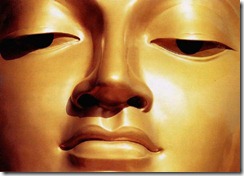
Determination

DeterminationDetermination grows out of adversity. To accomplish an easy or pleasant task does not require determination, it is the difficult or unpleasant task that most definitely does.

Dreams don’t come true on their own. Determination is required to achieve the things we set out to accomplish and to keep things going in the face of discouragement.

The essential purpose of Buddhism is to make people happy. True happiness is the result of consistent effort and constant growth as a human being.

Remind yourself every day, why you are pursuing your goal. Self doubt and negative thoughts are the making of your fundamental darkness. Confront your inner demons and tell them that you are going to overcome them. Take heart and strength from your Practice, chanting Nam Myoho Renge Kyo will raise your life-energy and help you focus on the task in hand. Remember, nobody ever felt satisfaction from giving up on their dreams.

And keep this in mind when times get tough …

When your determination changes, everything else begins to move in the direction you desire. The moment you resolve to be victorious, every nerve and fibre in your being immediately orient themselves toward your success.

Nam Myoho Renge Kyo.

Nuclear Energy – Your Choice

Ban The BombWe had a very lively and informative discussion this evening at Jayne and Ken’s.

After Gongyo, the topic under the spotlight was nuclear energy and nuclear weapons, whether either can be regarded as a good thing, and if not, how would we go about reducing and finally removing their use altogether.

Simon chaired the meeting, and came up with some very frightening figures in terms of the number of nuclear warheads still in existence. Some 25,000 by all accounts, enough to destroy all life on this beautiful planet of ours, several times over.

We also discussed the alternatives to nuclear power stations. In the light of the terrible situation in Japan, non of us were very happy with the prospect of building more nuclear power stations in this country, but what are the alternatives?

Wind, wave, solar, even hydrogen powered cars, all were mentioned, but I, playing devil’s advocate, wondered whether any, or all of these actually present a realistic alternative in terms of ‘on demand’ power generation. Of course, reducing our individual power needs would reduce the World’s need for energy. We must all ‘do our bit’.

We came to the conclusion that nuclear is a necessary evil at present, though weapons must go, and that must be accomplished through a change in the public psyche. The acceptance that killing thousands of citizens, whether of a different race, political idealism, or religion is totally wrong. We must show the politicians that we will no longer accept their feeble excuses and explain to them that they are our employees, rather than we, their pawns.

Buddhahood In This Lifetime

Buddhahood In This LifetimeReligion must teach an ‘attitude to life’.

To live a life of true human dignity is certainly difficult. Life is change, it is continuous change. Nothing is constant. The  four sufferings of birth, old age, sickness and death are an eternal theme that no one can escape.

Amid harsh reality, people yearn, from the depths of their beings, to live with dignity, and for their lives to have meaning, and they make efforts towards that end. The product of these human yearnings, these prayers, is religion. Religion was born from prayer.

What is Nichiren’s response to these prayers of human beings? What attitude towards life does he teach? The answer, in short, is the principle of attaining Buddhahood in this lifetime.

Nam Myoho Renge Kyo.

The Power Of Optimism

The Light of OptimismThe noted pacifist scholar Johan Galtung tells young people …

“We must be realists in our brains while keeping the flame of idealism burning in our hearts“

Both of these – to see the world as it is and how it could be – are essential to reform.

A firm hold on reality should not entail being swamped by or resting easy in the status quo.

To pioneer uncharted ways requires that people today keep the lamp of optimism lit.

What Is Joy?

The Mystic LawWhat is true joy in life?

This is a difficult question – and one that has occupied a great many thinkers and philosophers.

Joy can quickly give way to suffering. Joy is short and suffering long.

Also what passes for joy in society is superficial. It cannot compare with the joy derived from the Mystic Law.

The key then lies in cultivating a state of mind where we can declare without reservation that life is a joy.

This is the purpose of our Buddhist Practice.

Nam Myoho Renge Kyo.

How Things Work

Complicated MoleculesA few people have asked how chanting Nam Myoho Renge Kyo actually works, how it raises my life-energy and puts me in a higher life-state, irrespective of the circumstances.

So how can chanting the title of The Lotus Sutra, without the need for reading or studying it, help me make contact with my Buddha nature?

Well chanting whilst keeping a problem or question in mind brings forth a certain clarity of thought, which has, on occasion, provided solutions or at least peace of mind.

So why don’t we need to understand The Lotus Sutra, chapter and verse, in order to benefit from it’s wisdom? Well, apart from the fact that we do study the major principles that it encompasses, there are a fair number of similarities with complex things in life.

I imagine you have taken painkillers like ibuprofen, a highly complex molecule that took many years to perfect, test and approve. Unless you are a pharmacist or a pharmaceutical chemist, I doubt that you have the slightest idea of how the shape of the molecule blocks the pain receptors in your nervous system. But the tablets work, whether you know, or whether you don’t.

Another good example is the humble motor car. You can drive from Land’s End to John O’Groats without having any knowledge of how an internal combustion engine works or how the friction linings of the brake pads slow the car by turning the kinetic energy into heat in the brake disks.

My point is, that some very clever people have spent many, many years developing complicated medicines or machines. Being able to benefit from them is simple, simply because they are so well thought out. So it is with The Lotus Sutra and chanting Nam Myoho Renge Kyo. Shakyamuni Buddha and Nichiren Daishonin spent many, many years perfecting the Lotus Sutra and Nichiren Buddhism.

The benefit of chanting is ours simply by chanting the title, studying the sutra is not necessary, but is certainly enlightening.

Is It Going To Be A Good Friday?

The Wheel of LifeThe next phase of our web project is nearing completion, and not before time.

With over a million items of stock to be carefully catalogued and stored in the database and a brand new website with well over a hundred pages to be designed, created and published, it has been a labour of love.

The launch date, planned for next Tuesday and the onset of the inevitable teething problems that ever such project encounters, we look set to be working into and maybe over the Easter break.

It struck me that as a Buddhist, Easter should not be such an important festival. Of course I respect all other religions and their important events. But Easter may be one of the closest encounters that Christianity and Buddhism have throughout the year, because of the not small matter of reincarnation.

Of course Christians do not consider that Jesus was reincarnated, they believe that he rose after the third day, and after meeting with a few of his disciples, rose up to Heaven to sit at the right hand of God.

Buddhists believe that we all, some say forty nine days, but certainly shortly after passing on from this life, come back, reincarnated in another life, over and over again.

What is clear, is that neither belief can be proven beyond doubt, but both offer a strong message of hope for us when we come to the end of this life.

The one big difference that I see in this, is that the Buddhist belief brings a certain continuity to the process. If you believe that the karma in your next life is the result of the causes we make in this life, I feel there is a real incentive to make good causes in order to lay the path for our next life.

Gongyo Translated – The Life Span Chapter

The Lotus SutraFollowing yesterday’s post about the Expedient Means chapter, here is the translation of the second chapter recited during Gongyo, The Life Span of the Thus Come One (Juryo) chapter, sometimes abbreviated to The Life Span chapter.

To explain further, The Life Span of the Thus Come One refers to the duration of Shakyamuni’s life as a Buddha.

As previously, the Japanese phonetic recital is in italics, with the English translation below.

Ji ga toku bur-rai. Sho kyo sho kosshu. Muryo hyaku sen man. Oku sai asogi. Jo seppo kyoke Mushu oku shujo. Ryo nyu o butsu-do. Nirai muryo ko.

Since I attained Buddhahood the number of kalpas that have passed is an immeasurable hundreds, thousands, ten thousands, millions, trillions, asamkhyas. Constantly I have preached the Law, teaching, converting countless millions of living beings, causing them to enter the Buddha way, all this for immeasurable kalpas.

I do shujo ko. Hoben gen nehan. Ni jitsu fu metsu-do. Jo ju shi seppo.

In order to save living beings, as an expedient means I appear to enter nirvana but in truth I do not pass into extinction. I am always here preaching the Law.

Ga jo ju o shi. I sho jin-zu-riki. Ryo tendo shujo. Sui gon ni fu ken.

I am always here, but through my transcendental powers I make it so that living beings in their befuddlement do not see me even when close by.

Shu ken ga metsu-do. Ko kuyo shari. Gen kai e renbo. Ni sho katsu-go shin.

When the multitude see that I have passed into extinction, far and wide they offer alms to my relics. All harbor thoughts of yearning and in their minds thirst to gaze at me.

Shujo ki shin-buku. Shichi-jiki i nyunan. Isshin yok-ken butsu. Fu ji shaku shinmyo. Ji ga gyu shuso. Ku shutsu ryojusen.

When living beings have become truly faithful, honest and upright, gentle in intent, single-mindedly desiring to see the Buddha not hesitating even if it costs them their lives, then I and the assembly of monks appear together on Holy Eagle Peak.

Ga ji go shujo. Jo zai shi fu-metsu. I hobenrik-ko. Gen u metsu fu-metsu. Yo-koku u shujo. Kugyo shingyo sha. Ga bu o hi chu. I setsu mujo ho.

At that time I tell the living beings that I am always here, never entering extinction, but that because of the power of an expedient means at times I appear to be extinct, at other times not, and that if there are living beings in other lands who are reverent and sincere in their wish to believe, then among them too I will preach the unsurpassed Law.

Nyoto fu mon shi. Tan ni ga metsu-do. Ga ken sho shujo. Motsu-zai o kukai. Ko fu i gen shin. Ryo go sho katsu-go. In go shin renbo. Nai shutsu I seppo.

But you have not heard of this, so you suppose that I enter extinction. When I look at living beings I see them drowned in a sea of suffering; therefore I do not show myself, causing them to thirst for me. Then when their minds are filled with yearning, at last I appear and preach the Law for them.

Jin-zu riki nyo ze. O asogi ko. Jo zai ryo jusen. Gyu yo sho jusho. Shujo ken ko jin. Dai ka sho sho ji. Ga shi do annon. Tennin jo juman. Onrin sho dokaku. Shuju ho Shogon. Hoju ta keka. Shujo sho yuraku. Shoten gyaku tenku. Jo sas-shu gi-gaku. U mandara ke. San butsu gyu daishu. Ga jodo fu ki. Ni shu ken sho jin. Ufu sho kuno. Nyo ze shitsu juman.

Such are my transcendental powers. For asamkhya kalpas constantly I have dwelled on Holy Eagle Peak and in various other places. When living beings witness the end of a kalpa and all is consumed in a great fire, this, my land, remains safe and tranquil, constantly filled with heavenly and human beings. The halls and pavilions in its gardens and groves are adorned with various kinds of gems. Jewelled trees abound in flowers and fruit where living beings enjoy themselves at ease. The gods strike heavenly drums, constantly making many kinds of music. Mandarava blossoms rain down, scattering over the Buddha and the great assembly. My pure land is not destroyed, yet the multitude see it as consumed in fire, with anxiety, fear and other sufferings filling it everywhere.

Ze sho zai shujo. I aku-go innen. Ka asogi ko. Fu mon sanbo myo.

These living beings with their various offenses, through causes arising from their evil actions, spend asamkhya kalpas without hearing the name of the Three Treasures.

Sho u shu ku-doku. Nyuwa shichi-jiki sha. Sokkai ken gashin. Zai shi ni seppo. Waku-ji i shi shu. Setsu butsu-ju muryo. Ku nai ken bussha. I setsu butsu nan chi.

But those who practice meritorious ways, who are gentle, peaceful, honest and upright, all of them will see me here in person, preaching the Law. At times for this multitude I describe the Buddha’s life span as immeasurable, and to those who see the Buddha only after a long time I explain how difficult it is to meet the Buddha.

Ga chi-riki nyo ze. Eko sho muryo. Jumyo mushu ko. Ku shugo sho toku.

Such is the power of my wisdom that its sagacious beams shine without measure. This life span of countless kalpas I gained as the result of lengthy practice.

Nyoto u chi sha. Mot-to shi sho gi. To dan ryo yo jin. Butsu-go jip-puko. Nyo i zen hoben. I ji o shi ko. Jitsu zai ni gon shi. Mu no sek-komo. Ga yaku I se bu. Ku sho kugen sha.

You who are possessed of wisdom, entertain no doubts on this point! Cast them off, end them forever, for the Buddha’s words are true, not false. He is like a skilled physician who uses an expedient means to cure his deranged sons. Though in fact alive, he gives out word he is dead, yet no one can say he speaks falsely. I am the father of this world, saving those who suffer and are afflicted.

I bonbu tendo. Jitsu zai ni gon metsu. I joken ga ko. Ni sho kyoshi shin. Ho-itsu jaku go-yoku. Da o aku-do chu. Ga jo chi shujo. Gyo do fu gyo do. Zui o sho ka do. I ses-shuju ho.

Because of the befuddlement of ordinary people, though I live, I give out word I have entered extinction. For if they see me constantly, arrogance and selfishness arise in their minds. Abandoning restraint, they give themselves up to the five desires and fall into the evil paths of existence. Always I am aware of which living beings practice the way, and which do not, and in response to their needs for salvation I preach various doctrines for them.

Mai ji sa ze nen. I ga ryo shujo. Toku nyu mu-jo do. Soku joju busshin.

At all times I think to myself: How can I cause living beings to gain entry into the unsurpassed way and quickly acquire the body of a Buddha?

Gongyo Translated – The Expedient Means Chapter

The Lotus SutraDuring Gongyo, apart from chanting Nam Myoho Renge Kyo, we also recite two chapters from the Lotus Sutra, Chapter 2 Expedient Means (Hoben) and Chapter 16 The Life Span of the Thus Come One (Juryo). Both chapters are recited in Chinese, so unless you are fluent, the meaning may be lost. I believe that it is important to understand what I am reciting. So the following is an English translation in order that the true meaning can be understood.

The Chinese phonetic recital is in italics, with the English translation below.

Niji seson. Ju sanmai. Anjo ni ki. Go shari-hotsu. Sho-but chi-e. Jinjin muryo. Go chi-e mon. Nange nannyu. Issai shomon. Hyaku-shi-butsu. Sho fu no chi.

At that time the World-Honoured One calmly arose from his samadhi and addressed Shariputra, saying: “The wisdom of the Buddhas is infinitely profound and immeasurable. The door to this wisdom is difficult to understand and difficult to enter. Not one of the voice-hearers or pratyekabuddhas is able to comprehend it.

Sho-i sha ga. Butsu zo shingon. Hyaku sen man noku. Mushu sho butsu. Jin gyo sho-butsu. Muryo doho. Yumyo shojin. Myosho fu mon. Joju jinjin. Mi-zo-u ho. Zui gi sho setsu. Ishu nange

What is the reason for this? A Buddha has personally attended a hundred, a thousand, ten thousand, a million, a countless number of Buddhas and has fully carried out an immeasurable number of religious practices. He has exerted himself bravely and vigorously, and his name is universally known. He has realized the Law that is profound and never known before, and preaches it in accordance with what is appropriate, yet his intention is difficult to understand.

Shari-hotsu. Go ju jo-butsu irai. Shuju innen. Shuju hiyu. Ko en gonkyo. Mu shu hoben. Indo shujo. Ryo ri sho jaku

Shariputra, ever since I attained Buddhahood I have through various causes and various similes widely expounded my teachings and have used countless expedient means to guide living beings and cause them to renounce attachments.

Sho-i sha ga. Nyorai hoben. Chiken hara-mitsu. Kai i gu-soku

Why is this? Because the Thus Come One is fully possessed by both expedient means and the paramita of wisdom.

Shari-hotsu. Nyorai chiken. Kodai jinnon. Muryo muge. Riki. Mu-sho-i. Zenjo. Gedas. Sanmai. Jin nyu musai. Joju issai. Mi-zo-u ho

Shariputra, the wisdom of the Thus Come One is expansive and profound. He has immeasurable [mercy], unlimited [eloquence], power, fearlessness, concentration, emancipation, and samadhis, and has deeply entered the boundless and awakened to the Law never before attained.

Shari-hotsu. Nyorai no. Shuju fun-betsu. Gyo ses sho ho. Gonji nyunan. Ekka shushin. Shari-hotsu. Shu yo gon shi. Muryo muhen. Mi-zo-u ho. Bus shitsu joju

Shariputra, the Thus Come One knows how to make various kinds of distinctions and to expound the teachings skilfully. His words are soft and gentle and delight the hearts of the assembly. “Shariputra, to sum it up: the Buddha has fully realized the Law that is limitless, boundless, never attained before.

Shi shari-hotsu. Fu shu bu setsu. Sho-i sha ga. Bus sho joju. Dai ichi ke-u. Nange shi ho

But stop, Shariputra, I will say no more. Why? Because what the Buddha has achieved is the rarest and most difficult-to-understand Law.

Yui butsu yo butsu. Nai no kujin. Shoho jisso. Sho-i shoho. Nyo ze so. Nyo ze sho. Nyo ze tai. Nyo ze riki. Nyo ze sa. Nyo ze in. Nyo ze en. Nyo ze ka. Nyo ze ho. Nyo ze honmak kukyo to

The true entity of all phenomena can only be understood and shared between Buddhas. This reality consists of the appearance, nature, entity, power, influence, inherent cause, relation, latent effect, manifest effect, and their consistency from beginning to end.

I hope the translation serves to demystify Gongyo and help explain why the chapter is recited.

Back To Reality

EmbarrasingHaving re-read my post from yesterday, I was feeling a little embarrassed at the gushy nature of it. Then I read today’s entry from Buddhism Day by Day …

“Worthy persons deserve to be called so because they are not carried away by the eight winds: prosperity, decline, disgrace, honour, praise, censure, suffering and pleasure. They are neither elated by prosperity nor grieved by decline.”

Nichiren Daishonin ~ circa 1277

Well that put me well and truly in my place. Wise words from The Buddha for the Modern Age, as usual.

Here is the whole letter, written to one of The Daishonin’s loyal disciples, Shijo Kingo …

The Eight Winds

“I had been anxious about you because I had not heard from you in so long. I was overjoyed to receive your messenger, who arrived with your various offerings. I am going to bestow the Gohonzon on you for your protection.

About the problem of your transfer to another estate: I have studied your lord’s letter to you and your letter to me, and compared them. I anticipated this problem even before your letter arrived. Since your lord regards this as a matter of the utmost importance, I surmise that other retainers have spoken ill of you to him, saying: “He shows a lack of respect for you in his unwillingness to move to a new estate. There are many selfish people, but he is more selfish than most. We would advise you to show him no further kindness for the time being.” You must beware and act cautiously.

As vassals, you, your parents, and your close relatives are deeply indebted to your lord. Moreover, he showed you great clemency by taking no action against your clan when I incurred the wrath of the government and the entire nation hated me. Many of my disciples had their land seized by the government and were then disowned or driven from their lords’ estates. Even if he never shows you the slightest further consideration, you should not hold a grudge against your lord. It is too much to expect another favour from him, just because you are reluctant to move to a new estate.

Worthy persons deserve to be called so because they are not carried away by the eight winds: prosperity, decline, disgrace, honour, praise, censure, suffering, and pleasure. They are neither elated by prosperity nor grieved by decline. The heavenly gods will surely protect one who is unbending before the eight winds. But if you nurse an unreasonable grudge against your lord, they will not protect you, not for all your prayers.

When one goes to court, one may win one’s case, but then again one may lose, when satisfaction could have been obtained outside of court. I considered how the night watchmen might win their case. I felt great pity for them; they were deeply troubled, and their houses and lands had been confiscated just because they were Nichiren’s followers. I said that I would pray for them, provided they did not go to court. They agreed and promised not to go. So when I heard they had submitted petitions and were embroiled in lawsuits, I was concerned that it would not go their way; so far no results have been forthcoming.

Daigaku and Uemon no Tayu had their prayers answered because they followed my advice. Hakiri seems to believe my teachings, but he ignored my suggestions about his lawsuit, and so I have been concerned about its progress. Some good seems to have come of it, perhaps because I warned him that he would lose unless he followed my advice. But because he did not listen to the extent I had hoped, the outcome has been less fruitful than he expected.

If lay believers and their teacher pray with differing minds, their prayers will be as futile as trying to kindle a fire on water. Even if they pray with one mind, their prayers will go unanswered if they have long made the error of attacking greater teachings with lesser ones. Eventually, both lay believers and their teacher will be ruined.

Myoun was the fiftieth chief priest of the Tendai school. He was punished by the retired emperor in the fifth month of the second year of Angen (1176) and ordered into exile in the province of Izu. En route, however, he was rescued at Otsu by his priests from Mount Hiei. He reassumed his position as chief priest, but in the eleventh month of the second year of Juei (1183), he was captured by [Minamoto no] Yoshinaka and beheaded. I am not saying that being exiled or beheaded is in itself an indication of fault. Even sages and worthies undergo such things.

When civil war broke out between Yoritomo of the Minamoto clan and Kiyomori of the Taira clan, more than twenty of Kiyomori’s clansmen signed a pledge and affixed their seals. They vowed: “We will look to Mount Hiei as our clan temple. We will revere the three thousand monks as our own parents. The sorrows of the mountain temple will be our sorrows, and the joys of the mountain temple, our joys.” They donated all the twenty-four districts of Omi Province to the temple. Then the chief priest [Myoun] and his disciples employed all the rites of the True Word teachings in their prayers to vanquish the enemy and even ordered

their armed priests to shoot arrows at the Minamoto soldiers. Yoshinaka [of the Minamoto clan] and one of his retainers, Higuchi, however, accompanied by a mere five or six men, climbed Mount Hiei and burst into the main hall. They dragged Myoun from the platform where he was praying for victory, bound him with a rope, rolled him down the west slope of the mountain like a big stone, and beheaded him. Nevertheless, the people of Japan do not shun the True Word teachings, nor have they ever delved into this matter.

During the fifth, sixth, and seventh months of the third year of Jokyu (1221), the cyclical sign kanoto-mi, the imperial court and the barbarian warriors engaged in combat. At that time Mount Hiei, To-ji, the seven major temples of Nara, Onjo-ji, and the other temples each performed all the most esoteric rites of the True Word school in their prayers to the Sun Goddess, Great Bodhisattva Hachiman, the Mountain King, and other deities. Forty-one of the most renowned priests, including the General Administrator of Priests Jien, a former chief priest of the Tendai school, and the administrators of priests of To-ji, of Omuro, and of the Joju-in hall of Onjo-ji temple, prayed repeatedly for [Hojo] Yoshitoki’s defeat.

The prelate of Omuro also began a ceremony to overpower the enemies in Shishin-den Palace on the eighth day of the sixth month. He proclaimed that the imperial court would be victorious within seven days. But on the seventh day— the fourteenth day of the sixth month— the battle ended in defeat, and the prelate died of extreme grief because his beloved page, Setaka, had been beheaded. Yet despite all this, no one ever wondered what was wrong with the True Word doctrines. The ceremonies that incorporated all the True Word doctrines— the first conducted by Myoun and the second by Jien— resulted in the complete collapse of royal rule in Japan. Now, for the third time, a special religious ceremony is being held to ward off the Mongol invasion. The present regime will surely suffer the same fate. This is a confidential matter; you should keep it strictly to yourself.

As for your own problem, I advise you not to go to court. Neither harbour a grudge against your lord, nor leave his service. Stay on in Kamakura. Go to attend on your lord less frequently than before; wait upon him only from time to time. Then you can expect that your wish will be fulfilled. Never conduct yourself in a shameful manner. Be unmoved by greed, by the desire for fame, or by anger.”

WND-1, p794

Previous Older Entries Next Newer Entries