But this letter, from Nichiren to Nichinyo, explains more completely the significance of the Gohonzon.
I have received your offerings to the Gohonzon of five thousand coins, one horse load of polished rice, and fruit. To begin with, this Gohonzon was revealed in the last eight years of the fifty that the Buddha preached in this world, and in this period of eight years, in eight chapters [of the Lotus Sutra], from the “Emerging from the Earth” chapter through the “Entrustment” chapter. Now, during the three periods following the Buddha’s passing, in the two thousand years of the Former and Middle Days of the Law, not even the term “object of devotion of the essential teaching” yet existed. How then could the object of devotion have been revealed? Moreover, there was no one who was able to give it expression. T’ien-t’ai, Miao-lo, and Dengyo perceived it in their hearts, but for some reason never put it into words, just as Yen Yüan realized the true meaning of Confucius’s teaching, but never gave it expression. Yet the sutra itself and the commentaries of T’ien-t’ai and Miaolo explicitly state that the Gohonzon will appear after two thousand years have elapsed following the Buddha’s passing, in the first five hundred years of the Latter Day of the Law.
How wondrous it is that, around two hundred years and more into the Latter Day of the Law, I was the first to reveal as the banner of propagation of the Lotus Sutra this great mandala that even those such as Nagarjuna and Vasubandhu, T’ien-t’ai and Miao-lo were unable to express. This mandala is in no way my invention. It is the object of devotion that depicts Shakyamuni Buddha, the World-Honoured One, seated in the treasure tower of Many Treasures Buddha, and the Buddhas who were Shakyamuni’s emanations as perfectly as a print matches its woodblock. Thus the five characters of the Lotus Sutra’s title are suspended in the centre, while the four heavenly kings are seated at the four corners of the treasure tower. Shakyamuni, Many Treasures, and the four leaders of the Bodhisattvas of the Earth are side by side at the top. Seated below them are the bodhisattvas, including Universal Worthy and Manjushri, and the voicehearers, including Shariputra and Maudgalyayana. [Beside them are] the gods of the sun and moon, the devil king of the sixth heaven, the dragon king, and an asura. In addition, the wisdom kings Immovable and Craving-Filled take up their stations to the south and north. The evil and treacherous Devadatta and the ignorant dragon king’s daughter form a group. Not only the Mother of Demon Children and the ten demon daughters, who are evil demons that sap the lives of people throughout the major world system, but also the Sun
Goddess, Great Bodhisattva Hachiman, and the seven reigns of the heavenly gods and five reigns of the earthly gods, who are the guardian deities of Japan— all the various great and small gods, that is, the main gods, are ranged in rows. How then could the remaining subordinate gods be left out? The “Treasure Tower” chapter states, “[Shakyamuni Buddha used his transcendental powers to] lift all the members of the great assembly up into the air.”
Without exception, all these Buddhas, bodhisattvas, great sages, and, in general, all the various beings of the two worlds and the eight groups who appear in the “Introduction” chapter of the Lotus Sutra dwell in this Gohonzon. Illuminated by the light of the five characters of the Mystic Law, they display the dignified attributes that they inherently possess. This is the object of devotion.
This is what is meant when the sutra says “the true aspect of all phenomena.” Miao-lo stated: “The true aspect invariably manifests in all phenomena, and all phenomena invariably manifest in the ten factors. The ten factors invariably manifest in the Ten Worlds, and the Ten Worlds invariably manifest in life and its environment.” It is also stated that the profound principle of the true aspect is the originally inherent Myoho-Renge-Kyo. The Great Teacher Dengyo said, “A single moment of life comprising the three thousand realms is itself the Buddha of limitless joy; this Buddha has forsaken august appearances.” Therefore, this Gohonzon shall be called the great mandala never before known; it did not appear until more than 2,220 years after the Buddha’s passing.
A woman who makes offerings to such a Gohonzon invites happiness in this life, and in the next, the Gohonzon will be with her and protect her always. Like a lantern in the dark, like a strong guide and porter on a treacherous mountain path, the Gohonzon will guard and protect you, Nichinyo, wherever you go. Therefore, you should take every care to ward off slanderers of the Law in the same way that you would never wish a courtesan even to come near your home. This is the meaning of “Thrust aside evil friends and associate with good companions.”
Never seek this Gohonzon outside yourself. The Gohonzon exists only within the mortal flesh of us ordinary people who embrace the Lotus Sutra and chant Nam-Myoho-Renge-Kyo. The body is the palace of the ninth consciousness, the unchanging reality that reigns over all of life’s functions. To be endowed with the Ten Worlds means that all ten, without a single exception, exist in one world. Because of this it is called a mandala. Mandala is a Sanskrit word that is translated as “perfectly endowed” or “a cluster of blessings.” This Gohonzon also is found only in the two characters for faith. This is what the sutra means when it states that one can “gain entrance through faith alone.”
Since Nichiren’s disciples and lay supporters believe solely in the Lotus Sutra, honestly discarding expedient means and not accepting even a single verse of the other sutras, exactly as the Lotus teaches, they can enter the treasure tower of the Gohonzon. How reassuring! Make every possible effort for the sake of your next life. What is most important is that, by chanting Nam-Myoho-Renge-Kyo alone, you can attain Buddhahood. It will no doubt depend on the strength of your faith. To have faith is the basis of Buddhism. Thus the fourth volume of Great Concentration and Insight states, “Buddhism is like an ocean that one can only enter with faith.” The fourth volume of The Annotations on “Great Concentration and Insight” explains this: “With regard to the phrase ‘Buddhism is like an ocean that one can only enter with faith,’ even Confucius taught that faith is first and foremost. How much more so is this true of the profound doctrines of Buddhism! Without faith, how could one possibly enter? That is why the Flower Garland Sutra defines faith as the basis of the way and the mother of blessings.” The first volume of Great Concentration and Insight says, “How does one hear, believe in, and practice the perfect teaching to attain perfect enlightenment?” The first volume of On “Great Concentration and Insight” says, “To ‘believe in the perfect teaching’ means to awaken faith through doctrine and to make faith the basis of practice.”
A non-Buddhist document relates that, because the emperor of Han believed his aide’s report, the waters of a river froze on the spot. Another tells how Li Kuang, because he was eager to revenge his father, shot an arrow all the way up to its feathers into a boulder hidden in the grass. The commentaries of T’ien-t’ai and Miao-lo make it perfectly clear that faith is the cornerstone. Because the Han emperor believed completely in his retainer’s words, the river froze over. And Li Kuang was able to pierce a rock with his arrow because he fully believed it to be the tiger that had killed his father. How much more so is this true in Buddhism!
Embracing the Lotus Sutra and chanting Nam-Myoho-Renge-Kyo in itself encompasses the five practices. It was this matter, the wonderful practice that includes the immediate completion of the five practices, that was transmitted to the Great Teacher Dengyo when he journeyed to T’ang China and met the Reverend Tao-sui. No other teaching is more important for Nichiren’s disciples and lay supporters. It is referred to in the “Supernatural Powers” chapter. I will write again in detail.
Respectfully, Nichiren
The twenty-third day of the eighth month in the third year of Kenji (1277)
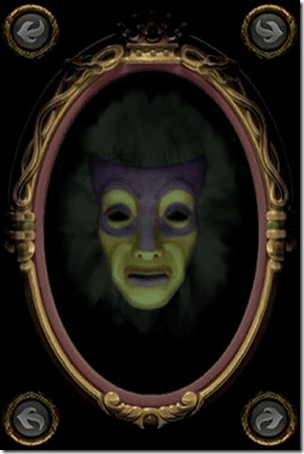 Self awareness, the realisation of who, or what you really are, comes to some people with age, but for me, it came at a point in life where I was at my all time low. Seeing my true reflection in the mirror was a long and painful process, there’s no joy in realising that you are someone you don’t really like, but it lead me to the turning point that has allowed me to change for the better.
 The human being is not a frail wretch at the mercy of fate. Shakyamuni insisted that to change oneself now is to change the future on a vast scale. The Western impression that Buddhism is all about meditation is alien to the spirit of Shakyamuni.
 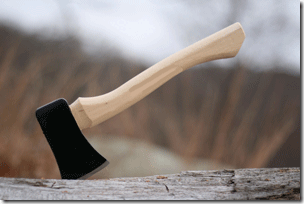 Before I became a Nichiren Buddhist I found disappointments very difficult to handle, so today, being told that my services are no longer required at work, I was inwardly pleased with the manner in which I handled the fall of the axe.
 My progress, through my Practice, has been pretty steady and positive for quite a while now.
  I’ve never been in a position where I can sit back and think, “Right that’s it, I’m who I want to be, I’m where I want to be, I have nothing left to do”. Maybe that is a rather rare situation to find oneself in, maybe we might call it Enlightenment.
 Passing on the ideas and ideals behind Buddhist teachings is a little like sewing a hidden gem into the lining of a friends clothes.
 When you become submerged in difficult situations, when the way forward looks bleak and less than inviting, it can be tempting to start pointing a finger at others to lay the blame at their door.
 I often get asked about the Gohonzon, by people interested to know what the inscriptions mean. Although it is revered and forms the object of devotion for our Practice, it has no magical properties and will not achieve anything for us in isolation. So let us learn a little more about it from the man who first inscribed it.
 Enlightenment is achievable by us all in this lifetime, and the life-state of Buddhahood is present within each and every one of us. There is no need to go looking for it elsewhere, all we need to do is to chant Nam-Myoho-Renge-Kyo and to seek it within.
 Watching DreamWork’s Kung Fu Panda on TV last night, not for the first time I have to admit, was another good lesson in humility, wisdom, trust and self confidence.
 The Search For Enlightenment
Recents Comments