More On Mindfulness

BreatheWhen we are feeling down, or simply the challenges of everyday life are coming at us too fast, it is all too easy to concentrate on ourselves, forgetting about those around us.

To stop this happening takes mindfulness and courage, as noted by Sensei in Daily Encouragement.

Buddhism is not about leading a self-centred existence. If we do not base our lives on the Law, we are not practicing Buddhism.

The German writer Friedrich von Schiller writes, “The brave man thinks upon himself the last.”

This is analogous to the spirit of not begrudging one’s life taught in the Lotus Sutra.

This means treasuring the Law more highly than one’s life.

The Law and kosen-rufu are central.

The old adage that ‘No Man is an island’ is very true. It is our family, friends and those we meet each day in our communities, who make our lives meaningful, and it is The Law that shows us the way we are to conduct ourselves and how we should relate to them.

To help with increasing our mindfulness, consciously focus on a simple task each day. Be that taking a shower, doing the dishes, going upstairs, even breathing, anything will do, but concentrate on every aspect of your feelings, your surroundings, everything, and you will find that even the simplest task takes on a whole new meaning.

Forever Reading

Forever ReadingDaisaku Ikeda, in his book, Buddhism Day By Day, says this about the act of reading:

‘Reading is dialogue with oneself; it is self-reflection, which cultivates profound humanity. Reading is therefore essential to our development.

It expands and enriches the personality like a seed that germinates after a long time and sends forth many blossom-laden branches.

People who can say of a book ‘this changed my life’ truly understand the meaning of happiness. Reading that sparks inner revolution is desperately needed to escape drowning in the rapidly advancing information society.

Reading is more than intellectual ornamentation; it is a battle for the establishment of the self, a ceaseless challenge that keeps us young and vigorous.’

We all know which book ‘changed my life’, and I can confirm that I fully understand the meaning of the happiness that this encompasses. Books transformed civilisation in the broadest sense when they became widely available via the printing presses of William Caxton and all those who have followed.

The advent of the world wide web and the internet has simply taken that process to the Nth level. The dissemination of information, and the written word has never been so widespread. Although there are associated dangers and we must be circumspect about the source of the information we consume, there has never been an easier time to read.

During my CELTA course I read to expand my knowledge of the English language, currently I am reading to increase my understanding of psychology and the workings of the mind. Whatever we read, be it fact or fiction, it adds to the kaleidoscope of facts and emotions locked in our brains, so read and read and read again, it will never be a waste of your precious time.

A Magical Saturday

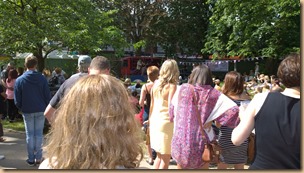
At Grooves on the GreenFollowing a magical sun filled Saturday which encompassed so many things, including a visit to  the Grooves on the Green music festival in Ashley Cross, I could not have expressed this observation any better …

Partners in a relationship have different roles.

There are times when the burning intensity and power of the sun are called for, and times when the soothing luminescence and serene wisdom of the moon is what’s needed.

A complementary relationship in which the partners cooperate and work together is a beautiful thing.

~ Daisaku Ikeda

The Joy Of Creating A Life

The Colour Of JoyNo need to panic folks, there is no impending patter of tiny feet or anything like that. But it’s been an interesting year for me so far.

Having put in the effort to get my CELTA, I’m now teaching again. Having taken strides to become more involved in the vegan community, in and around Bournemouth, I have forged new relationships.

Sensei has some very wise words to elaborate the reasons why such events have brought joy into my life …

There is no one lonelier or more unhappy than a person who does not know the pure joy of creating a life for himself or herself. To be human is not merely to stand erect and manifest intelligence or knowledge. To be human in the full sense of the word is to lead a creative life.

The struggle to create new life from within is a truly wonderful thing. There is found the brilliant wisdom that guides and directs the workings of reason; the light of insight that penetrates the farthest reaches of the universe; the undaunted will to see justice done that meets and challenges all the assaults of evil; the spirit of unbounded care that embraces all who suffer.

When these are fused with that energy of compassion that pours forth from the deepest sources of cosmic life, an ecstatic rhythm arises to colour the lives of all people.

~ Daisaku Ikeda

On Happiness

HappinessHappiness as we all know, if we take the time to consider, is connected to everything, and connected to nothing. It cannot be bought or sold and it cannot be measured against any physical scale. It is determined by a combination of our circumstances and the way in which we are controlled by, or are controlling, those circumstances.

To be concerned only with one’s own happiness is egoism. To claim you care only about the happiness of others is hypocrisy. Genuine happiness is becoming happy together with others. Josei Toda said: “Just becoming happy oneself – there’s nothing difficult to that. It’s easy. Helping others become happy is the foundation of our faith.”

A Sudden Realisation

A Sudden ThoughtOccasionally I really surprise myself, or rather something that in all truth should be blindingly obvious, suddenly permeates my grey matter and comes as a bit of a shock.

I’ve been writing my blog for nearly four years now, and over eighty thousand people have visited it in that time, but it struck me today that the whole purpose behind it and my practice, is to help myself and others, to reach a state of enlightenment.

Sensei says this of enlightenment, or the state of Buddhahood:

If we attain the state of Buddhahood in this lifetime, that state will forever pervade our lives. Throughout the cycle of birth and death, in each new lifetime, we are endowed with good health, wealth and intelligence, along with a supportive, comfortable environment, and lead lives that overflow with good fortune. Each of us will also possess a unique mission and be born in an appropriate form to fulfil it.

Quite a powerful statement, but really, just how amazing will that be? And there was the shock, that my practice and my musings about it each day are actually helping me, and hopefully you, along the long and winding path to a most amazing goal.

Maybe I am a bit dim, ok there’s no maybe about it, and perhaps I should have realised it sooner, but I hope that my posts help others, even if it is only a simple thought that strikes a chord.

Nam Myoho Renge Kyo

The Seeds Of Change

Human Revolution - Change For The BetterIn today’s world where global issues are so important, many people feel a sense of powerlessness and resignation; a feeling that no single individual’s effort can change the way things are.

But the Buddhist viewpoint is that the world should be seen from the perspective of the individual, and that the human life contains the entire universe.

That is why changing our own lives one by one will bring a change in our family, our community, and the society in which we live. It will change the age we live in, our history, and indeed all aspects of our world.

If we look for the true causes of war, we see that it is essentially caused by the human mind. War stems from the desire to control and conquer others, to have power, and from hatred and antipathy. Such is a human being in the grip of the negative force of life. World peace starts with the inner transformation of the individual, and the struggle to elevate our state of life, and free ourselves from the domination of the negative force of life.

A single sunflower contains the seeds for more than a thousand new plants. Similarly, when one brave person stands up for peace, his or her resolve spreads out into the environment in thousands of ways. Courage always brings a response. One person’s human revolution can therefore eventually change the destiny of the entire human race.

The Spirit of Human Revolution

In his writing On Attaining Buddhahood, Nichiren Daishonin conveys the basic spirit of human revolution: “You must never think that any of the eighty thousand sacred teachings of Shakyamuni’s lifetime or any of the Buddhas and bodhisattvas of the ten directions and three existences are outside yourself. Your practice of the Buddhist teachings will not relieve you of the sufferings of birth and death in the least unless you perceive the true nature of your own life.” [WND p3]

We could summarise the spirit of this teaching as being, “It’s not up to others; nor can I blame anyone else. I have to change myself first.” It is a viewpoint which says, everything in life is part of our own training; it is for our benefit and development. Human revolution takes place right now, in the situation we find ourselves at this moment.

World peace starts with this inner transformation of the individual. And yes it is a struggle to develop and elevate our state of life but human revolution is the foundation for world peace and also for individual peace and happiness. It is at the heart of our Buddhist practise. It is about changing our heart and drawing out our humanity.

It is the most amazing feeling as you discover that if the cause of your suffering is within the realms of your own life then you and only you can change that aspect of your life. This is the most freeing feeling. This is human revolution and the door to your Buddhahood.

Human revolution brings into play all the principles and processes that make up the Buddhist teachings of life. Learning to be able to live our lives on the basis of correct teachings is part of our human revolution. The process is a transformation of the heart.

Transforming the Self, Living the Teachings

When we commit our lives to chanting we embark on a journey of self-discovery and challenge. By taking responsibility for our feelings and emotions, especially those we most dislike, we come to realise we have the ability to transform our lives from within. As we broaden our experiences of chanting daimoku we get experiences of our environment reflecting the transformation of our inner lives. This could be in our family relationships, at work or in other aspects of life.

It is usually within one of these arenas that we find life can be difficult or cause us to suffer. As we continue chanting, the more we start to see our lives very differently. At first this process may seem a little uncomfortable because it is quite unique and new to us. We may or may not like what we see. Perhaps we realise we have set attitudes or opinions about others or various issues that make us suffer. It may seem that others have a problem with us. This can draw out all sorts of feelings and emotions that can make us uneasy, or uncomfortable.

Getting this kind of reaction does not mean that chanting is not working or that it is working in a negative way. On the contrary you are actually in the process of transforming exactly that which has always led you to suffer in that particular area of your life. Your chanting is illuminating an area of your life that needs to change for your own happiness. The realisation that this opinion or attitude stems from our own lives and not from others opinions of us, leads us to uncover the Buddha nature inherent in our lives. The quickest way to transform these feelings or attitude is to keep chanting until you realise the cause of these uncomfortable feelings.

However, it may be that is exactly when you find it the most difficult time to chant. You are on the brink of changing a part of your life that always stops you from progressing or being happy. It will probably feel like walking up a hill backwards. At such times obstacles and devils arise. You will probably be able to justify why it is more beneficial to watch TV than do gongyo or chant or tell a friend about Nam-myoho-renge-kyo or study some of Nichiren Daishonin`s writings. But this is exactly the time to do these things in order to break through and win over something that has always held you back. This is the time to muster a fighting spirit and to be courageous.

In his book Seven Paths to Peace, Daisaku Ikeda talks about human revolution in terms of self-mastery. Simply put, this means winning control over oneself, overcoming the small self that is dominated by narrow self-interest and awakening to the larger self that works for the good of all humanity. From this standpoint a major obstacle to developing ourselves is to pursue a way of life bound by our small ego or self. Expanding from the lesser self to the greater self is the path of human revolution.

Through our practice of introducing others to Nichiren Daishonin’s Buddhism, and through efforts to share Buddhism with others, we ourselves grow immensely, we can carry out our human revolution, and transform our karma. Therefore by guiding another individual towards happiness, we also guide ourselves towards happiness. The act of introducing others to Buddhism, which enables us to profoundly benefit both ourselves and others, is the formula of hope for humanity.

At a time when an ordinary person attains Buddhahood, or at a time when a person is at a turning point in doing their human revolution, the negative aspect of life will always appear in some form. This is an unavoidable fact of life! Nichiren Daishonin assures us of this and asks us to transmit it as an axiom or principle of faith so that it is understood by all those who practise.

Taken from the SGI-UK study notes, this encapsulates the meaning of Human Revolution. It beautifully explains the way that self discipline through practice makes us examine our own thoughts and deeds and promotes an inner change by increasing our self awareness.

Chanting Nam Myoho Renge Kyo (at least) twice a day, every day, may seem a mindless practice, but it enables us to devote our whole lives to changing for the better.

Let’s Start A War On War

Dove Of PeaceWith all the coverage about ISIS and the continuing fighting in Syria and Iraq, we need to find some way to embrace and broadcast these positive words of peace from Daisaku Ikeda …

Each of us, no matter how weak or ineffectual we may feel ourselves to be, must build deep within our hearts a stronghold for peace, one that will be capable of withstanding and in the end silencing the incessant calls to war.

This is the only way humanity’s tragic predilection for violence can be reformed and its energies channelled in new directions.

Pick Yourself Up, Dust Yourself Off …

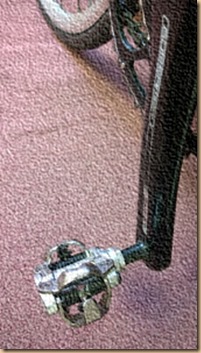
Clipless PedalsAs one who is yet to completely master the pitfalls of clip-less pedals, this wisdom from Sensei struck a resonant chord …

Anyone who has ever made a resolution discovers that the strength of that determination fades in time.

The moment you feel that is when you should make a fresh determination. Tell yourself, “OK! I will start again from now!”

If you fall down seven times, get up an eighth.

Don’t give up when you feel discouraged—just pick yourself up and renew your determination each time.

Staying Young

Keep Calm And Stay YoungI’m no spring chicken, though I have to say, that I am fitter and healthier now than I have ever been.

The trick, in my opinion, is to eat the right food, get plenty of exercise, enough sleep and maybe above all, view everything life throws at you with a calm and mindful attitude.

Easier said than done? Maybe.

Daisaku Ikeda has a few years start on me, but he has a few thoughts for all of us on the subject of staying young …

When I was younger, I thought I had nothing to do with those who were elderly. I think most young people find it hard to believe that they themselves will grow old. The reality is, however, that now I am among the “elderly,” and I can’t move with the speed and ease that I once did.

My teacher used to say that the last years of our life are the most important. If those last few years are happy ones, we have had a happy life.

Old age is a time of spiritual fruition and completion. When people are no longer pursuing position or status, money or material possessions, they can look closely at themselves and at the reality of life and death without the distractions of superficial concerns.

When you reach old age, you know in your heart if you have lived a satisfying life or not. No one else can know this or decide it for you. The single greatest challenge we each will face is whether we can honestly say at the end of our days on this Earth that our life has been well spent.

I believe that whether we can live a truly satisfying life to the end depends to a considerable extent on how we view death. Sadly, many older people are anxious and fearful about death. But, as a Buddhist, I find it helpful to compare the cycles of life and death to the daily rhythms of waking and sleeping. Just as we look forward to the rest sleep brings after the efforts and exertions of the day, death can be seen as a welcome period of rest and re-energizing in preparation for a new round of active life. And just as we enjoy the best sleep after a day in which we have done our very best, a calm and easy death can only follow a life lived to the fullest without any regrets.

It is natural for trees to bear fruit in the harvest season, and in the same way, “old age” is a period of ripening. It can be the most valuable time in human life, when we have rich experience, deeply polished character, and a pure and gentle heart. The loss of certain capacities with age is nothing to be ashamed of. Rather, I feel the various infirmities of age should even be seen as badges of honour and worn with pride.

There is a saying that goes: “To a fool, old age is a bitter winter; to a wise man it is a golden time.” Everything depends on your own attitude, how you approach life. Do you view old age as a period of decline ending in death, or as a time in which one has the opportunity to attain one’s goals and bring one’s life to a rewarding and satisfying completion? The same period of old age will be dramatically different depending upon your own outlook.

I received a letter a few years ago from a woman in Kyoto who was then 67 years old. Her advice was as follows: “We need to banish any expression of defeat from our minds—statements or thoughts such as ‘I can’t do it,’ ‘I’m too old,’ ‘There’s no point in my trying,’ ‘I’m past it,’ or ‘It’s too hard.’ Instead we should be telling ourselves: ‘I won’t give up yet,’ ‘I’m still young,’ ‘I can still do it,’ ‘I’ve still got plenty of energy.’ Just by changing the way we speak to ourselves and others we can change our pattern of behaviour in a positive direction.”

Research shows that when people make continuous use of their powers of memory and concentration, these abilities need not fade. An active interest in others, finding new pastimes and making new friends—such positive attitudes have been shown to slow physical and mental decline.

Even though our bodies may age, if we maintain an active, positive attitude, our hearts and minds will remain “youthful” as long as we live.

To quote the poet Samuel Ullman, “Youth is not a time of life; it is a state of mind; it is not a matter of rosy cheeks, red lips and supple knees; it is a matter of the will, a quality of imagination, a vigour of emotions; it is the freshness of the deep springs of life.”

It is vital to always look to the future, to have plans and aspirations—such an outlook is crucial to making the last years of one’s life rewarding and fulfilling.

One woman whose youthful attitude greatly impressed me was the American painter known as “Grandma Moses.” She had produced around 1,500 paintings by her death at the age of 101. Yet she didn’t even start painting until she was 75. She had never studied painting and was an ordinary farmer’s wife until then.

She had faced many difficulties in her life. Five of her ten children died young, and she lost her husband when she was 66. She said that though she had experienced real pain and hardship, she refused to be dragged down by suffering and always looked ahead.

Whatever she encountered, Grandma Moses strove to make each day and each moment shine with her smile. After her surviving children left home and her husband died, she refused to give in to loneliness or step back from life. She took up the challenge of painting, and her last years glowed like a beautiful sunset. She wrote, “I look back on my life like a good day’s work. It was done and I feel satisfied with it. I was happy and contented. I knew nothing better and made the best out of what life offered. And life is what we make it; always has been, always will be.”

There is a great difference between simply living a long life and living a full and rewarding life. What’s really important is how much rich texture and colour we can add to our lives during our stay here on Earth—however long that stay may be. Quality is the true value, not quantity.

Previous Older Entries Next Newer Entries