A View From The Other Side

A View From The Other SideMy dear old friend Billy Brown had a favourite saying, ‘that everyone had the right to his opinion’. He was generally joking, but sometimes he meant it.

My view is somewhat different. I believe everyone has a right to their own opinion, whether it agrees with mine, or not.

Seeing things from another’s viewpoint is a critical part of being able to meet that person half way in any situation. That then gives us the ability to resolve, or at least come to terms with any potential point of conflict in a positive and constructive way.

If someone stands by their beliefs, even when doing so might run the risk of causing hurt in some manner, those beliefs must be respected. To do anything else would be to concur with Billy’s idea, and that, I am afraid, is not a recipe for peace, love or understanding.

Walking In Another Person’s Shoes

Another Person's ShoesThere is an old saying, that before you criticise someone, you should walk a mile in their shoes. That way, when you criticise them, you have a pair of their shoes, and you are a mile away 🙂

But seriously, it is easy to see the faults in another when you are only seeing things from your point of view.

There is a wise Buddhist saying that says ‘we hate in others, what we refuse to see in ourselves’. Before you start picking on someone for their faults, make sure that you don’t have the same faults yourself.

Seeing the other persons viewpoint takes wisdom, courage and compassion, particularly in the heat of the moment. But taking a few seconds to allow yourself to become mindful, and then trying to reach a balanced view will do no harm, and may help resolve the issue once and for all.

On The Purpose Of Prayer

The Chosen PathPrayer, in Nichiren Buddhism, is unlike that in most other faiths, in that they are not directed to a higher power for help or consideration for the subject of the prayer.

When Nichiren Buddhists pray, they are making themselves more mindful of the effects they wish to see in their lives, and raising their life-state in order to enable them to create the causes to achieve those effects.

It is important to remember that our prayers reflect our life state. In that respect, prayer is a solemn means to raise our life-state or condition. To receive exactly the results for which we are praying, it is crucial to make a determined, single minded effort toward that goal.

This is the true path of manifesting faith in our daily life. Those of us who proceed along this narrow path, day after day, month after month, year after year, will develop, without fail. Just as a sapling grows into a mighty tree, to become a person of outstanding strength and character, one with wisdom, courage and compassion, relies on us remaining true to our chosen path.

On Being Grateful

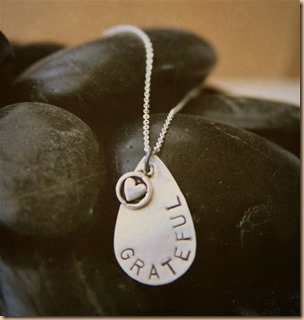
On Being GratefulWe all have the ability to feel sorry for ourselves. Sometimes it seems we have problem after problem, and think the world is against us.

But we can all take a step back and look at our situation compared to others, and be honest enough to see that there are other people in much worse circumstances.

In Buddhist terms, the effects in our lives are the product of the causes we make along our way, it’s called Karma. Whilst it is difficult sometimes, to reconcile ourselves with the fact that we have, in some way caused our own problems, it is important to remember that we are not being punished.

So when you have had enough of your troubles, and are ready to throw in the towel, just take time to look around and realise that there is always someone worse off somewhere.

Be grateful for what you have, and concentrate on making causes for the effects you need to improve the situation. To do anything else is to lack Courage and Wisdom and that doesn’t help anyone, least of all yourself.

On Ichinen Sanzen

Ichinen SanzenMany thanks to that most learned of  fellows, Ken Hawkins, for providing the following explanation of the Chinese symbols of Ichinen Sanzen.

Ichinen Sanzen is the wish-granting gem.

There are as many sides to this gem as there are living beings. Like a gem, each side reflects its own reality. Our life is a wish-granting gem.

When we peer into our lives we can barely see our own reflection. But when we polish our lives through chanting and making efforts to improve ourselves, we can see ourselves reflected clearly.

When our gem is polished in this way we can see beyond our own reflection and see inside the gem that is the ultimate reality of all life.

Ichinen Sanzen in Chinese is composed of four main Chinese characters.

Ichi

Ichi

The first character (Ichi) is a horizontal line. It is the character one. It is both the beginning of the Chinese alphabet and  numbering system. In Buddhism, Ichi is the source of all beings.  The “Fundamental Essence” in the Japanese title of  Heritage of the Ultimate Law

Nen

Nen

Nen  is composed of three elemental characters. On top are three lines  forming a triangle. Under the triangle is a person bending to  completely enclose an object, and under the bending person is a  heart.

– The triangle is a convergence of the elements of one’s life.

– It combines with the bending person to form a compound meaning the  present moment. (All of one’s life is enfolded in the present  moment.)

– The character, Kokoro or shin. The heart, in this case, is the core of intention. The derived meaning is to make present the heart’s intent, reviving or making real a person’s intent.

In some sects, “Nen” means mindfulness – that is being aware of the Buddha in the present moment.

San

San

San is the number three, representing heaven (the cosmos), earth, and humanity (also known as the three realms).

Zen

Zen

Zen is ten times 100. Connected to this concept is the harvest of crops or a thousand grains. The character for 1000 is also used to indicate an uncountable number.

Putting it all together:

Ichi

a single (Ichi) core intention in the present moment

Nen

makes real, enfolds, and harvests (Nen)

San

three (San)

Zen

thousand (Zen) – or uncountable – realms and possibilities.

A determination or decision (Ichi) at the core of your being makes real (Nen) that self-pledge or vow in all the realms (Sanzen) of your life.

Learn To Know Thyself

Socrates - 'Know Thyself'The path to enlightenment involves a lot of learning, much of it about ourselves. My growing emphasis on mindfulness leads to much self examination, of feelings, thoughts and of the workings of the mind.

Wisdom is rooted in the souls of human beings. The way to acquire it is to follow the simple advice of Socrates – ‘Know Thyself’.

This is the starting point for the establishment of a sense of human dignity, preventing the degradation of human beings into anonymous, interchangeable cogs in a machine.

The basis of all true knowledge is self knowledge.

Managing Expectations

Great Expectations Miss Havisham?We all live with hopes and expectations, of ourselves, of others, and of the outcome of situations in our lives, and it is all too easy to be disappointed when those expectations are not fully met.

However, you must also remember, that your happiness is in your own hands, so being unhappy when your expectations are dashed, is your own decision.

In my own experience, I find that taking some quiet time to examine why I am disappointed helps to solve the problem. Sometimes, upon reflection, my expectations are too high, even unrealistic you might say, sometimes the simple acceptance that my expectations are not those of others explains the outcome.

But allowing your expectation of others to be, even in part, the basis of your own happiness shows a lack of wisdom, so learn from the pain, don’t repeat the mistake and move forward.

So to help maintain your happiness, set realistic and flexible expectations for yourself and of others, and accept that failing to meet those expectations does not mean failing altogether.

Still Completely The Wrong Emphasis

How much is life worth?NICE, the NHS drugs watchdog, is set to refuse to provide the £90,000 Kadcyla breast cancer treatment to patients on the grounds of cost. As many of you will know, my daughter had breast cancer, had treatment, and has now been tested clear several times, so I have a vested interest in such issues.

How much is life worth? How much would you pay to spend a year, a month, a week or a day extra with your loved ones? Life is priceless, but the greed of the pharmaceutical industry knows no bounds. They are beholding to their shareholders and are driven purely by the profits they can make from people who find themselves stuck between a huge rock and a very hard place.

The really annoying part of all this, is that the cancer industry, those who make a living from researching, isolating, diagnosing, and treating cancer cases, really have no interest in halting the growth in cancer incidence, it’s their livelihood. When you think of all the millions of pounds and hours put into research over decades, there has been virtually no progress in preventing cancer.

Rather than trying to find cures or treatments for cancer, which like the common cold, has thousands of variants, they should be concentrating on finding the cause. But finding the cause doesn’t make you rich, and once it’s found, what will you do with the rest of your working life?

We know that cancer is caused by any number of things, but we also know that it stops developing in the absence of animal protein in the diet. So why are we all still so keen to fund research and treatment when we know how to stop cancer in its tracks?

Money, that’s why. Like the meat and dairy industries, the cancer industry would collapse overnight, with the loss of thousands of jobs, if the truth were widely known. Not exactly a disaster if we look a the bigger picture though. A world without cancer would be a better world, and all the money saved, could be used to fund more worthy schemes.

So let’s stop looking down the wrong end of the microscope, let’s embrace the changes that will make a difference, and give the Big C the heave-ho once and for all.

For more information, take a look here …

Ironic Or What?

The Barn Of FollyIt’s a fairly well known fact that 90% of the wealth of the UK is in the hands of 10% of the population, which is a shocking state of affairs in my opinion.
Of course it’s fairly easy to be shocked when you aren’t one of the 10%, but it got me wondering whether I would be any more benevolent if I were.

You may remember the fable about the rich farmer who, having grown his crops, decided that he needed to store it somewhere safe, so that the peasants of the area couldn’t get their thieving hands on any of it. So he set about building a huge barn, and made it secure so it kept out the riff-raff.

It must have taken him quite a while to build it, but finally it was finished, and he was happy that his crops would now be safe. Of course, there was far more than he would ever need himself, but he locked it all away and hoarded it for his old age. Ironically, the night the barn was finished, he died in his sleep.

So the adage that ‘you can’t take it with you’ is anything but new. So I suppose the lesson from the story is, if you have enough of anything, money, food, whatever, you are fortunate. If you have more than enough, you are more than fortunate, and you might consider sharing some of it with others less fortunate, particularly in these austere times.

On Thinking Straight

Right ThinkingOne of the many aims of Nichiren Buddhism is to smooth out the emotional highs and lows in life. through right thinking. However, one of the most difficult things to do, personally speaking, is to remain in a constant life-state when confronted by the highs and lows of life.

A Buddhist quotation says that “The Wise Man is neither elated by success nor deflated by failure”. That is not to say that you cannot be happy when you succeed, or sad when you fail, it’s about the intensity of those feelings and trying to stay nearer the mid-point.

We all find it tough at times, but I find the more I practice. the better I get at achieving equilibrium.

Previous Older Entries Next Newer Entries