Two And Not Two, Too

Shikishin-FuniWe must never underestimate the power the mind has over our bodies. If we can remain positive, with high life-energy and in one of the higher worlds, our bodies will respond positively. If we allow negativity to creep in, the battle will be all the harder.

The Nichiren phrase for this connection between our body and mind is Shikishin-Funi. Two, but not two, not two, but two, meaning that they are separate, but cannot function alone.

Not exactly easy to understand, but essential for us to prosper in difficult times. By being positive, we give out positive energy to those around us. Whether we are in a difficult situation in our life, looking for a job, trying to make ends meet financially, battling against illness or just trying to grin and bear it in the face of seemingly unending bad news, staying positive is the only way to win through.

[色心不二] (Jpn shikishin-funi )

Also, non-duality of body and mind. The principle that the two seemingly distinct phenomena of body, or the physical aspect of life, and mind, or its spiritual aspect, are essentially non-dual, being two integral phases of a single reality. One of the ten onenesses formulated by Miao-lo (711-782) in his Annotations on “The Profound Meaning of the Lotus Sutra.” In the Japanese term shikishin-funi, shiki means that which has form and colour, or physical existence, while shin means that which has neither form nor colour, or spiritual existence, such as the mind, heart, and soul. Funi is an abbreviation of nini-funi, which indicates “two (in phenomena) but not two (in essence).” This means that the material and the spiritual are two separate classes of phenomena, but non-dual and indivisible in essence, because they are both aspects of the same reality. In the above annotations, Miao-lo states that, from the viewpoints of the whole and its components, life at a single moment is the whole, while body and mind are its components. Neither body nor mind is a separate entity; there is not one without the other. They are inseparable components of life. In the Lotus Sutra, the principle of the ten factors of life represents the oneness of body and mind. The ten factors are listed in the “Expedient Means” (second) chapter of the sutra, where it states that the true aspect of all phenomena consists of “appearance, nature, entity, power, influence, internal cause, relation, latent effect, manifest effect, and their consistency from beginning to end.” On “The Profound Meaning” states: “Appearance exists only in what is material; nature exists only in what is spiritual. Entity, power, influence, and relation in principle combine both the material and the spiritual. Internal cause and latent effect are purely spiritual; manifest effect exists only in what is material.” The Record of the Orally Transmitted Teachings reads, “[Concerning the term dedication of one’s life ] ‘dedication’ refers to the element of physical form as it pertains to us, while ‘life’ refers to the element of mind as it pertains to us. But the ultimate teaching tells us that form and mind are not two.” – Taken from the SGI Dictionary of Buddhism

The Answer Lies Within

The Answer Lies WithinThere is an expansive life-state of profound, secure happiness, that transcends any material or social advantage.

It is called faith; it is called the life-state of Buddhahood.

As Nichiren reminds us:

“It is the heart that is important.”

It is in the heart of faith that Buddhahood resides and boundless and immeasurable happiness shines forth. Happiness is not something located far away.

We must realise that it exists within our own lives. Nichiren Buddhism teaches this and shows us how to attain indestructible happiness.

~ Daisaku Ikeda

Asking The Difficult Questions

Asking The Difficult QuestionsGoing back over your own mistakes, asking yourself those painful questions and giving honest answers is a difficult, but cathartic experience.

We’ve all made mistakes in life, some more serious than others, but thinking them through, trying to explain why you made that decision at that point in time, makes you re-examine your own values. In my case, having changed through my Buddhist Practice, it also becomes clear that I would have made different decisions in many cases.

Our history is set in stone, we cannot go back and make those decisions anew. But we can try to make amends, apologise for any hurt we have caused, and, above all, be honest with ourselves and others.

The changes in myself, that I see and feel, the way I view life, and my responsibility for events affecting me and people around me, have come about through my Practice and my study of Nichiren Buddhism.

As I have said before, once you see things in a different light, you cannot undo that change. Nor would I want to, because even though I know I will make other mistakes in the future, I know that those mistakes will be made despite honourable intentions, and with a great deal more Wisdom, Courage and Compassion.

Go Compare

Go CompareMy trainee teacher colleagues are looking forward to a short respite from the weekly rota of lesson planning and assignment preparation.
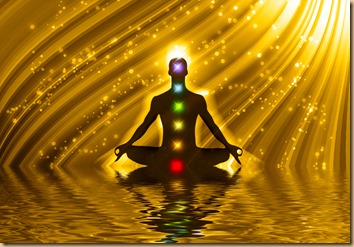
Not that we don’t love what we are doing, but twenty weeks, non stop, would be a pretty tall order.

Although we still have plenty to get on with, and there are assignments due when we get back after Easter, we have a little time to sit back and take stock. Daisaku Ikeda has this useful advice, and it’s not just for teachers …

Do not compare yourselves to others. Be true to who you are and continue to learn with all your might. Even if you are ridiculed, even if you suffer disappointments and setbacks, continue to advance and do not be defeated.

Daisaku Ikeda

Inner Communication

Inner CommunicationI hear myself once again having to explain, that unlike almost every other religion, Nichiren Buddhism sees things differently.

Not that I feel I am apologising for that, just that because it is a philosophy for life and living, rather than a religion in the more generally accepted sense, the meaning and purpose of prayer are in my opinion, fundamentally different.

As with all the deity based religions, prayer is a conduit of communication, a method for getting a message, or request heard. However, in Buddhism, prayer is a communication to the inner self, rather than to an external being, and in that respect, it is more about focussing the conscious and sub-conscious on a task or topic at hand.

Prayer in Nichiren Buddhism is an integral part of our daily practice. We say, or think, as three of the prayers are silent, four prayers during Gongyo and these are they:

First Prayer – for the appreciation of life’s protective forces:

I offer appreciation to the Shoten Zenjin, the functions in life and in the environment that serve to protect us, and pray that these protective powers may further be strengthened and enhanced through my practice of the Law.

Second Prayer – for the appreciation for the Gohonzon:

I offer my deepest praise and most sincere gratitude to the Dai-Gohonzon of the Three Great Secret Laws, which was bestowed upon the entire world.

I offer my deepest praise and most sincere gratitude to Nichiren Daishonin, the Buddha of the Latter Day of the Law.

I offer my deepest praise and most sincere gratitude to Nikko Shonin.

I offer sincere gratitude to Nichimoku Shonin.

Third Prayer – for the attainment of kosen-rufu:

I pray that the great desire for kosen-rufu is fulfilled, and that the Soka Gakkai International develops eternally in this endeavour.

I offer my most sincere gratitude to the three founding presidents – Tsunesaburo Makiguchi, Josei Toda and Daisaku Ikeda – for their eternal example of selfless dedication to the propagation of the Law.

Fourth Prayer – personal prayers and prayers for the deceased:

I pray to bring forth Buddhahood from within my life, change my karma and to fulfil my wishes in the present and the future.

* Prayers for specific outcomes are brought to mind here.

I pray for my deceased relatives and for all those who have passed away, particularly for these individuals:

* Here we bring to mind the names of those we particularly wish to remember

I pray for peace throughout the world and for the happiness of all humanity.

I think you can see that the prayers are mainly intended to bring to mind the subjects they contain, rather than being any form of communication with a third party. They focus the mind on the desired effect, and are intended to remind us that we need to make the causes ourselves, for the effects we wish to see.

We remember the dedication and sacrifices that the founding presidents have made in order to keep the faith alive and the efforts they have made in promoting the religion in the past decades. I feel it is important to mention that although the third prayer mentions the development of the Soka Gakkai International, it is more important that the aim of the SGI to promote peace for all on earth, rather than the organisation itself, is the desired outcome.

Personally, during the forth prayer, where we bring to mind specific outcomes, I remind myself of personal goals, self-improvement, human revolution and the like, as well as thinking of others who are struggling with challenges such as ill health, difficult situations and so on.

By bring these things into my consciousness means that I can focus on ways I may resolve my own challenges, or help others resolve theirs. There is no concept of me asking any third party to intervene in the outcome, the responsibility for that is all my own.

In that respect, I find Nichiren Buddhism to be a very empowering philosophy. I am taking responsibility for the events occurring in my life, myself. Whilst this puts the onus squarely on my own shoulders, it also gives me control, rather than handing it to any third party  whatsoever.

Far from being an all-knowing, all-seeing deity, I am, like you, a simple human being. So I make mistakes in the decisions and thoughts, words and deeds I perform each and every day. Because I take full responsibility for all those mistakes, I am free to learn from them, rather than ask forgiveness for them.

Prayers form a large part in that learning process. By purposefully bringing these erroneous issues into my consciousness, I am able to analyse, evaluate and modify my thinking. By doing this as part of my daily regime, I am forced to constantly confront my failings, and that improves my chances to improve and to increase the scope of  my enlightened nature.

So I hope you can see the contrast between Buddhist prayers and those of other theistic religions. Far from being a form of communication between the person praying and his or her god, it is communication between me and my consciousness. Furthermore, because I accept responsibility for everything that happens in my life, I am forced to search for the causes of the effects I am experiencing, rather than asking ‘why is this happening to me?’.

I am tempted to suggest that Nichiren Buddhists do not actually pray at all, in the accepted definition of that word. But although the intended recipient of our prayers could not be more different, the intention behind those prayers can be seen to be very much the same.

Fuelling The Flame

Fuelling The FlameNichiren spoke of earthly desires being used as fuel for the flame of wisdom. Buddhism teaches the converting of personal ambitions and desires, even base ones, into good traits like wisdom through altruistic living.
A Buddhist doctrine that earthly desires are enlightenment indicates that greed, anger (violence) and egocentricism can be transformed into altruistic traits like compassion, trust and nonviolence.

The underlying delusions that drive our desires—including the desire for the development of science and civilizations—can be essentially transformed in a way that changes selfishness into altruism, violence into nonviolence and suspicion into trust.

~ Daisaku Ikeda

Prayer Beads

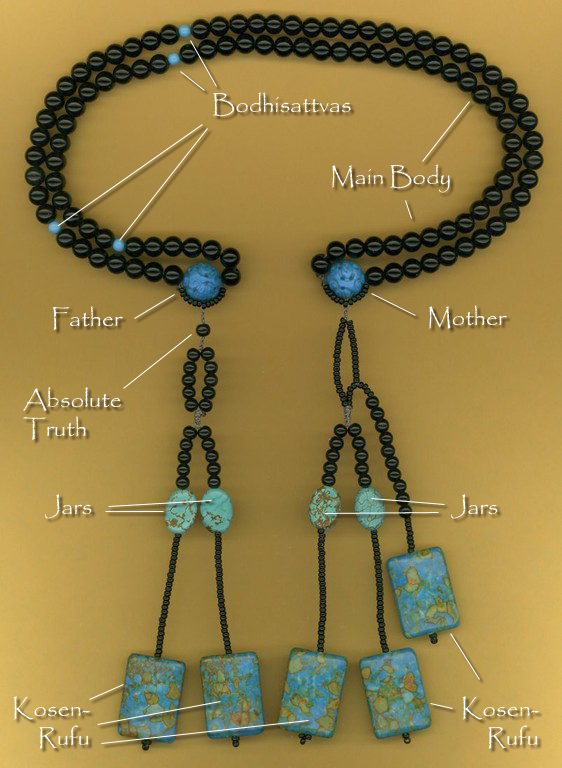
Click for a larger imageIn the practice of Nichiren Buddhism, we hold juzu beads in our hands while reciting Gongyo and chanting Diamoku.

There are 108 beads in the main body, signifying the 108 Earthly Desires.

The 4 smaller beads in the main body represent the 4 Great Bodhisattvas of the Earth … Jogyo, Muhengyo, Jyogyo, and Anryugyo.

The 2 large beads at each end of the main body, are the “parent” beads.  The “mother” bead, representing “mystic” is on the side with 3 dangles, and is placed over the middle finger of the right hand.  The “father” bead, representing “law” is on the side with 2 dangles, and is placed on the middle finger of the left hand.

We cross the beads in the middle, which shows our oneness with THE LAW.  Also, we cross the beads so our benefits do not fall through our hands and lives.  By placing the beads on our hands this way, we are accepting the reality that Buddhahood exists within our lives.

When we press our hands together while we hold our juzu beads, our 10 fingers represent the 10 Worlds which fuse together simultaneously in the life of a Buddha, our lives.  Our life is now one with the Mystic Law!

The one small bead that sits below the “father” bead, represents Absolute Truth.

Prior to Nichiren Buddhism, there were only 2 dangles on each end of juzu beads.  The third dangle, consisting of 10 beads and a “Kosen-Rufu” bead, on the side of the “mother” was added, actually tied on, to signify Nichiren Buddhism and distinguish it from other Buddhist sects.

On the remaining 4 dangles, there is a differently shaped bead part way down each string.  This bead is called the “jar” bead and holds the benefits of our practice.

The 5 larger beads at the bottom of each dangle are the “Kosen-Rufu” beads, and represent our desire to spread Nichiren Buddhism,  Kosen-Rufu, throughout the World.

My huge thanks are due to my lovely friend Lily Rose of Myoho Beads for researching the meanings of the individual beads and for allowing me to use her explanation.

As Lily Rose says on her site, be careful buying juzu beads on line.  Use this description or the juzu purchased in SGI bookstores as a guide.  Make sure the beads you purchase have been created in an ethical and politically correct manner. Sorry to say, but many are not.

If you would like to learn more about chanting, this link will take you to a very informative video produced by SGI.

Sharing the Love

Sharing the LoveThat makes me sound like a ‘60s flower child, doesn’t it? I was a bit too young to really take part in the Swinging Sixties, with their free love, flower power and peace signs. It must have been a very exciting time, so much was happening, in so many ways.
That’s how I feel about my experiences through chanting. The world is a much brighter, more enjoyable place to be and I really want everyone to share in those experiences.

Of course, trying to explain in detail how Nichiren Buddhism can transform your life is not something you can do on the tube or in your local, uninvited. At least not without clearing the carriage, or the snug of the Red Lion, at one fell swoop.

So with my slowly increasing self-awareness and understanding of karma and Buddhist principles, I am chanting more for others than for myself, for their health, wealth and happiness, and am always willing to discuss my practice if people want to hear more.

I like the way this new world of Bodhisattva, well largely new to me, makes me feel, and I have this increasing urge to do things for others, rather than for me. What a wonderful world we would live in, if we all felt the same way.

Made To Measure

Nichiren BuddhismSo many of the World Religions base their beliefs on a God, a Supreme Being, a Creator or an Entity whose existence is the focus of the religion’s belief.

As a confirmed Atheist, that focus never sat comfortably in my psyche. I don’t think anyone really believes in a white haired old man sitting in the clouds these days, but there are millions of people who base their faith on a Being whose existence cannot be proven. In fact, many religions actively seek to dissuade followers from even trying to prove that existence.

I was schooled in the Sciences, Mathematics, Physics, Chemistry and Biology as well as Psychology, and those sciences demand proof for each and every hypothesis. So when I stumbled, and that is the right way to describe it, upon Nichiren Buddhism, I was overjoyed to find that there was no supreme being and that every part of Practice demands we examine the results of that Practice as proof of it’s validity.

Nichiren Daishonin said that we should seek proof of the effectiveness of our Practice in the results it brings. He also says that if the results do not support the practice, that we should desist.

I don’t want anyone to think that I am putting Nichiren Buddhism above or before any other religion, I am only saying that, for me, it fits my thinking and for me, it works. Although I have been practicing for a while now, I am still learning new things all the time, and the results have been amazing, so the proof is there for me and others to see.

Valentine’s Day – The Small Print

ValentinesLoving, and being loved is really great isn’t it? There is little to compare with the feeling one gets from being part of a loving relationship, but there are two types of love, unconditional and conditional.

Unconditional love is about giving without limits, about being happy for the happiness of others. Conditional love, on the other hand, can be painful for both parties. Elements of jealousy, or the need to be loved in order to love, can lead the way to a painful end of the relationship.

Buddhism defines love as an action. It is that force that motivates people to become better, to improve themselves in order to reach eternity and happiness. Love brings out the best in people, as when they love, the target is not themselves but the beloved one. This wish to serve the other is a reflection of an innate knowledge that everyone is connected through the same principle, and therefore, it is an illusion to believe that one can achieve true happiness while those around haven’t attained it . So, love is the action that makes people forego their own ego and concentrate their efforts on the other in a search for fulfilment.

Personally, I have been criticised for suggesting that, if my partner would be happier with someone else, that I would not stand in their path. That feeling, I believe, shows that I love them unconditionally and, arguably, more than someone who wants to control or confine them. It does not mean that I want them to go, just that I want them to be happy, and that my happiness is found through their happiness.

Achieving unconditional love is hard. So many people feel that they need to be loved to be happy. In fact, the most happiness comes from loving another, and the need to be loved is often a sign of insecurity. Loving unconditionally requires a totally unselfish attitude to the other. Being happy when they are happy, being happy for them when they succeed, rather than feeling jealous of their success. Keeping those negative feelings in check requires constant effort, but the happiness gained from so doing is unbounded.

So take a look at your motives next time you tell that special someone that you love them. Will you still love them if that love is not reciprocated? Are you happy for them when they find pleasure in something that is of no interest to you? Would you sacrifice the relationship if that added to their happiness? If the answer to any of those questions is no, then you are not loving unconditionally.

It is not the end of things if you are not, there is always time to change. Loving everyone, in the broadest sense of the word, is a very rewarding way to lead your life. Being concerned for the happiness of someone who clearly has no time for you is tough. Going the extra mile to ensure that the happiness of another at the expense of yourself is not necessarily a natural thing to do, but the rewards for doing so are great indeed.

So next time you say ‘I love you’ to someone, try mentally tagging on ‘no matter what’ to that phrase and see how that makes you feel inside. If you can honestly say that it makes no difference to you saying it, then you have reached the state of unconditional love and that will reward you every time you say it.

Previous Older Entries Next Newer Entries