Happy Birthday Dad

DadToday would have been my Dad’s 87th birthday.

This photograph of him hangs on the wall next to my desk at home, and I look at it often and remember him with great fondness and love.

He wasn’t a religious man, only going to church for weddings and the like, though he always supported my Mom in her church activities.

As a boy, I remember him as always being at work. Back then, it was quite common for people to work on Saturdays too, and as a printer, he was always busy.

My Mom was definitely his Honzon. If ever she went away for the day, she would leave him a packed lunch, an apple cut into quarters and maybe a cheese sandwich, just to make sure he ate something. He was a bit lost whenever she wasn’t around.

His one big love in life, apart from his family, was printing. Our house was always full of books and paper and print samples, and if he was ever given a book as a present, he was far more interested in who had printed it than what it was about.

In later years, he had a passion for free pistol shooting, he kept meticulous sets of figures of his scores, and used to compile the tables of scores for the club to which he belonged. He was very angry when the Government brought in stricter gun laws, and he was unable to keep his much cherished guns. He always felt that they were punishing the innocent, for the sins of the guilty.

Sadly he spent the last couple of years of his life in the World of Tranquillity. He had a heart condition that meant he didn’t have the life-energy to get out and do very much. He still read quite a lot and watched sport on TV, but he slept a lot more.

You were a great Dad, and, in your own quiet way, a great man. You were Wise, Courageous and Compassionate in so many ways, though maybe I didn’t always appreciate it at the time. I pray for you every morning and evening during Gongyo, and although I know you are back here with us somewhere, I miss you a great deal.

Happy Birthday Dad.

Nam Myoho Renge Kyo

The Meaning Of NMRK

Nam Myoho Renge KyoEvery day, twice a day, I chant Nam Myoho Renge Kyo. You see it on the headline banner of my blog and I mention it often. I thought it would be beneficial for me to revisit the meaning and I would like to share it with you. This explanation and definition comes from the Sokka Gakkai Dictionary of Buddhism.

[南無妙法蓮華経] Nam-myoho-renge-kyo

The ultimate Law or truth of the universe, according to Nichiren’s teaching. Nichiren first taught the invocation of Nam-myoho-renge-kyo to a small group of people at Seicho-ji temple in his native province of Awa, Japan, on the twenty-eighth day of the fourth month in 1253. It literally means devotion to Myoho-renge-kyo. Myoho-renge-kyo is the Japanese title of the Lotus Sutra, which Nichiren regards as the sutra’s essence, and appending nam (a phonetic change of namu ) to that phrase indicates devotion to the title and essence of the Lotus Sutra. Nichiren identifies it with the universal Law or principle implicit in the meaning of the sutra’s text.

The meaning of Nam-myoho-renge-kyo is explained in the opening section of The Record of the Orally Transmitted Teachings, the record of Nichiren’s lectures on the Lotus Sutra compiled by his disciple and successor, Nikko. It states that namu derives from the Sanskrit word namas and is translated as devotion, or as “dedicating one’s life.” What one should dedicate one’s life to, he says, are the Person and the Law. The Person signifies “Shakyamuni,” which means the eternal Buddha, and the Law is “the Lotus Sutra,” which means the ultimate truth, or Myoho-renge-kyo. According to Orally Transmitted Teachings, the act of devotion (namu) has two aspects: One is to devote oneself to, or fuse one’s life with, the eternal and unchanging truth; the other is that, through this fusion of one’s life with the ultimate truth, one simultaneously draws forth inexhaustible wisdom that functions in accordance with changing circumstances.

Orally Transmitted Teachings further states: “We may also note that the nam of Nam-myoho-renge-kyo is a Sanskrit word, while Myoho-renge-kyo are Chinese words. Sanskrit and Chinese join in a single moment to form Nam-myoho-renge-kyo. If we express the title [of the Lotus Sutra] in Sanskrit, it will be Saddharma-pundarika-sutra. This is Myoho-renge-kyo. Sad (a phonetic change of sat ) means myo, or wonderful. Dharma means ho, Law or phenomena. Pundarika means renge, or lotus blossom. Sutra means kyo, or sutra. The nine Chinese characters [that represent the Sanskrit title] are the Buddha bodies of the nine honoured ones. This expresses the idea that the nine worlds are none other than the Buddha world.”

Myo stands for the Dharma nature, or enlightenment, while ho represents darkness, or ignorance. Together as myoho, they express the idea that ignorance and the Dharma nature are a single entity, or one in essence. Renge stands for the two elements of cause and effect. Cause and effect are also a single entity.”

Kyo represents the words and voices of all living beings. A commentary says, ‘The voice carries out the work of the Buddha, and it is called kyo.’ Kyo may also be defined as that which is constant and unchanging in the three existences of past, present, and future. The Dharma realm is myoho, the wonderful Law; the Dharma realm is renge, the lotus blossom; the Dharma realm is kyo, the sutra.”

As Nichiren states, namu derives from Sanskrit, and Myoho-renge-kyo comes from Chinese. Nam-myoho-renge-kyo is, therefore, not simply a Japanese phrase, but a Japanese reading of a Sanskrit and Chinese phrase. In this sense, it contains aspects of the languages of three countries in which Mahayana Buddhism spread. According to Nichiren’s treatise The Entity of the Mystic Law, Nan-yüeh and T’ient’ai of China and Dengyoof Japan recited the invocation meaning devotion to the Lotus Sutra of the Wonderful Law, or Nam-myoho-renge-kyo, as their private practice, but they did not spread this practice to others.

In On the Three Great Secret Laws, Nichiren states that the daimoku Nichiren chants today in the Latter Day of the Law is different from that of the previous ages—the daimoku T’ient’ai and others chanted in the Former Day and Middle Day of the Law—because the practice of daimoku in the Latter Day of the Law involves chanting it oneself and teaching others to do so as well. Nichiren not only established the invocation (daimoku) of Nam-myoho-renge-kyo but embodied it as a mandala, making it the object of devotion called Gohonzon. In Reply to Kyo’o, he states, “I, Nichiren, have inscribed my life in sumi ink, so believe in the Gohonzon with your whole heart. The Buddha’s will is the Lotus Sutra, but the soul of Nichiren is nothing other than Nam-myoho-renge-kyo” (412).

Chant If You Want To Go Faster

Life is a rollercoasterLife is a rollercoaster at the best of times, so the ups and downs shouldn’t be a surprise. But just like a real rollercoaster, they can still make you scream at times.

Like finding you have a flat back bike tyre, just when you were planning to take yourself out for a quiet evening ride.

In this case I needed my puncture repair kit and a couple of tyre levers, but generally when I am looking for answers, or need to know the path I need to take, I chant, as you might expect. Often the answers come quite quickly, so the fact that this particular question is taking it’s time about offering up a solution must mean that I need to focus more and Chant, Chant, Chant.

The important thing to remember, is that only you can provide the answers to your questions, no one else can decide for you. Only your heart holds the key to unlock the path you must take, and only Nam Myoho Renge Kyo can turn that key.

How It Looks From Here

The Pole In The RiverWe all have a mental view of where we are going in life, what we would like our future to look like, a set of challenges that we must face if we are to achieve our goal. Each day, maybe even each second of each day, that view changes, usually just a little, sometimes quite a lot.

In a way, we can look at this from the view of a swimmer who is trying to swim against the flow of a river or a tide. He or she can swim at a constant pace, from their own viewpoint, a set number of strokes per minute, but their progress, from the viewpoint of an observer on the bank or the shore may be anything but constant.

It all depends on the strength of the current. If the current is flowing slower than the swimmer, the swimmer moves forward, if it is flowing faster than the swimmer, the swimmer moves backwards. Unsurprisingly, if the two are the same, the swimmer stays in exactly the same place.

Now we know that rivers and tides change, hourly, daily, in fact all the time. In order for the swimmer to know how fast to swim in order to make his or her desired progress they need to have a constant unchanging point on which to focus, a pole in the river, or a landmark on the shore, a point against which they can measure that progress.

Our situation in life changes in a similar way, so when we are striving towards our goals, we may think we are ‘swimming’ fast enough, think that we are making progress, when in fact, from another viewpoint, we are going nowhere, or even going backwards.

So what can we use as our ‘pole in the river’, our landmark by which we can measure our progress? Something that is constant, no matter what else changes around us. The answer, for me at least, is my practice. It is unchanging, it is strong and resilient and is always in the same place, no matter what else may be going on around me.

My practice gives me a great view of my progress. No matter what the challenge, when I chant Nam Myoho Renge Kyo, my perspective on things is focussed on a wider view of the situation rather than just my own viewpoint. So I know whether I am ‘swimming’ fast enough to reach my goal, or whether I need to put in more effort to achieve my aims.

Problems Or Challenges?

Nam-Myoho-Renge-KyoLife is punctuated by a series of  problems and challenges, but what is the real difference between them? Generally speaking we call situations we can deal with, challenges, and those we fear we cannot deal with, problems. But actually, the difference is in our own heads and depends more on our life-state at the time the situation arises.

If we are in a higher life-state, we look upon the situation as a challenge. We concentrate our energies to resolving the situation and pride ourselves that we rose to the challenge. If, on the other hand, we are depressed and in a lower life-state, we tend to get further depressed by the situation, our life-energies are reduced and the problem, as we now call it, becomes insurmountable.

So the question is, how do we keep our life-energy, and hence our life-state, as high as possible in order to enable us to confront situations with confidence. That’s where chanting comes in. When I chant Nam Myoho Renge Kyo, I can feel my life-energy increasing.

The more I chant, the louder I chant, the higher my life-state rises, so when situations arise, as they always will, I am in a better position to deal with them. It works for me, and it works for millions of people across the world, so why not give it a go and see whether it will work for you, I’m sure it will.

Nam Myoho Renge Kyo

A Little Further Along The Road

Buddhist PracticeMy Buddhist Practice has become, over the years, my way of life. The routine of chanting Nam Myoho Renge Kyo and of prayer, that I go through every day, a routine that also involves me writing this blog. But routine is also another word for boring, mundane or even hum-drum, so it’s important to keep in mind why we Practice.
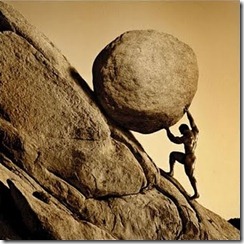
We Practice for several reasons …

  • To give a stable anchor to our lives …

  • To raise our life-energy levels …

  • To chant for certain outcomes …

  • To move us along the road towards Buddhahood …

and there are many others, often different for every individual.

As a mere novice, I find that I can learn a little more each day Let’s face it, Buddhism has been around for well over two thousand years, so there’s plenty to learn about. I can improve or seek to perfect my Practice and to maintain a more focussed attention to the subject of my chanting. I look forward to the feeling I get during and after Gongyo. I often find that I am quite warm when I finish chanting and in a really good mood, despite any problems I am facing.

I never cease to be amazed by the effectiveness of chanting either. To start with, the word coincidence came into my mind to explain the results I saw, but not any more. But I do get surprised by the way the Universe solves the problems with which I have asked it to help. Not always the way I expected, and often in better, more subtle ways than I could have ever imagined.

So my Practice is a pleasure, not a chore. It’s something I enjoy and never something I feel I have to do. As Nichiren Daishonin said, ‘If you practice something, you must test it’s validity with the results you see’. In other words, if it doesn’t work, stop doing it. For me, it is still working wonders almost daily, and I truly believe the World would be a better place if more people were to discover those wonders.

Never, Ever Give Up

DeterminationRecently, we talked about the fact that we only lose when we decide we have lost. Having the courage, patience and determination to press on, even when all the signs are telling you to stop, to give in, to cut and run, can allow amazing unexpected results to occur.

Remaining calm, collected, objective and compassionate, even when the circumstances may be urging you on in other directions, is a feature of our nature that requires time, patience and practice.

I don’t think it is simply a coincidence that practice, meaning repeating a task or skill to improve your proficiency, and Buddhist practice, use the same word. As Gary Player, the famous golfer once said of his game, ‘the more I practice, the luckier I get’. Luck has nothing to do with it of course, and he, and we, know it.

So if you find the odds stacked against you, start getting disheartened by the way events seem to be going, you must believe in yourself and your practice. You might be surprised by what actually happens. So apply for that job, write that email or make that phone call, what have you got to lose?

Goal Setting

Goal SettingSo many of us strive for a personal goal, something that we believe will make us happy. That may be money, status, property, love or anything else you would like to cite.
Often however, we fail in our efforts because we focus on the wrong aspect en-route, but Kyo Chi Gyo I can help put that right.

No it’s not another chant like Nam Myoho Renge Kyo. Kyo Chi Gyo I (pronounced keyo chee geyo ee) is a tried and trusted method for achieving anything your heart desires. Let’s find out what each part means …

Kyo – the goal you wish to achieve.

Chi – is the wisdom needed to reach that goal.

Gyo – is the action you need to take to reach the goal.

I – the status you will attain when the goal is reached.

So having set Kyo (our goal) firmly in our heart, we chant for Chi, the wisdom to achieve our goal. Of course, this wisdom doesn’t simply appear, we have to get ourselves into a learning life-state and use every avenue to gather that wisdom. Once the wisdom has been attained we can use it to guide our actions (Gyo).

The trick is to concentrate on Kyo at all times. So many people fail to achieve their desired status because they take their eye off Kyo, their goal.

The rational behind this is that by focussing on your goal, you concentrate on something concrete. Your status, I, is about you and is not a physical entity, making it an ethereal target and your task that much more difficult.

Let’s give you real world example …

It’s the last minute of the F.A. Cup Final, it’s 1-1, but to add to the excitement, one team has just been awarded a penalty. A single player has been given the ball and is going to take the penalty.

In this example Kyo is successfully converting the penalty, Chi is the skill needed to kick the ball accurately and maybe knowing which way the keeper tends to dive. Gyo is accurately kicking the ball, in the desired direction with enough force to beat the keeper, and I is being remembered as the player who scored the winning goal in the Cup final.

Let’s assume that the player is the regular penalty taker for his team, and that he’s really good at scoring from them. He has practiced for hours, kicking the ball exactly where he wants it to go and disguising his intentions from the keeper, so his Chi is near perfect. He may have taken dozens of penalty kicks during his playing career, so he has the correct action, Gyo, also well defined.

If he concentrates on Kyo, scoring the goal, he has a very good chance of success. If, however, he lets I, his status, control his thoughts, he has a much greater chance of missing.

So it’s all about reaching your goal, Kyo. Your task is to hone your Chi and Gyo along the way. Your status, I, whatever that may be, will look after itself as soon as achieve your goal.

The Key To Success, That’s Ichinen

The Key To SuccessBeing a success or good at something isn’t just about talent, it’s about having the desire, in your heart, to make it happen. Ichinen is a Japanese word meaning determination (amongst other things). If you have a strong Ichinen, you are far more likely to reach your goal. You still have to put in the effort and in fact, the more talent you have, the more effort is needed, because your end result might be far more exacting than a less talented person.
If you think you will fail, you will fail. You must embrace your goals, your targets, with every fibre of your being. Strive with all your might, night and day towards that goal and you are far more likely to succeed. And actually, only you decide when you have failed, when you give up trying.

ichinen

[一念] (Jpn; Chin i-nien )

A single moment of life, one instant of thought, or the mind or life at a single moment. Also, life-moment, thought-moment, or simply a single moment or instant. Ichinen has various meanings in Buddhism: (1) A moment, or an extremely short period comparable to the Sanskrit term kshana. The Treatise on the Great Perfection of Wisdom defines one kshana or moment as a sixtieth of the time it takes to snap one’s fingers. (2) The functioning of the mind for one moment. The “Distinctions in Benefits” (seventeenth) chapter of the Lotus Sutra speaks of a single moment of belief and understanding. (3) To focus one’s mind on meditating on a Buddha; Shan-tao (613-681), a patriarch of the Chinese Pure Land school, defined ichinen (one instant of thought) as chanting Amida Buddha’s name once. (4) T’ient’ai (538-597) philosophically interprets ichinen in his doctrine of three thousand realms in a single moment of life ( Jpn ichinensanze Chin i-nien san-ch’ien ). In this doctrine, ichinen indicates the mind of an ordinary person, which at each moment is endowed with the potential of three thousand realms; its characteristics are: (a) it pervades the entire universe; (b) it includes both body and mind; (c) it includes both self and environment; (d) it gives rise to good and evil; and (e) it encom-passes cause and effect simultaneously. Nichiren (1222-1282) embodied this philosophical framework in the form of a mandala known as the Gohonzon. By this he aimed to establish a practical way for ordinary people to manifest Buddhahood from among the Ten Worlds of their own lives. SGI Dictionary

Being good or a success at something isn’t just about talent, it’s about having the desire, in your heart, to make it happen.

If you have a strong Ichinen, you are far more likely to reach your goal. You still have to put in the effort and in fact, the more talent you have, the more effort is needed, because your end result might be far more exacting than a less talented person.

If you think you will fail, you will. You must embrace your goals, your targets, with every fibre of your being. Strive with all your might, night and day towards that goal and you are far more likely to succeed.

Success takes focus, desire, effort, hard work, determination and perseverance.

Ichinen covers them all and chanting for what you want to achieve makes your ichinen stronger and stronger.

Ke, Ku And Chu – The Middle Way

This Way, That Way, The Middle WayWe are all aware that life is made up of two components, the physical (ke or ketai) and the spiritual (ku or kutai).

They are separate, but joined, two, but not two (shikishin funi) and cannot exist one without the other.

The body or physical aspect becomes useless without the mind, or spiritual aspect, and the mind is helpless without the body.

The mind however, can continue to function without the body, when we sleep for example. We have all experienced dreams where we perform feats that would be totally impossible in the physical world, like being able to fly.

So we have two rather different components, maybe working in a way that is not necessarily harmonious, until chu (or chutai) takes control.

Chu is the harmonisation of ke and ku. It controls each aspect, making sure one or the other doesn’t drag us off course. This is known as The Middle Way (chudo).

Previous Older Entries Next Newer Entries