
Inner Communication

Inner CommunicationI hear myself once again having to explain, that unlike almost every other religion, Nichiren Buddhism sees things differently.

Not that I feel I am apologising for that, just that because it is a philosophy for life and living, rather than a religion in the more generally accepted sense, the meaning and purpose of prayer are in my opinion, fundamentally different.

As with all the deity based religions, prayer is a conduit of communication, a method for getting a message, or request heard. However, in Buddhism, prayer is a communication to the inner self, rather than to an external being, and in that respect, it is more about focussing the conscious and sub-conscious on a task or topic at hand.

Prayer in Nichiren Buddhism is an integral part of our daily practice. We say, or think, as three of the prayers are silent, four prayers during Gongyo and these are they:

First Prayer – for the appreciation of life’s protective forces:

I offer appreciation to the Shoten Zenjin, the functions in life and in the environment that serve to protect us, and pray that these protective powers may further be strengthened and enhanced through my practice of the Law.

Second Prayer – for the appreciation for the Gohonzon:

I offer my deepest praise and most sincere gratitude to the Dai-Gohonzon of the Three Great Secret Laws, which was bestowed upon the entire world.

I offer my deepest praise and most sincere gratitude to Nichiren Daishonin, the Buddha of the Latter Day of the Law.

I offer my deepest praise and most sincere gratitude to Nikko Shonin.

I offer sincere gratitude to Nichimoku Shonin.

Third Prayer – for the attainment of kosen-rufu:

I pray that the great desire for kosen-rufu is fulfilled, and that the Soka Gakkai International develops eternally in this endeavour.

I offer my most sincere gratitude to the three founding presidents – Tsunesaburo Makiguchi, Josei Toda and Daisaku Ikeda – for their eternal example of selfless dedication to the propagation of the Law.

Fourth Prayer – personal prayers and prayers for the deceased:

I pray to bring forth Buddhahood from within my life, change my karma and to fulfil my wishes in the present and the future.

* Prayers for specific outcomes are brought to mind here.

I pray for my deceased relatives and for all those who have passed away, particularly for these individuals:

* Here we bring to mind the names of those we particularly wish to remember

I pray for peace throughout the world and for the happiness of all humanity.

I think you can see that the prayers are mainly intended to bring to mind the subjects they contain, rather than being any form of communication with a third party. They focus the mind on the desired effect, and are intended to remind us that we need to make the causes ourselves, for the effects we wish to see.

We remember the dedication and sacrifices that the founding presidents have made in order to keep the faith alive and the efforts they have made in promoting the religion in the past decades. I feel it is important to mention that although the third prayer mentions the development of the Soka Gakkai International, it is more important that the aim of the SGI to promote peace for all on earth, rather than the organisation itself, is the desired outcome.

Personally, during the forth prayer, where we bring to mind specific outcomes, I remind myself of personal goals, self-improvement, human revolution and the like, as well as thinking of others who are struggling with challenges such as ill health, difficult situations and so on.

By bring these things into my consciousness means that I can focus on ways I may resolve my own challenges, or help others resolve theirs. There is no concept of me asking any third party to intervene in the outcome, the responsibility for that is all my own.

In that respect, I find Nichiren Buddhism to be a very empowering philosophy. I am taking responsibility for the events occurring in my life, myself. Whilst this puts the onus squarely on my own shoulders, it also gives me control, rather than handing it to any third party  whatsoever.

Far from being an all-knowing, all-seeing deity, I am, like you, a simple human being. So I make mistakes in the decisions and thoughts, words and deeds I perform each and every day. Because I take full responsibility for all those mistakes, I am free to learn from them, rather than ask forgiveness for them.

Prayers form a large part in that learning process. By purposefully bringing these erroneous issues into my consciousness, I am able to analyse, evaluate and modify my thinking. By doing this as part of my daily regime, I am forced to constantly confront my failings, and that improves my chances to improve and to increase the scope of  my enlightened nature.

So I hope you can see the contrast between Buddhist prayers and those of other theistic religions. Far from being a form of communication between the person praying and his or her god, it is communication between me and my consciousness. Furthermore, because I accept responsibility for everything that happens in my life, I am forced to search for the causes of the effects I am experiencing, rather than asking ‘why is this happening to me?’.

I am tempted to suggest that Nichiren Buddhists do not actually pray at all, in the accepted definition of that word. But although the intended recipient of our prayers could not be more different, the intention behind those prayers can be seen to be very much the same.

Beauty And Buddhahood

Hengistbury HeadI’ve been out cycling this weekend, surrounded by beautiful nature and in the soft spring sunshine, just wonderful.

All thoughts fade away, as you lose yourself in the surroundings, so here is a snippet of wisdom from Nichiren Daishonin, about letting go of worldly desires…

Now, if you wish to attain Buddhahood, you have only to lower the banner of your arrogance, cast aside the staff of your anger, and devote yourself exclusively to the one vehicle of the Lotus Sutra. Worldly fame and profit are mere baubles of your present existence, and arrogance and prejudice are ties that will fetter you in a next one.

~ Nichiren Daishonin

Ideas & Ideals

BuddhahoodI can think of several people who would do well to listen to the following advice …
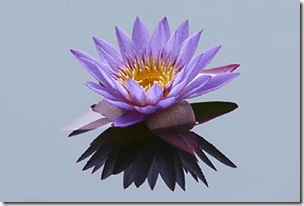
If you wish to attain Buddhahood, you have only to lower the banner of your arrogance, cast aside the staff of your anger, and devote yourself exclusively to the one vehicle of the Lotus Sutra.

Worldly fame and profit are mere baubles of your present existence, and arrogance and prejudice are ties that will fetter you in a next one.

~ Nichiren Daishonin

Green Energy

The Ultimate Renewable Green EnergyWhen we practice gongyo and chant daimoku before the Gohonzon, the good and evil capacities of our lives begin to function as the exalted form of fundamental existence.

Lives that are full of the pain of Hell, lives that are in the world of Hunger, lives warped by the world of Anger – such lives too begin to move in the direction of creating their own personal happiness and value.

Lives being pulled toward misfortune and unhappiness are redirected and pulled in the opposite direction, toward fortune and happiness, when we make the Mystic Law our base.

Chant daimoku with all your heart, chant whenever you feel downcast, whenever you feel listless or lacking in focus.

Chanting daimoku connects us directly to chi, the Universal energy, the ultimate renewable green energy, so chant and raise your life-state, your life-energy and put your life back on track.

Nam Myoho Renge Kyo

No Man Is An Island

The Lotus SutraWhen we are feeling unwell, or the challenges of everyday life are coming thick and fast, it is all too easy to concentrate on ourselves, forgetting about those around us.
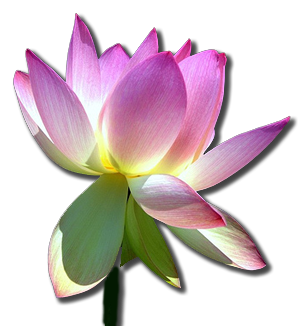
To stop this happening takes mindfulness and courage, as noted by Sensei in Daily Encouragement.

Buddhism is not about leading a self-centred existence. If we do not base our lives on the Law, we are not practicing Buddhism.

The German writer Friedrich von Schiller writes, “The brave man thinks upon himself the last.”

This is analogous to the spirit of not begrudging one’s life taught in the Lotus Sutra.

This means treasuring the Law more highly than one’s life.

The Law and kosen-rufu are central.

The old adage that ‘No Man is an island’ is very true. It is our family, friends and those we meet each day in our communities, who make our lives meaningful, and it is The Law that shows us the way we are to conduct ourselves and how we should relate to them.

Use A Touch Of WCC … Please

The Lotus SutraListening to reports of the Syrian negotiations and upcoming elections in Egypt this morning, I was reminded of the wisdom encapsulated in the Lotus Sutra. Generally regarded as Siddhārtha Gautama’s greatest teaching, it forms the basic structure for all forms of Buddhist practice.
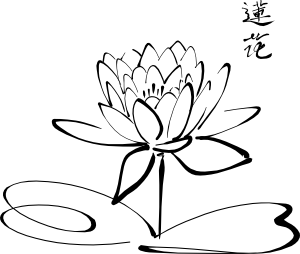
The Lotus Sutra has the drama of fighting for justice against evil. It has the warmth that comforts the weary. It has a vibrant pulsing courage that drives away fear. It has a chorus of joy at attaining absolute freedom throughout past, present and future. It has the soaring flight of liberty.

It has brilliant light, flowers, greenery, music, paintings and vivid stories. It offers unsurpassed lessons on psychology, the workings of the human heart, lessons on happiness and lessons on peace. It maps out the basic rules for good health. But more than all of these, it awakens us to the universal truth that a change in our heart can transform everything.

I am praying and chanting for peaceful resolutions of the situation in both Egypt and Syria. It is my hope that a little of the Wisdom, Courage and Compassion contained in the Lotus Sutra might find its way into the negotiations in both situations.

The Joy Of Life

The Lotus SutraWe only have to watch the news on TV, listen to the radio, or even simply talk to the people around us, to be aware of the challenges and sadness that can accompany the process of living our daily lives.
Buddhism has at it’s very core, the ultimate goal of removing suffering and promoting a state of happiness in all those with whom it comes in contact. Many may think that this is an unachievable target, and that those who strive towards it are deluded.

But the principles and method for attaining such a state are encompassed by teachings contained in The Lotus Sutra. That is not to say that there is any magic bullet or instant fix to alleviate our suffering, but striving to do so is surely a task worth undertaking.

Daisaku Ikeda summarised it thus:

What is true joy in life?

This is a difficult question – and one that has occupied a great many thinkers and philosophers.

Joy can quickly give way to suffering. Joy is short and suffering long.

Also what passes for joy in society is superficial. It cannot compare with the joy derived from the Mystic Law.

The key then lies in cultivating a state of mind where we can declare without reservation that life is a joy.

This is the purpose of our Buddhist Practice.

Nam Myoho Renge Kyo.

It All Happens By Chants

The Lotus SutraBeing a Buddhist in Western society makes you a ‘bit different’, and the curious like to ask questions about the philosophy.
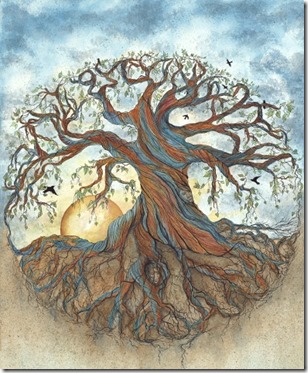
After the initial question “do you chant?” we are then asked “what do you chant?” followed closely by “for how long do you chant?” and then almost certainly “what does it mean?”.

After a little practice, no pun intended, most people can master the phrase Nam-myoho-renge-kyo, but explaining why we chant it, what it means, and how it works may take a little longer.

Here is how the SGI website describes the meaning of the individual parts …

Nichiren Daishonin established the chanting of Nam-myoho-renge-kyo as the way to awaken one’s Buddha nature and tap into the deepest levels of our existence, on which our own lives and that of the universe are one. He first taught the invocation of the phrase to a small group at Seicho-ji temple in Awa province, Japan, on April 28, 1253.

Myoho-renge-kyo is the name of the Lotus Sutra in Japanese pronunciation of classical Chinese characters, and so the literal meaning of Nam-myoho-renge-kyo is “I devote myself to the Lotus Sutra.” As the following explanation shows, there are deeper levels of meaning attached to each element of the phrase.

Nam

Nam derives from the Sanskrit word namu, meaning “to devote oneself.” Nichiren established the practice of chanting Nam-myoho-renge-kyo as a means to enable all people to put their lives in harmony or rhythm with the law of life, or Dharma. In the original Sanskrit, namu indicates the elements of action and attitude, and refers therefore to the correct action one needs to take and the attitude one needs to develop in order to attain Buddhahood in this lifetime.

Myoho

Myoho literally means the Mystic Law–the underlying truth or principle which governs the mysterious workings of the universe and our life from moment to moment. Myo refers to the very essence of life, which is “invisible” and beyond intellectual understanding. This essence always expresses itself in a tangible form (ho) that can be apprehended by the senses. Phenomena (ho) are changeable, but pervading all such phenomena is a constant reality known as myo. Myo also means to open, to revive, and to be fully endowed with the qualities we need to develop our lives.

Renge

Renge means lotus flower. The lotus blooms and produces seeds at the same time, and thus represents the simultaneity of cause and effect. The circumstances and quality of our individual lives are determined by the causes and effects, both good and bad, that we accumulate (through our thoughts, words and actions) at each moment. This is called our “karma.” The law of cause and effect affirms that we each have personal responsibility for our own destiny. We create our destiny and we have the power to change it. The most powerful positive cause we can make is to chant Nam-myoho-renge-kyo; the effect of Buddhahood is simultaneously created in the depths of our life and will definitely manifest in time.

The lotus flower grows and blooms in a muddy pond, and yet remains pristine and free from any defilement, symbolizing the emergence of Buddhahood from within the life of an ordinary person in the midst of the struggles of day-to-day existence.

Kyo

Kyo literally means sutra, the voice or teaching of a Buddha. In this sense, it also means sound, rhythm or vibration. In a broad sense, kyo conveys the concept that all things in the universe are a manifestation of the Mystic Law.

Further explanation of the meaning of Nam-myoho-renge-kyo can be found here.

Back To The Very Basics

The Bodhi TreeEach day, at least twice a day, I chant Nam Myoho Renge Kyo. It is this phrase that encapsulates the very essence of The Lotus Sutra, which itself contains the teachings of Shakyamuni Buddha as refined during his time sitting under the Bodhi tree.

So much philosophy, encompassed in a single phrase, requires some explanation.

The teachings of Shakyamuni, the historical founder of Buddhism, are recorded in an enormous body of texts, known as sutras. The manner in which the philosophy of Buddhism is presented within the sutras varies widely.

This can be explained by a number of factors. During the 50 odd years over which Shakyamuni shared his teachings with the people of his day, he travelled widely throughout India.

Rather than expounding his philosophy in a systematic manner, his teaching mainly took the form of dialogue. Meeting with people from a wide range of backgrounds–from ministers of state to unlettered men and women–he sought to respond to their questions and doubts. Most of all, he sought to provide answers to the fundamental questions of human existence: Why is it that we are born and must meet the inevitable sufferings of illness, aging and death?

The sutras were compiled in the years following the death of Shakyamuni; it is thought that the Lotus Sutra was compiled between the first and second century C.E. In Sanskrit it is known as the Saddharmapundarika-sutra (lit. “correct dharma white lotus sutra”). Like many Mahayana sutras, the Lotus Sutra spread through the “northern transmission” to Central Asia, China, Korea and Japan.

Originally entering China in the third century C.E., the Lotus Sutra is said to have been translated into several different versions of the Chinese, of which three complete versions are extant. The fifth-century translation of Kumarajiva (344-413 C.E.) is considered to be particularly outstanding; its philosophical clarity and literary beauty are thought to have played a role in the widespread veneration of this sutra throughout East Asia.

The title of the Lotus Sutra in Kumarajiva’s translation, Myoho-renge-kyo, contains the essence of the entire sutra, and it was on the basis of this realization that Nichiren (1222-1282 C.E.) established the invocation of Nam-myoho-renge-kyo as his core Buddhist practice.

The Lotus Sutra is considered the sutra that fulfils the purpose for Shakyamuni’s advent in the world, expressed in these words: “At the start I took a vow, hoping to make all persons equal to me, without any distinction between us.” In other words, the purpose of Shakyamuni’s advent was to enable all people to attain the same state of perfect enlightenment that caused him to be known as “Buddha,” or “awakened one.”

The Lotus Sutra contains a number of concepts that were revolutionary both within the context of Buddhist teachings and within the broader social context of the time. Many of these are not stated explicitly but are implied or materialized in the dramatic and even fantastic-seeming events portrayed in the text. Much of the genius of later scholars of the sutra, such as T’ien-t’ai (538-597 C.E.), lay in their ability to extract and systematize these principles.

A core theme of the sutra is the idea that all people equally and without exception possess the “Buddha nature.” The message of the Lotus Sutra is to encourage people’s faith in their own Buddha nature, their own inherent capacity for wisdom, courage and compassion. The universal capacity for enlightenment is demonstrated through the examples of people for whom this possibility had traditionally been denied, such as women and people who had committed evil deeds.

In many sutras a number of Shakyamuni’s senior disciples are condemned as people who have, through arrogant attachment to their intellectual abilities and their self-absorbed practice, “scorched the seeds of their own enlightenment.” The profundity of Shakyamuni’s teachings in the Lotus Sutra, however, awakens in them the spirit of humility and compassion. They realize that all people are inextricably interlinked in their quest for enlightenment, and that if we desire happiness ourselves, it is imperative that we work for the happiness of others.

In this sutra, moreover, Shakyamuni demonstrates that he actually attained enlightenment in the infinite past, not in his current lifetime as had been assumed by his followers. This illustrates, through the concrete example of his own life, that attaining enlightenment does not mean to change into or become something one is not. Rather, it means to reveal the inherent, “natural” state that already exists within.

As President Daisaku Ikeda has said, “The Lotus Sutra is ultimately a teaching of empowerment. It teaches us that the inner determination of an individual can transform everything; it gives ultimate expression to the infinite potential and dignity inherent in each human life.”

Ideals and Images

I’ve been out cycling, surrounded by beautiful nature all day, just wonderful, so here is a snippet of wisdom from Nichiren Daishonin, about letting go of worldly desires, and a couple of images from the ride …

New Forest Heathland Panorama

Now, if you wish to attain Buddhahood, you have only to lower the banner of your arrogance, cast aside the staff of your anger, and devote yourself exclusively to the one vehicle of the Lotus Sutra. Worldly fame and profit are mere baubles of your present existence, and arrogance and prejudice are ties that will fetter you in a next one.

~ Nichiren Daishonin

Beach Huts at Hengistbury Head

Previous Older Entries Next Newer Entries