True Freedom

True Freedom

Being able to allow ourselves or another to be free enough to reach full potential takes courage. But to take any other path would be to stifle that potential and act in a cowardly and selfish manner.

Nichiren writes: “Myoho-renge-kyo is the Buddha nature of all living beings…. The Buddha nature that all these beings possess is called by the name Myoho-renge-kyo” (wnd, 131). Regarding how to manifest one’s innate Buddha nature, Nichiren explains: “When we revere Myoho-renge-kyo inherent in our own life as the object of devotion, the Buddha nature within us is summoned forth and manifested by our chanting of Nam-myoho-renge-kyo. This is what is meant by ‘Buddha.’ To illustrate, when a caged bird sings, birds who are flying in the sky are thereby summoned and gather around, and when the birds flying in the sky gather around, the bird in the cage strives to get out. When with our mouths we chant the Mystic Law, our Buddha nature, being summoned, will invariably emerge” (wnd, 887).

In Nichiren’s metaphor, our innate Buddha nature, whose name is Nam myoho renge kyo, is a bird trapped in the cage of ignorance. In other words, our deluded minds create this cage that imprisons our Buddha nature. But when we chant Nam myoho renge kyo to the Gohonzon, which expresses Nichiren’s enlightened life and the potential of all people, our dormant Buddha nature becomes activated.

The singing of the caged bird is our chanting, and the birds flying in the sky are the Buddha nature in our environment, particularly as it is expressed in the Gohonzon. Through our chanting, the Buddha nature within our lives and the Buddha nature inherent in the universe begin their dynamic interaction.

For Nichiren’s metaphor to work, however, it is necessary for the caged bird to recognize the birds in the sky as being its own kind. In other words, when we pray to the Gohonzon, rather than thinking of it as an external power or deity, we must think of it as the mirror image of our own Buddha nature. If the caged bird thinks of itself as an elephant, it is unlikely to give the slightest thought to flying.

Nichiren Buddhism clarifies that the teaching of the Buddha nature is a teaching of faith and practice. All people have it, but not many can believe in it. Furthermore, some of those who believe in their Buddha nature may not practice to manifest it, erroneously thinking-I’m already a Buddha, so I don’t have to do anything. One’s faith in the Buddha nature must be expressed in one’s actions to manifest it.

Those who see the universal Buddha nature of oneself and others, and work to awaken it in all people are already Buddhas, for such actions belong to none other than a Buddha. As we cultivate our inherent Buddha nature through our conviction and actions to manifest it no matter our circumstances, we begin to see it and experience it. In our everyday lives, seeing may be believing. But in the world of Buddhism, believing in the Buddha nature is the first step toward seeing it.

(from Living Buddhism – February 2005)

Exquisite Pain

Look In The MirrorSelf awareness, the realisation of who, or what you really are, comes to some people with age, but for me, it came at a point in life where I was at my all time low. Seeing my true reflection in the mirror was a long and painful process, there’s no joy in realising that you are someone you don’t really like, but it lead me to the turning point that has allowed me to change for the better.
It is said that ‘we hate in others, what we refuse to see in ourselves’ and I suddenly understood what that meant. Things that annoy us about other people, are sometimes the very things in us that annoy others. Being honest enough with ourselves, to admit our failings or less attractive traits, can be the start of the process of self improvement.

In Nichiren Buddhism we refer to that process as Human Revolution, the nurturing and growth of self improvement through the acquisition of wisdom, courage and compassion. It is achieved, over time, through our practice and learning.

So next time, before you go criticising others, take a long, hard and honest look in that mirror, and have the courage to see the faults you are so desperate to hide from yourself. It will be a painful process, but you will emerge on the other side, like a butterfly emerging from the chrysalis, a better and more beautiful being for doing it.

Why Help Pakistan?

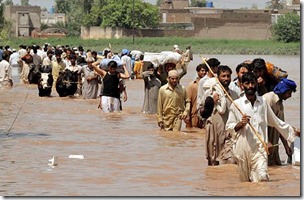
Pakistan FloodsIt is a well documented fact that Pakistan is a very active area for the organisation and training of al-Qaeda terrorists. On the southern border of Afghanistan it is perfectly placed to allow it to be used as a base for the insurgents’ attacks. It also appears that the Pakistani government is prepared, if not to aid, to turn a blind eye to the training camps. It was not really a huge surprise that Osama Bin Laden was finally trapped in a compound in Abbotabad in north west Pakistan.

So why should we be moved by the scenes of starvation and death from the Singh province in southern Pakistan?

I suppose the most obvious answer is that these poor, and malnourished people, who have seen their crop harvest decimated by horrendous floods, are part of the human race, just as deserving of assistance, as you or I. They are not the people to blame for the terrorism, but they have been all but forgotten by their own government and the rest of the world.

A less obvious, but maybe more appropriate reason, in the cause of Kosen Rufu, how can we better build bridges to this country? We have been attempting, mostly in vain, to supress the terrorist factions through the use of arms and violence. What have we to lose if we change tack and help the country, win the hearts, and save thousands of lives into the bargain?

The aid organisations are crying out for donations. They are saying that the international response to calls for donations have been ‘pathetic’. So why not stop spending millions of pounds a week on a futile war, and channel some of that money into going some real good?

Lessons Learned

World PeaceAs we are all well aware, today is the tenth anniversary of the September 11th attack on the World Trade Centre towers in New York. At the time of the attack, I was working for an American company and vividly remember the shock and outrage at the devastation and loss caused on that fateful day.

The most serious act of terrorism on American soil had a huge effect on the American psyche and the realisation that they were not immune to such attacks made them sit up and think about their role in world affairs. But were the lessons of the day really learned?

Listening and watching the plethora of media reports about the attack appear to have concentrated on the mistakes made leading up to the event itself. How the CIA and FBI failed to communicate the known terrorist threat to each other effectively. How the terrorists themselves were identified, but still allowed to board the planes, and how the allies of the Northern Alliance on the Afghanistan / Pakistan border were let down after promises of cooperation had been made.

I’m sure those lessons have, to some extent, been learned, and that anti-terrorist measures, particularly focussed around aviation, have been increased. But have the reasons identified about why the attacks were perpetrated even been acknowledged? It is clear, that in the middle East and in many parts of Asia, the Americans are hated, and are seen as a country of militaristic empire builders, using brute force to manipulate the political and economic situations within countries thousands of miles from their shores.

If we, the human race, are ever to reach a state of peace and understanding, to be able to live together on this amazing planet in harmony, we have to embrace the differences between our nations, our societies and our religions. We have to nurture the wisdom, the courage and the compassion with which we interact. We must change our way of thinking on both sides, from what can we gain from them, to what can we do to help them.

The ultimate success, in this whole process, would be when we reach the point where the very concept of we and them is no longer perceived. We are all human, we are all us, and the sooner we see this basic fact, the sooner we can start creating a world of harmony. Let us all hope, that in the next tens years, there is real progress and that the people lost to their families and friends on September 11th 2001 did not die in vain.

Back To Basics

The Global SocietyA society that has sacrificed so much to material wealth that is has forgotten the human heart and the best of human aspirations, degenerates into something compassionless, doctrinaire, ignorant and ultra-conservative. When this happens, fundamental solutions to the issues of that society become impossible. If we protect the truth and are resolute, we are capable of creating peace and prosperity, and the truth that we should be protecting has to be high and great.

The great truth of Nichiren Buddhism, the thing that we must do our utmost to protect, involves ethics and the very best of human nature. At the very heart of this lies our duty to protect the truth of life, the truth that we are all one with the universe, and that every single human thought contains the entirety of universal life.

All the talk, this week, about 9/11, al Qaeda, terrorists and political strife fails to address the fact that we are all one, connected by our membership of the global society, and that the only solution to such deep seated issues is that of human revolution. If we all conduct ourselves with wisdom, courage and compassion for others, there are no issues that are beyond solving.

The Right Path

Moral CompassWe all have to find our own path to enlightenment. One person’s way may not be that of another, but we all have a path, if we take the time, and have the courage to find it.

Everyone has the right to flower, to reveal his or her full potential as human beings and to fulfil their particular mission in this world. You have this right, as does everyone else.

This is the meaning of human rights. To scorn, violate and abuse people’s human rights destroys the natural order of things. Valuing human rights and showing respect for other people are amongst our most important tasks.

What’s In A Saying?

Red Sky At NightTonight we had the most beautiful sunset, reds and pinks and oranges covered the sky and I thought about the old saying “Red sky at night, shepherd’s delight”. I think that means that the weather will be fine, but it obviously doesn’t come with any guarantee because right now it’s raining cats and dogs.

Another saying, well more of a quote from Daisaku Ikeda actually, is “A great inner revolution in just a single individual will help achieve a change in the destiny of an entire society and, further, will cause a change in the destiny of humankind”. Watching the BBC news tonight showed that the ‘Arab Spring’ is still on going and that Libya looks to be freeing itself (albeit with a great deal of help from the West) of forty years of tyrannical leadership.

When you think how all this started, with one man in Tunisia giving his life for the cause of freedom, maybe some sayings hold more water than others.

All Change

Change It This WayReading this today made me sit and think, I’m sure it will do the same for you.

The Nichiren Buddhist teaching of changing karma restores the original Buddhist emphasis on the role of present action changing negative karma. Furthermore, the Nichiren Buddhist concept of karma is unique because it focuses on the fundamental cause of negative karmic retribution and provides the concrete means to change that cause, instead of focusing on the ultimately unknowable negative causes accumulated over one’s infinite past.

Nichiren writes: “The Nirvana Sutra teaches the principle of lessening one’s karmic retribution. If one’s heavy karma from the past is not expiated within this lifetime, one must undergo the sufferings of hell in the future, but if one experiences extreme hardship in this life [because of the Lotus Sutra], the sufferings of hell will vanish instantly. And when one dies, one will obtain the blessings of the human and heavenly worlds, as well as those of the three vehicles and the one vehicle” (WND, 199).

In this passage, Nichiren teaches that our karmic retribution can “vanish instantly” rather than us having to undergo many lifetimes of austerities. In addition, he makes it clear that eradicating our karmic retribution is in itself the “blessing of the one vehicle”, the attainment of Buddhahood.

Chanting With a Fighting Spirit

Nichiren Buddhism teaches that the essential way to change karma is to chant Nam myoho renge kyo with confidence in all people’s potential for Buddhahood. In The Record of the Orally Transmitted Teachings, Nichiren states: “This word ‘belief ‘ is a sharp sword that cuts off fundamental darkness or ignorance… It is through the one word ‘belief ‘ that we are able to purchase the wisdom of the Buddhas of the three existences. That wisdom is Nam myoho renge kyo”.

When we chant Nam myoho renge kyo with the resolve to challenge our fundamental darkness, with confidence in the existence of the sun, we can quickly remove the clouds and reveal the sun. Once the sun of Buddhahood rises in our lives, all of our karmic suffering is reduced to seeming nonexistence. With Nam myoho renge kyo, Nichiren teaches, delusion is transformed into wisdom, unwholesome actions into wholesome actions, and suffering into a source of growth and genuine fulfilment. This transformation of life’s causation from delusion to suffering into wisdom to joy is the meaning of changing karma in Nichiren Buddhism. The key to this fundamental change in the chain of cause and effect within our lives is chanting Nam Myoho Renge Kyo with confidence, with a fighting spirit, creating powerful winds to blow away the dark clouds of delusion and reveal the sun of Buddhahood.

Never Disparaging and Soka Spirit

The Soka Spirit movement is the SGI-USA’s collective and individual efforts to challenge the distortion of Nichiren Buddhism, as seen in the Nichiren Shoshu priesthood, and encourage both self and others to awaken to life’s true potential.

The method and aim of Soka Spirit are the same as those of Never Disparaging, reconfirming people’s dignity through respecting their innate Buddhahood and helping them challenge their fundamental darkness. Both Soka Spirit and the actions of Never Disparaging aim to establish a humanistic religion by challenging authoritarianism, to establish respect for each person by challenging disrespect for ordinary believers perpetrated by religious authority. While the doctrinal importance of the Lotus Sutra is found in the “Expedient Means” and “Life Span” chapters, its importance in terms of Buddhist practice lies in “Never Disparaging,” the twentieth chapter. Nichiren, therefore, writes: “The heart of the Buddha’s lifetime of teachings is the Lotus Sutra, and the heart of the practice of the Lotus Sutra is found in the ‘Never Disparaging’ chapter. What does Bodhisattva Never Disparaging’s profound respect for people signify? The purpose of the appearance in this world of Shakyamuni Buddha, the lord of teachings, lies in his behaviour as a human being” (WND, 851-52).

Proclaiming respect for humanity in the abstract is easy, but to show sincere respect for the person confronting you is difficult, especially if the person is hostile. But this is exactly what Bodhisattva Never Disparaging did. In each person he met, he saw the Buddha nature and expressed his utmost respect through his words and behaviour. His practice, at the same time, was a direct challenge to the great authority and power of arrogant monks in an age of religious corruption.

In the end, respect triumphed over disrespect, as did the Buddha nature over the fundamental darkness. Never Disparaging’s negative karma gave way to the joy of living, and the name given to demean this nameless man became a name of honour in Buddhist history.

(excerpt from September 2005 Living Buddhism)

Happy Families

Happy FamiliesWhat a brilliant day! The beautiful drive to Bristol, first thing in the morning, with amazing views made green and pleasant by the recent rains was quick and easy.

The day had a definite football theme to it. Following breakfast we went off to Longwell Green community centre for Jake’s football training. A little kick around with Zach was fun and Jake was proud to have scored three goals in his practice game.

Charlotte has started the second phase of her chemotherapy, and is looking very tired. Her hubby Rob, also looked pretty drawn, but he is a real star in the way he is keeping everything together. It’s really difficult to see your child looking tired and poorly, even knowing that the reason behind it is all for a very good cause. But it was wonderful to meet my new grandson, Oliver, and to see the how his birth has kept her positive and given a reason to dig deep and carry on.

Hannah and Stanley came round and it was fun to watch the way the boys interact together. They seem to understand each other, even though the little two aren’t even two yet. After lunch, Hannah took Zach for the afternoon, and Rob, Jake and I went off to pick up Barry to go the watch Bristol Rovers, so that Charlotte could have a restful afternoon.

It was my first visit to the Memorial ground, and although the result wasn’t what the Rovers fans had hoped for, it was a nice way to spend the afternoon. Following a few slices of pizza and a final kiss and cuddle with Charlotte and the boys, it was time to wend my way back to Poole, the end of a great day of happy families.

The Gift Of Freedom

The Gift Of FreedomYesterday we spoke of responsibility, individual responsibility, and how taking responsibility for your actions is a major part of moving your life forward towards your chosen goals. But responsibility is a gift, whether you realise it or not, and having responsibility for the actions you take is very precious.

Think about the millions of people around the world who dream of having such a gift. These people live under conditions where their lives are controlled by the regimes governing their countries. Because they have no control, they never know the gift of responsibility.

Even though there are often comments about our ‘Nanny State’, we live in one of the most liberal, most accepting countries in the world. With that freedom comes the responsibility to act in a manner that show wisdom, courage and compassion, failure to do so risks us all losing that most precious gift.

Previous Older Entries Next Newer Entries