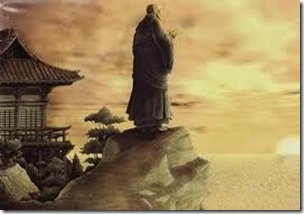
Nichiren Buddhism – The Purest?

Nichiren Buddhism - The Purest?Apparently, I was told yesterday, Nichiren Buddhists consider their faith to be the purest of all the Buddhist sects. Although this did stir a vague memory, and an explanation about Nichiren Buddhism being based on The Lotus Sutra and not having any gods, demons and hungry ghosts, such as are part of the New Kadampa Tradition, I thought I should investigate further.

Nichiren Shonin, as he was known in the early years, gave his first sermon to commemorate the completion of his studies to his master and fellow monks. In this sermon he shocked his audience by criticising the then popular form of Buddhism known as Pure Land. The Pure Land movement taught that Buddhahood could only be attained, after death in a heavenly pure land, by chanting the name of the Buddha of Infinite Light.

In place of this practice, Nichiren taught the practice of chanting the “Great Title” (daimoku) of the Lotus Sutra, which is Nam Myoho Renge Kyo. He taught the chanting of daimoku as a practical and accessible way in which all people can realise the deepest truths of Buddhism.

He argued that, just as the name of a country can bring to mind all the characteristics of that country, so the title of the Lotus Sutra embodies all the merits and virtues of the Buddha expounded in the sutra. Nichiren taught that by chanting the daimoku, we can directly receive the ultimate truth of the Lotus Sutra from Shakyamuni Buddha and attain Buddhahood within our lifetime.

So maybe the claim about Nichiren Buddhists having the purest of faiths stems from the manner in which Nichiren stripped away all the embellishments of the other sects, to get back to Shakyamuni Buddha’s original teachings. This is not to say that these embellishments are without worth, but more that the simpler (purer) practice was accessible to many more people of lower status.

Thinking of our practice as purer, truer, better even, is not a very Buddhist way of looking at things. We should look at all aspects of all matters from all angles and without bias or preconceived ideas, in an enlightened manner you might say.

To use an modern idiom, we might say that Nichiren Buddhism is Buddhism Lite. It has all the core beliefs and the fundamentals of the philosophy without the adornments, the bells and whistles, that others sects have incorporated into their practice.

Before any argument or criticism ensues, I am not putting this idea forward as any form of value judgement, just my thoughts and ideas, from my mostly unenlightened view point. I have seen other sects from inside and out, I simply prefer the atheistic approach and the simple and accessible practice.

Nam Myoho Renge Kyo
Nothing To Be Sneezed At

Sniff, Cough, SniffSo here we are again, the weekend is upon us and there is a spring in the step of people as they leave the office for a couple of days of well earned relaxation. Some are talking of shopping expeditions, others have Christmas trees to decorate, so much excitement.

Sadly, many people, myself included, are still trying to fight off this nasty little cough and cold combination that has been doing the rounds. Not for me, the crowds of shoppers, the festooned arcades of consumerist delights.

With luck, I should be able to spend a good fifty percent of the next couple of days in bed. Plans to visit the Girls in Bristol have again been scuppered, I have no wish to spread this dreaded lurgy amongst my daughters or their families.

If it’s really cold, as they are promising it may be, I might even stay in bed to chant. I’m not sure what Nichiren would have made of horizontal daimoku, but I can’t imagine him being too worried, he was never too concerned with rules.

P For Practice

P For PracticeFor me, my Buddhist Practice is a way of life. A routine that I go through every day, Gongyo, Daimoku, even writing this blog. But routine is also another word for boring, mundane or even hum-drum, so it’s important to keep in mind why we Practice.
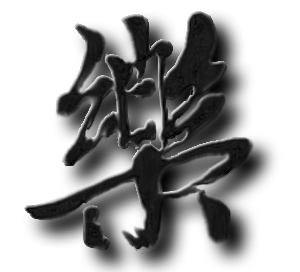
We Practice for several reasons …

  • To raise our life-energy levels …
  • To chant for certain outcomes …
  • To move us along the road to Buddhahood …
  • To give a stable anchor in our lives …

and there are many others, often different for every individual.

As a novice, I find that I can learn a little more each day Let’s face it, Buddhism has been around for well over two thousand years, so there’s plenty to learn about.. I can improve or seek to perfect my Practice and to maintain a more focussed attention to the subject of my chanting.

I look forward to the feeling I get during and after Gongyo. I often find that I am quite warm when I finish chanting and in a really good mood, despite any problems I am facing.

I never cease to be amazed by the effectiveness of chanting either. To start with, the word coincidence came into my mind when I saw results, but not any more. But I do get surprised by the way the Universe solves the problems with which I have asked it to help. Not always the way I expected, and often in better, more subtle ways than I could have imagined.

So my Practice is a pleasure, not a chore. It’s something I enjoy and never something I feel I have to do.

As Nichiren Daishonin said, ‘If you practice something, you must test it’s validity with the results you see’. In other words, if it doesn’t work, stop doing it.

For me, it’s working wonders and I think the World would be a better place if more people were to discover those wonders.

The Happiness Of Others

HappinessI think I’m a pretty happy sort of chap, always joking around and generally enjoying life. But there are times when that just isn’t appropriate and the last couple of weeks have been such a time.

Being happy is actually a frame of mind. It is also a choice that we can all make, by seeing the glass as half full, rather than half empty. But the happiness of others can, and often does, have a very uplifting effect.

Understandably, Bumble has been very sad of late. That really isn’t how she usually is, every picture of her has her wearing a smile. So it was really nice to hear her in a happy mood. She’s back at work and life is slowly getting bearable again.

So my happiness tonight is more than partly down to her happiness. The happiness of others is important and is something we should try our best to promote. Using our wisdom, courage and compassion will go a long way to achieving that goal.

So next time, during diamoku, concentrate on praying for the happiness of someone you know who needs a bit of cheering up. Fill your lungs, chant your heart out and you too will feel your spirits lifted.

Nam Myoho Renge Kyo.

A Final Farewell, For Now

Lotus Flowers - Poison Into MedicineToday was Ivor’s funeral, and a chance for the majority of his family and friends to say a fond, final farewell at the graveside. In all honesty, it was not the sombre event I had dreaded. The setting, the Memorial Woodland, was the most tranquil and beautiful place I have been in a long time.
At the allotted hour, we followed the hearse to the graveside, through sunshine and shade, through ancient woodland and newly planted saplings. This was my first burial ceremony and there is a certain something about the hole in the earth that emphasises the physical finality of the service.

It was a very close family affair, even the service was performed by Steve’s dad Alan, and beautifully so. I read my little piece, putting the Buddhist perspective …

Life is a journey, an adventure during which we are set challenges to test our resolve and to help us learn lessons that will ease our steps along the path to enlightenment.

Buddhism sees death as part of that journey. Far from it being the end of life, it is simply the next step in the process.

So rather than mourning the loss of Ivor, we should rejoice in the sound knowledge that, after a short rest, he will return in a new form, in a new body.

We are all made of stardust; we are an integral part of the Universe and but a single drop of universal energy.

Just as raindrops fall to the Earth, collect in streams and rivers and flow back into the oceans, to be raised up again to repeat the process, so has Ivor joined the ocean of universal energy in preparation for the next cycle in the eternal process we know as The Wheel of Life.

Let us take comfort and rejoice in the fact that Ivor has taken another step on his path to enlightenment.

After the service, a few of us stayed behind to chant, and it was really nice to be able to offer daimoku in such an intimate way and in such a perfect setting.

The photo of the water lilies was taken from the pond outside the chapel of rest, and I think they were a very fitting embellishment to a very lovely and moving ceremony.

Nam Myoho Renge Kyo

Just Before Dawn

They say that things are the darkest just before dawn, but I would suggest that this is not always the case. When people are under intense pressure, as we all are at the moment, that darkest moment can come at almost any point.

Our Fundamental Darkness, my Dark Passenger, can have a field day when we are tired, emotional and stressed out by Ivor’s situation. Whilst the trick is to keep a wary eye on the little devil, it is also of paramount importance that we maintain our compassion for each other too.

Ivor remains comfortable, sedated and pain free, but there cannot be any improvement, so we are still keeping our 24 hour bedside vigil, supported by the marvellous staff at Frenchay hospital. Although Ivor is not a Buddhist, his wife Jill is, so please send Daimoku, if you can, to help her through this most difficult of moments.

Nam Myoho Renge Kyo

Poor Charlotte

Poor CharlotteA very quick post tonight.

Just when we were hoping that things were getting back on track, Charlotte has been admitted to the Bristol Royal Infirmary oncology unit for a series of tests.

I shall be chanting for her, Rob and the boys and doing all I can to help. Your daimoku will be gratefully received. More news when I have some.

Nam Myoho Renge Kyo.

Family Fortunes

Oliver Richard SavageAfter much chanting, the great news is that, all being well, young Oliver will be going home from hospital tomorrow. I am so pleased that he is better, but even happier for Charlotte and Rob, that they have their little man back at home.

Is there any better way to confirm your faith, than to see a perfect outcome after sending daimoku for a definite goal? I think not.

A very short post, but a very good outcome.

A New Life Begins

Oliver Richard Savage - dob 20/07/2011It has been a joyous day today. My daughter Charlotte gave birth to a bouncing baby boy this morning. With all the trials and tribulations she, and we, have been through, it is a triumph of medicine, her positive attitude and copious amounts of daimoku from many, many friends. Not necessarily in that order.

So Oliver has started his latest life cycle and it led me to a few interesting questions:

  • Why did he chose this time, this place, this family to be reincarnated?
  • Who or what was he in previous incarnations?
  • What will he do with this lifetime?

Of course it is impossible to answer any of these. Even Oliver will not remember details from his previous lives. Only our Karma follows us from one lifetime to another (unless you believe in regression). But never mind all that now.

He’s a beautiful healthy little boy, I’m a proud grandfather (again) and I promise to fill his life with as much happiness as I can.

Welcome to the world Oliver Richard Savage.

The Four Virtues

Juzu BeadsNichiren Buddhism demands that we test ourselves and that we test the results of our Practice. To do this we must know why we do, what we do, and this covers every aspect of our Practice.

In my previous post about The Significance Of Prayer Beads we saw that the four smaller beads in the body represent the four Great Bodhisattvas of the Earth. These in turn represent The Four Virtues of the Buddha, and here is a much fuller explanation.

Nichiren Daishonin attributes the four virtues of the Buddha to the four leaders of the Bodhisattvas of the Earth. Bodhisattva Superior Practices (Jogyo) represents true self. Revealing true self means for us to chant Nam-myoho-renge-kyo to the Gohonzon, thus manifesting our innate Buddhahood and shedding the lesser self of egotism. Bodhisattva Boundless Practices (Muhengyo) signifies eternity. Through establishing our true self of Buddhahood, we come to understand, perhaps not intellectually but with our innermost heart, the eternity of life, and remain unswayed by our ever-changing circumstances while confidently challenging ourselves. Bodhisattva Pure Practices (Jyogyo) represents purity. Once we are awakened to the greater self of Buddhahood, we are no longer tainted by delusions. With a secure sense of self, we can even positively influence our environment, thus purifying it. Finally Bodhisattva Firmly Established Practices (Anryugyo) signifies happiness—a kind of happiness that withstands all the ups and downs of our lives, including death. Through developing confidence in the Buddha nature as our true self, we free ourselves from trivial concerns for any unnecessary artifice of life and remain at peace with ourselves, knowing that we will ultimately triumph over any obstacle.

It is significant that the four leaders of the Bodhisattvas of the Earth represent the four virtues of the Buddha. As the names of those bodhisattvas indicate, only through our dedicated practice as bodhisattvas—practice dedicated to the happiness of others—can we break through our lesser self and reveal the greater self of Buddhahood. In other words, our bodhisattva practice is the cause for the Buddha’s four virtues to manifest in our lives. Yet from another perspective, it may be also said that Buddhas are in essence those who are awakened to their greater self and act for the well-being of others. In this sense, the altruism of Bodhisattva practice is not only the means to overcome the lesser self and develop the four virtues; it is also a direct expression of these four virtues inherent in life, in our Buddha nature. This is why chanting Nam-myoho-renge-kyo, which calls forth our inherent Buddhahood and its corresponding virtues, provides the greatest basis for an altruistic life—a life dedicated to the happiness of others.

The four virtues of the Buddha, from the standpoint of the Daishonin’s Buddhism, describe the ideal characteristics of human beings whose view of self is not hindered in any way by selfish ego. Their understanding of self is so encompassing that their own existence and the world around them become indistinguishable. A limited understanding of self, however, leads to egotism, bringing suffering and misery to both oneself and others. True self-knowledge—an awakening to our true, greater self—in this sense is a key to overcoming selfishness.

Previous Older Entries Next Newer Entries