 In today’s world where global issues are so important, many people feel a sense of powerlessness and resignation; a feeling that no individual’s efforts can change the way things are.
But the Buddhist viewpoint is that the world should be seen from the perspective of the individual, and that the human life contains the entire universe.
That is why changing our own lives one by one will bring a change in our family, our community, and the society in which we live. It will change the age we live in, our history, and indeed all aspects of our world.
If we look for the true causes of war, we see that it is essentially caused by the human mind. War stems from the desire to control and conquer others, to have power, and from hatred and antipathy. Such is a human being in the grip of the negative force of life. World peace starts with the inner transformation of the individual, and the struggle to elevate our state of life, and free ourselves from the domination of the negative force of life.
A single sunflower contains the seeds for more than a thousand new plants. Similarly, when one brave person stands up for peace, his or her resolve spreads out into the environment in thousands of ways. Courage always brings a response. One person’s human revolution can therefore eventually change the destiny of the entire human race.
The Spirit of Human Revolution
In his writing On Attaining Buddhahood, Nichiren Daishonin conveys the basic spirit of human revolution: “You must never think that any of the eighty thousand sacred teachings of Shakyamuni’s lifetime or any of the Buddhas and bodhisattvas of the ten directions and three existences are outside yourself. Your practice of the Buddhist teachings will not relieve you of the sufferings of birth and death in the least unless you perceive the true nature of your own life.” [WND p3]
We could summarise the spirit of this teaching as being, “It’s not up to others; nor can I blame anyone else. I have to change myself first.” It is a viewpoint which says, everything in life is part of our own training; it is for our benefit and development. Human revolution takes place right now, in the situation we find ourselves at this moment.
World peace starts with this inner transformation of the individual. And yes it is a struggle to develop and elevate our state of life but human revolution is the foundation for world peace and also for individual peace and happiness. It is at the heart of our Buddhist practise. It is about changing our heart and drawing out our humanity.
It is the most amazing feeling as you discover that if the cause of your suffering is within the realms of your own life then you and only you can change that aspect of your life. This is the most freeing feeling. This is human revolution and the door to your Buddhahood.
Human revolution brings into play all the principles and processes that make up the Buddhist teachings of life. Learning to be able to live our lives on the basis of correct teachings is part of our human revolution. The process is a transformation of the heart.
Transforming the Self, Living the Teachings
When we commit our lives to chanting we embark on a journey of self-discovery and challenge. By taking responsibility for our feelings and emotions, especially those we most dislike, we come to realise we have the ability to transform our lives from within. As we broaden our experiences of chanting daimoku we get experiences of our environment reflecting the transformation of our inner lives. This could be in our family relationships, at work or in other aspects of life.
It is usually within one of these arenas that we find life can be difficult or cause us to suffer. As we continue chanting, the more we start to see our lives very differently. At first this process may seem a little uncomfortable because it is quite unique and new to us. We may or may not like what we see. Perhaps we realise we have set attitudes or opinions about others or various issues that make us suffer. It may seem that others have a problem with us. This can draw out all sorts of feelings and emotions that can make us uneasy, or uncomfortable.
Getting this kind of reaction does not mean that chanting is not working or that it is working in a negative way. On the contrary you are actually in the process of transforming exactly that which has always led you to suffer in that particular area of your life. Your chanting is illuminating an area of your life that needs to change for your own happiness. The realisation that this opinion or attitude stems from our own lives and not from others opinions of us, leads us to uncover the Buddha nature inherent in our lives. The quickest way to transform these feelings or attitude is to keep chanting until you realise the cause of these uncomfortable feelings.
However, it may be that is exactly when you find it the most difficult time to chant. You are on the brink of changing a part of your life that always stops you from progressing or being happy. It will probably feel like walking up a hill backwards. At such times obstacles and devils arise. You will probably be able to justify why it is more beneficial to watch TV than do gongyo or chant or tell a friend about Nam-myoho-renge-kyo or study some of Nichiren Daishonin`s writings. But this is exactly the time to do these things in order to break through and win over something that has always held you back. This is the time to muster a fighting spirit and to be courageous.
In his book Seven Paths to Peace, Daisaku Ikeda talks about human revolution in terms of self-mastery. Simply put, this means winning control over oneself, overcoming the small self that is dominated by narrow self-interest and awakening to the larger self that works for the good of all humanity. From this standpoint a major obstacle to developing ourselves is to pursue a way of life bound by our small ego or self. Expanding from the lesser self to the greater self is the path of human revolution.
Through our practice of introducing others to Nichiren Daishonin’s Buddhism, and through efforts to share Buddhism with others, we ourselves grow immensely, we can carry out our human revolution, and transform our karma. Therefore by guiding another individual towards happiness, we also guide ourselves towards happiness. The act of introducing others to Buddhism, which enables us to profoundly benefit both ourselves and others, is the formula of hope for humanity.
At a time when an ordinary person attains Buddhahood, or at a time when a person is at a turning point in doing their human revolution, the negative aspect of life will always appear in some form. This is an unavoidable fact of life! Nichiren Daishonin assures us of this and asks us to transmit it as an axiom or principle of faith so that it is understood by all those who practise.
Taken from the SGI-UK study notes, this encapsulates the meaning of Human Revolution. It beautifully explains the way that self discipline through practice makes us examine our own thoughts and deeds and promotes an inner change by increasing our self awareness.
Chanting Nam Myoho Renge Kyo (at least) twice a day, every day may seem a mindless practice, but it enables us to devote our whole lives to changing for the better.
 Let’s just think back to Friday evening. The anticipation of a couple of days away from the office, maybe big plans, maybe just looking forward to the chance to recharge the batteries.
  It is a well known Buddhist saying, that our problems are not the real problem, it is the way we perceive them that is the problem.
 Over the life of this blog, you will have seen that my Buddhist Practice has become, more and more, the basis of my life.
 I offer appreciation to the Shoten Zenjin, the functions in life and in the environment that serve to protect us, and prey that these protective powers may be further strengthened and enhanced through my practice of the Law.
 I offer my deepest praise and most sincere gratitude to the Dai-Gohonzon of the Three Great Secret Laws, which was bestowed upon the entire world.
 I pray that the great desire for kosen-rufu is fulfilled, and that the Soka Gakkai International develops eternally in this endeavour.
 I pray to bring forth Buddhahood from within my life, change my karma and to fulfil my wishes in the present and the future.
 The true victors in life are those who, having endured repeated challenges and setbacks, have sent the roots of their spiritual being to such a depth, that nothing can ever shake them loose.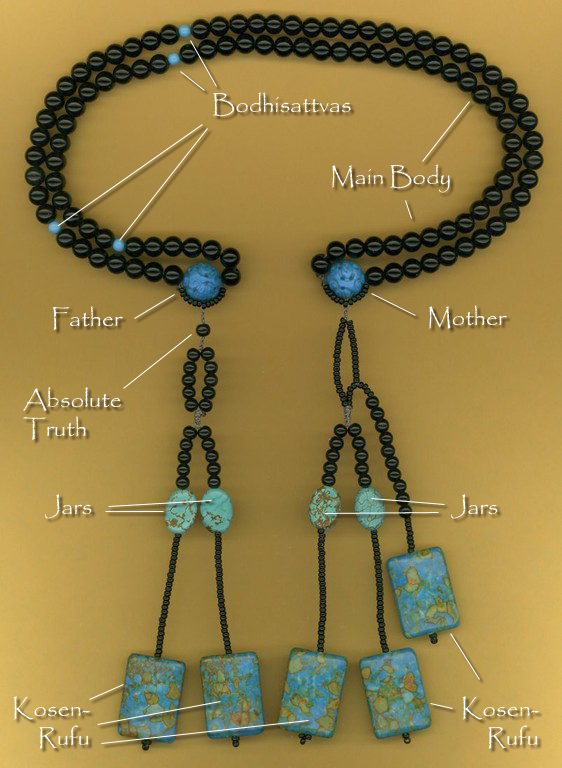
 A few people have asked how chanting Nam Myoho Renge Kyo actually works, how it raises my life-energy and puts me in a higher life-state, irrespective of the circumstances.
 Living on the coast, it can get very foggy at times, to the point where you can’t see your hand in front of your face. The fog horn blares out all night, you can’t sleep, and your surroundings take on a surreal air.
 When times are easy and things go our way, it is easy to stick to the plan. It is when things go wrong, problems arise, or we are distracted from our Practice that we need to summon up our inner strength.
 The Search For Enlightenment
Recents Comments