 If you research Buddhism, you will find, as with Christianity, that there are many schools or sects, believing much the same basic principles, but with their own embellishments or focus.
When I first became a Buddhist, I was rather naive about the different schools and followed the Kadampa tradition practiced at the Shantideva Buddhist centre in Maidenhead, later moving to Reading.
Kadampa Buddhism focuses on the teachings of Geshe Kelsang Gyatso and the centre of the practice is concentrated on clearing the mind through meditation. The cause of much unhappiness and suffering is due to desirous attachment to property, people or situations, according to Kelsang Gyatso. The way to remove suffering is therefore to break the links of desirous attachment and accept the principle of impermanence.
This is all very well in an eastern third world country, where possessions are few, life is lived at a different pace and everyone, or at least the majority, hold the same beliefs. Here in the west, where Judaeo Christianity is the predominant religion, Kadampa Buddhism only works if you can remove yourself from the mainstream society and immerse yourself in study within one of their centres.
I also felt that the worship of gods within the temple was wrong. Shakyamuni was a man, he never proclaimed to be, or to be connected with, any deity. So where did all these gods spring from. I believe they are the manifestation of the metaphorical gods of The Lotus Sutra, made real by man’s need for a focus of worship. Not for me, this went against my atheist beliefs and lost the focus of the practice in my eyes.
Over time I drifted away from the practice, and it was only when I was suffering because of the breakdown of my marriage, that I sought Buddhism once again. This time, I was lucky, or fortunate as we would say in Buddhism (not such thing as luck), to find Jason Jarrett’s podcasts, and through that, William Woollard’s Reluctant Buddhist.
Immediately, the sense that my own life would be put back in my own hands, that belief was in the self and one’s ability to achieve Buddhahood in this lifetime, struck a chord. At last, a Practice that worked with real life, that answered questions instead of posing several more. A Practice that has helped me more over the best part of a year, than any other practice has done in the past fifty years.
I wish I was like Ken, Jayne, William, Eddy and many, many others, who found Nichiren Buddhism ten, fifteen, twenty or more years ago. My life would have been completely transformed, and I believe, entirely for the better. There is a letter from Nichiren Daishonin to the wife of the late Matsuno, which describes how unlikely, and difficult it is to meet the Practice in a lifetime, it is well worth reading and explains just how lucky I have been to find my faith at last.
 The Sanskrit word Buddha means “One who is awakened [to the truth].”
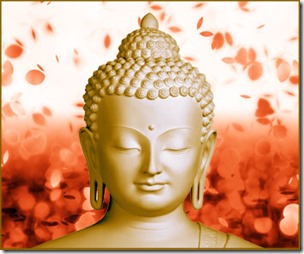 May 6th was celebrated as always, the world over, as the birthday of Shakyamuni Buddha. The Sanskrit word Buddha means “One who is awakened [to the truth].” While the term was widely employed by various schools of the time, it eventually came to be used exclusively in reference to Shakyamuni. At the same time, the word Buddha implies “to bloom.”
 The alarm went off at 7:00am, the same as it would on any Monday morning, but this morning was all about making the most of the Bank holiday. My challenge was to complete my Purbecks Figure O’ Eight ride, a round trip of close to 70km, before the roads filled up with visitors and holidaymakers.
 Buddhism teaches that human life is endowed simultaneously with both good and evil.
 I’ve been out cycling this weekend, surrounded by beautiful nature and in the soft spring sunshine, just wonderful.
 I can think of several people who would do well to listen to the following advice …
 The purpose behind my Buddhist Practice is to bring me a little closer to Buddhahood, each and every day.
 The Search For Enlightenment
Recents Comments