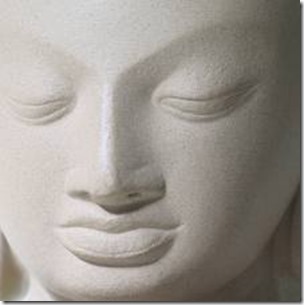
 The very reason for my Buddhist Practice is to bring me a little closer to Buddhahood each and every day.
That is to say, to emulate as closely as possible, the Buddha himself in the way he was able to see life and all things in a pure clarity through his enlightened state.
Siddhārtha Gautama was a man, albeit a prince, who forsaking his life of comfort and position, went out into the world to meditate on the causes of, and ways to reduce or remove, the suffering of life.
In Nichiren Buddhism we speak about the Ten Worlds, Hell, Hunger, Animality, Anger, Humanity, Heaven, Learning, Realisation, Bodhisattva and Buddhahood. Each World containing, and being contained by, the other nine.
The Buddha state originates from the very depths of life, called the amala consciousness, meaning the fundamentally pure life force or consciousness. The function of the Buddha state is to bring out the positive side of the other nine worlds.
This principle of the Ten Worlds shows that the Buddha state is a naturally occurring condition of life in every living being. The purpose of Buddhist practice is to enable us to cause the Buddha state to appear; to have it working strongly in us.
In Nichiren Buddhism, therefore, the Buddha is not some perfect ideal being, but is rather an ordinary person living in rhythm with the law of the universe, taking wise, courageous and compassionate action for the benefit of others, through the functioning of the nine worlds in daily life.
The more I practice, the longer I practice, the closer I come to Buddhahood, a very positive thought for today.
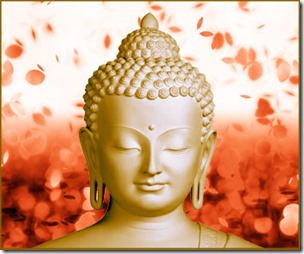 What does attaining Buddhahood mean for us? It does not mean that one day we suddenly turn into a Buddha or become magically enlightened. In a sense, attaining Buddhahood means that we have securely entered the path, or orbit, of Buddhahood inherent in the cosmos.
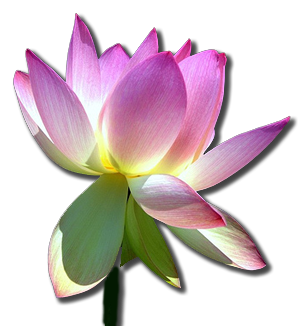 Listening to reports of the continuing struggle for change and self determination in Egypt, I was mindful of the wisdom encapsulated in the Lotus Sutra. Generally regarded as Siddhārtha Gautama’s greatest teaching, it forms the basic structure for all forms of Buddhist practice.
 The purpose behind my Buddhist Practice is to bring me a little closer to Buddhahood, each and every day.
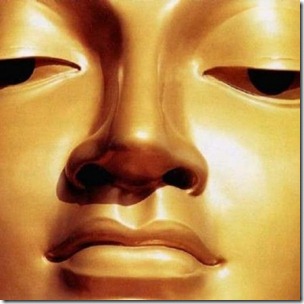 The Sanskrit word Buddha means “One who is awakened [to the truth].” While the term was widely employed by various schools of the time, it eventually came to be used exclusively in reference to Shakyamuni. At the same time, the word Buddha implies “to bloom.”
 The function of fire is to burn and give light. The function of water is to wash away filth. The winds blow away dust and breathe life into plants, animals, and human beings. The earth produces the grasses and trees, and heaven provides nourishing moisture.
 Where is all this rain coming from? Apparently, it is officially the wettest drought on record, and looking out of the cottage window this morning it’s not surprising. The raindrops are hammering on the windows, powered on by a blustery north wind.
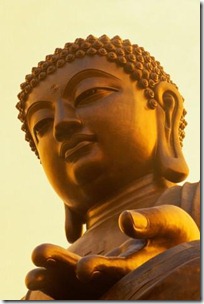 A man once came to see the Buddha to get help with his problems. After the man had told the Buddha one of his problems and asked for help, the Buddha replied: “I cannot help you get rid of that problem.”
 A life lived without purpose or value, the kind in which one doesn’t know the reason why one was born, is joyless and lacklustre. To just live, eat and die without any real sense of purpose, surely represents a life pervaded by the life-state of Animality, that of animals.
 The Search For Enlightenment
Recents Comments