 We must never underestimate the power the mind has over our bodies. If we can remain positive, with high life-energy and in one of the higher worlds, our bodies will respond positively. If we allow negativity to creep in, the battle will be all the harder.
The Nichiren phrase for this connection between our body and mind is Shikishin-Funi. Two, but not two, not two, but two, meaning that they are separate, but cannot function alone.
Not exactly easy to understand, but essential for us to prosper in difficult times. By being positive, we give out positive energy to those around us. Whether we are in a difficult situation in our life, looking for a job, trying to make ends meet financially, battling against illness or just trying to grin and bear it in the face of seemingly unending bad news, staying positive is the only way to win through.
-
[色心不二] (Jpn shikishin-funi )
-
Also, non-duality of body and mind. The principle that the two seemingly distinct phenomena of body, or the physical aspect of life, and mind, or its spiritual aspect, are essentially non-dual, being two integral phases of a single reality. One of the ten onenesses formulated by Miao-lo (711-782) in his Annotations on “The Profound Meaning of the Lotus Sutra.” In the Japanese term shikishin-funi, shiki means that which has form and colour, or physical existence, while shin means that which has neither form nor colour, or spiritual existence, such as the mind, heart, and soul. Funi is an abbreviation of nini-funi, which indicates “two (in phenomena) but not two (in essence).” This means that the material and the spiritual are two separate classes of phenomena, but non-dual and indivisible in essence, because they are both aspects of the same reality. In the above annotations, Miao-lo states that, from the viewpoints of the whole and its components, life at a single moment is the whole, while body and mind are its components. Neither body nor mind is a separate entity; there is not one without the other. They are inseparable components of life. In the Lotus Sutra, the principle of the ten factors of life represents the oneness of body and mind. The ten factors are listed in the “Expedient Means” (second) chapter of the sutra, where it states that the true aspect of all phenomena consists of “appearance, nature, entity, power, influence, internal cause, relation, latent effect, manifest effect, and their consistency from beginning to end.” On “The Profound Meaning” states: “Appearance exists only in what is material; nature exists only in what is spiritual. Entity, power, influence, and relation in principle combine both the material and the spiritual. Internal cause and latent effect are purely spiritual; manifest effect exists only in what is material.” The Record of the Orally Transmitted Teachings reads, “[Concerning the term dedication of one’s life ] ‘dedication’ refers to the element of physical form as it pertains to us, while ‘life’ refers to the element of mind as it pertains to us. But the ultimate teaching tells us that form and mind are not two.” – Taken from the SGI Dictionary of Buddhism
 We are very similar, in many ways, to steel reinforced concrete, in that much of our strength comes from within. The pillars of motorway bridges are immensely strong because, apart from the toughness of the concrete itself, they have a rigid steel structure embedded within them.
 For me, my Buddhist Practice is a way of life. A routine that I go through every day, Gongyo, Daimoku, even writing this blog. But routine is also another word for boring, mundane or even hum-drum, so it’s important to keep in mind why we Practice.
 Let’s talk about Ichinen Sanzen for a moment, about how each of the Ten Worlds contain all of the other Worlds, meaning we can move from one to another in an instant.
 This is nothing about the motto of the Boy Scout movement. It is about being ready to face whatever life may throw at you. Life challenges us daily. There are joyous days and days of suffering. Sometimes really unpleasant things happen, but this variety is actually what makes life so interesting. The dramas we encounter are part and parcel of being human.
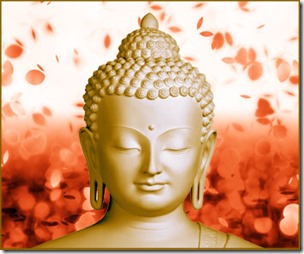 The Sanskrit word Buddha means “One who is awakened [to the truth].” While the term was widely employed by various schools of the time, it eventually came to be used exclusively in reference to Shakyamuni. At the same time, the word Buddha implies “to bloom.”
 My first
  Often we hear about the different attitudes of religious doctrine around the world, some we are happy to embrace, others we find unsettling. But whatever the doctrine, religion must teach us an ‘attitude to life’.
 A man was offered the chance to visit Heaven and Hell. Upon entering Hell he was greeted by the sight of an infinitely long room filled with tables laden with the finest of foods, meat, fruit, wine and all manner of delicacies. But around the tables sat groups of starving people, crying out in their hunger. He realised that each person was holding a spoon, but the spoons were so long that they were unable to feed themselves.

 The Search For Enlightenment
Recents Comments