The Ten Worlds are the life-states we all experience, many each and every day.
 The Ten Worlds are:
-
Hell
-
Hunger
-
Animality
-
Anger
-
Humanity
-
Heaven
-
Learning
-
Realisation
-
Bodhisattva
-
Buddhahood
Each World contains the other nine Worlds to a greater or lesser extent, so even though you might be in a Heaven (or Rapture) life-state, you will have elements of Hell, Hunger, Animality, Anger, Humanity(or Tranquillity), Learning, Realisation, Bodhisattva and Buddhahood within that life-state. This helps us to explain how our life-state (or mood) can change so quickly when we encounter new or changing causes.
The first six Worlds, Hell, Hunger, Animality, Anger, Humanity and Heaven are brought about by external causes, events which we cannot control.
The last four, Learning, Realisation, Bodhisattva and Buddhahood are brought about by our own thoughts and actions, which we can control.
Nichiren Daishonin wrote:
‘If you wish to free yourself from the sufferings of birth and death you have endured since time without beginning and to attain without fail unsurpassed enlightenment in this lifetime, you must perceive the mystic truth that is originally inherent in all living beings. This truth is Myoho-renge-kyo. Chanting Myoho-renge-kyo will therefore enable you to grasp the mystic truth innate in all life.
The Lotus Sutra is the king of sutras, true and correct in both word and principle. Its words are the ultimate reality, and this reality is the Mystic Law (myoho). It is called the Mystic Law because it reveals the principle of the mutually inclusive relationship of a single moment of life and all phenomena. That is why this sutra is the wisdom of all Buddhas.
Life at each moment encompasses the body and mind and the self and environment of all sentient beings in the Ten Worlds as well as all insentient beings in the three thousand realms, including plants, sky, earth, and even the minutest particles of dust. Life at each moment permeates the entire realm of phenomena and is revealed in all phenomena. To be awakened to this principle is itself the mutually inclusive relationship of life at each moment and all phenomena. Nevertheless, even though you chant and believe in
Myoho-renge-kyo, if you think the Law is outside yourself, you are embracing not the Mystic Law but an inferior teaching. “Inferior teaching” means those other than this [Lotus] sutra, which are all expedient and provisional. No expedient or provisional teaching leads directly to enlightenment, and without the direct path to enlightenment you cannot attain Buddhahood, even if you practice lifetime after lifetime for countless kalpas. Attaining Buddhahood in this lifetime is then impossible. Therefore, when you chant myoho and recite renge, you must summon up deep faith that Myoho-renge-kyo is your life itself.
You must never think that any of the eighty thousand sacred teachings of Shakyamuni Buddha’s lifetime or any of the Buddhas and bodhisattvas of the ten directions and three existences are outside yourself. Your practice of the Buddhist teachings will not relieve you of the sufferings of birth and death in the least unless you perceive the true nature of your life. If you seek enlightenment outside yourself, then your performing even ten thousand practices and ten thousand good deeds will be in vain. It is like the case of a poor man who spends night and day counting his neighbour’s wealth but gains not even half a coin. That is why the T’ien-t’ai school’s commentary states, “Unless one perceives the nature of one’s life, one cannot eradicate one’s grave offenses.” This passage implies that, unless one perceives the nature of one’s life, one’s practice will become an endless, painful austerity. Therefore, such students of Buddhism are condemned as non-Buddhist. Great Concentration and Insight states that, although they study Buddhism, their views are no different from those of non-Buddhists.
Whether you chant the Buddha’s name, recite the sutra, or merely offer flowers and incense, all your virtuous acts will implant benefits and roots of goodness in your life. With this conviction you should strive in faith. The Vimalakirti Sutra states that, when one seeks the Buddhas’ emancipation in the minds of ordinary beings, one finds that ordinary beings are the entities of enlightenment, and that the sufferings of birth and death are nirvana. It also states that, if the minds of living beings are impure, their land is also impure, but if their minds are pure, so is their land. There are not two lands, pure or impure in themselves. The difference lies solely in the good or evil of our minds.
It is the same with a Buddha and an ordinary being. When deluded, one is called an ordinary being, but when enlightened, one is called a Buddha. This is similar to a tarnished mirror that will shine like a jewel when polished. A mind now clouded by the illusions of the innate darkness of life is like a tarnished mirror, but when polished. it is sure to become like a clear mirror, reflecting the essential nature of phenomena and the true aspect of reality. Arouse deep faith, and diligently polish your mirror day and night. How should you polish it? Only by chanting Nam-myoho-renge-kyo.
What then does myo signify? It is simply the mysterious nature of our life from moment to moment, which the mind cannot comprehend or words express. When we look into our own mind at any moment, we perceive neither colour nor form to verify that it exists. Yet we still cannot say it does not exist, for many differing thoughts continually occur. The mind cannot be considered either to exist or not to exist. Life is indeed an elusive reality that transcends both the words and concepts of existence and nonexistence. It is neither existence nor nonexistence, yet exhibits the qualities of both. It is the mystic entity of the Middle Way that is the ultimate reality. Myo is the name given to the mystic nature of life, and ho, to its manifestations. Renge, which means lotus flower, is used to symbolize the wonder of this Law. If we understand that our life at this moment is myo, then we will also understand that our life at other moments is the Mystic Law. This realization is the mystic kyo, or sutra. The Lotus Sutra is the king of sutras, the direct path to enlightenment, for it explains that the entity of our life, which manifests either good or evil at each moment, is in fact the entity of the Mystic Law.
If you chant myoho-renge-kyo with deep faith in this principle, you are certain to attain Buddhahood in this lifetime. That is why the sutra states, “After I have passed into extinction, [one] should accept and uphold this sutra. Such a person assuredly and without doubt will attain the Buddha way.” Never doubt in the slightest. Respectfully. Maintain your faith and attain Buddhahood in this lifetime. Nam-myoho-renge-kyo, Nam-myoho-renge-kyo.’
Nichiren
The more we chant, and the more we practice, the higher our life-energy becomes and the more control we have over our life-state. The object of the exercise is to raise our own self-awareness and through selfless thoughts and deeds, to grow ever nearer our goal of attaining Buddhahood.
 Sometimes in life we find ourselves in difficult and painful situations. The laws of Karma are universal, we get what we deserve, and whether we recognise the causes or not, the effects speak for themselves.
  So many of the World Religions base their beliefs on a God, a Supreme Being, a Creator or an Entity whose existence is the focus of the religion’s belief.
 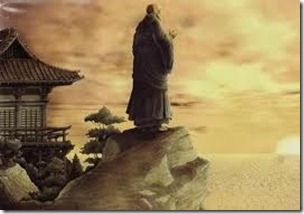 Sometimes all it takes to resolve an unexpected and insurmountable issue is a cool head and a warm heart. Oh yes, and a great deal of compassion and understanding from both sides.
  We should all welcome, if not exactly seek out problems, to test our practice.
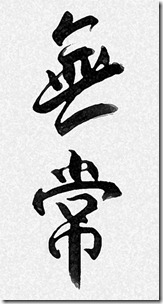 On the day when many of us promised to love each other forever, it is wise to remember that although we mean what we say, our human frailty will most certainly mean that we are unable to keep that promise. It has often been said that the only certain things in life are death and taxes, with death being the most certain.
 Abu Qatada, one of the UK’s most dangerous extremist preachers, has been
  Happiness is a matter of the heart.
 Isn’t life grand when everyone is happy and getting along just fine. Today has been a day of enlarging family ties, much fun and frivolity, and a great deal of happiness. Introducing Bridget to Hannah and Stanley, as well as meeting Bridget’s children and her granddaughter, made the weekend.
 When you start a new relationship, it’s very easy to get carried away by the wave of optimism that accompanies that first flush of excitement. Being a Buddhist doesn’t change that, it’s in my nature, and my family and friends can all see it happening before their very eyes.
 The Search For Enlightenment
Recents Comments