 On the night that the United Nations have sanctioned a no-fly zone and ‘all necessary measures’ against Gaddafi’s forces in Libya, I would like to propose an alternative.
The following is taken from the Soka Gakkai International website.
For the members of the SGI, kosen-rufu means the ceaseless effort to enhance the value of human dignity, to awaken all people to a sense of their limitless worth and potential. As SGI President Daisaku Ikeda notes, ‘Kosen-rufu does not mean the end point or terminus of a flow, but it is the flow itself, the very pulse of living Buddhism within society.
The Japanese phrase kosen-rufu expresses a centrally important concept for members of the SGI. It is often used synonymously with world peace, and has been informally defined as “world peace through individual happiness.” More broadly, it could be understood as a vision of social peace brought about by the widespread acceptance of core values such as unfailing respect for the dignity of human life.
The phrase itself is of ancient origin and appears in the 23rd chapter of the Lotus Sutra, which states, “In the fifth five hundred years after my death, accomplish worldwide kosen-rufu and never allow its flow to cease.” Here, the phrase kosen-rufu is written with four Chinese characters that could be rendered, respectively, as “widely,” “declare,” “flow” and “promulgate,” and in its most literal sense it means the widespread flow and spreading–and application–of the teachings contained in the Lotus Sutra. Kosen-rufu implies an approach to Buddhist practice that is deeply engaged with the affairs of society and the world.
Nichiren (1222-1282) was distinguished from the Buddhists of his time by his frequent use of this term. The stress placed by Nichiren on kosen-rufu typifies his approach to Buddhist practice; that our personal happiness–enlightenment–is inextricably linked with the peace and happiness of our fellow humans and of society as a whole. He rejected the idea that enlightenment is something to be cultivated as a private, inner virtue. He also rejected the idea that the proper goal of Buddhism is to garner reward in the afterlife. What these two ideas have in common is resignation regarding our ability to overcome suffering and positively transform society. For Nichiren, this represented an unacceptable turning away from the core Buddhist tenet that people are capable of realizing genuine happiness in this world. Both approaches were the target of his critique.
In Nichiren’s view, enlightenment is not so much a goal or end in itself, as a basis for altruistic action. The life-state of Buddhahood–a condition of limitless vitality, wisdom and compassion–is one which is expressed, maintained and strengthened through committed action to contribute to the well-being and happiness of other people.
Nichiren’s emphasis on kosen-rufu also reflected his understanding of the nature of the times in which he lived. It was widely believed that history had entered the period of the “Latter Day of the Law” (Jpn mappo). Said to start 2,000 years after Shakyamuni Buddha’s passing (thus the injunction “in the fifth five hundred years after my death”), it was predicted that this would be a period of degeneracy, in which the Buddha’s teachings would lose their power to save people. Calculations by Japanese Buddhists had put the start of the Latter Day of the Law at 1052, and the arrival of this dread age was greeted with widespread anxiety.
The degenerate nature of the age and the failure of the Buddhist law seemed to be confirmed by events. In 1221, for example, a year before Nichiren’s birth, a cloistered emperor had tried to overthrow the samurai-dominated government, enlisting the established Buddhist sects to pray for victory. He was easily defeated and spent the rest of his life in exile. In the popular imagination, this represented an unthinkable defeat for the secular authority of the emperor and the religious authority of official Buddhism. Violent natural disasters, political unrest, famine and plague continued to occur throughout Nichiren’s life, providing a backdrop to the development of his thinking.
However, unlike many of his contemporaries, Nichiren did not regard the Latter Day as a time of resignation to inevitable suffering. He focused instead on those passages in the sutras predicting that the Latter Day would be the time when Buddhism would be revived in new form, and would spread widely to benefit the people. In practical terms, he saw the Latter Day as an age in which happiness solely for oneself was no longer a viable option. The only path to happiness, in his view, was one of actively challenging the root causes of unhappiness afflicting all people and the whole of society.
In our day, globalization, the deepening interaction and interdependence among the world’s peoples, is making it increasingly clear that peace and prosperity cannot be enjoyed only by a limited group or by the inhabitants of any country in isolation. The simple truth that humankind will all stand or fall together, is gaining widespread acceptance.
A Vision of World Peace
Nichiren’s vision was not limited to Japan. From around 1273, the phrase “the western return of Buddhism” starts appearing in his writings. This phrase, closely linked to the idea of kosen-rufu, indicates that Buddhism, having spread east to Japan, would eventually spread (return) to India and countries to the west, reaching the entire world.
In 1274, Mongol forces first attempted to invade Japan. In 1279, the Mongols defeated the Southern Song on the Asian mainland, bringing an end to that dynasty. Many Buddhist priests fled to Japan as refugees, and their graphic reports of the invasion heightened the sense of dread gripping Japan. For the first time in its history, Japan was caught in the vortex of world history, and this formed the background for Nichiren’s call for propagation of his teachings far beyond the confines of Japan.
While Nichiren may stand out among Japanese Buddhists for seeking the global acceptance of his ideas, in the history of the world’s religions, this is far from unique. Over the course of history, many religions have arisen with a message of universal salvation, which they have sought to actualize through universal propagation.
In this sense, it is important to clarify what kosen-rufu is not. It does not mean the conversion of all Earth’s inhabitants, without exception, to Nichiren Buddhism. While the members of the SGI, deeply confident in the validity of Nichiren Buddhism, are eager to share its benefits with family and friends, faith is not seen as a stark demarcation between those who are “saved” and those who are not. Because the lives of all people are interconnected at the most profound level, a fundamental change in the life of one individual will have a positive influence on all the people with whom that person has contact, especially those sharing an intimate connection. Just as the light of a single beacon can guide many ships to safety, the example of a single person shining with confidence and joy can help many people find direction in life.
In our world today, the darkness that most requires dispelling is the entrenched inability to recognize the dignity of life. Ideologies teaching that certain people are without worth, that certain lives are expendable, undermine the common basis of human dignity. The failure to recognize one’s own true potential and worth is always linked with the denial of these qualities in others. Violence has its wellsprings in a gnawing lack of self-confidence.
Thus, for the members of the SGI, kosen-rufu means the ceaseless effort to enhance the value of human dignity, to awaken all people to a sense of their limitless worth and potential. It is for this reason that efforts in the fields of peace, humanitarian aid, educational and cultural exchange are all seen as vital aspects of the movement for kosen-rufu. For these promote the values that are integral to human happiness.
Finally, it should be understood that kosen-rufu does not represent a static end point. As SGI President Daisaku Ikeda noted in 1970, “Kosen-rufu does not mean the end point or terminus of a flow, but it is the flow itself, the very pulse of living Buddhism within society.”
In this sense, the “attainment” of kosen-rufu does not suggest the end of history or of the inevitable conflicts and contradictions that drive history. Rather, it could be thought of as building a world in which a deeply and widely held respect for human life would serve as the basis on which these can be worked out in a peaceful, creative manner. This is not something, however, which we must passively wait for.
Buddhism teaches that it is something that we can begin to implement right now, wherever we are.
 One of the principles of Nichiren Buddhism is that of the Oneness of Self and the Environment.
  As you may know, my eldest daughter was diagnosed with breast cancer a few weeks ago.
 On the day that David Cameron told the country that we were sending our last few RAF planes off to the Mediterranean to take part in the UN backed action against Colonel Gaddafi’s troops, it was so annoying to see the pathetic attendance in the House of Commons.
 I can’t be alone in feeling that I would like to be of some practical help to the poor people of Japan. Whether it is because it is the birthplace of Nichiren Daishonin, that makes the feeling more acute, I’m not sure. But the increasing worries over the atomic power stations, rising numbers of dead and even a deterioration in the weather with northerly winds and snow, every day seems to bring more tales of woe.
 We’ve all been shocked by the devastation caused by the earthquake in Japan this morning. The sheer scale of the destruction caused by the most powerful quake in a hundred years shows us just how powerful nature can be, and how fragile our existence on this Earth really is.
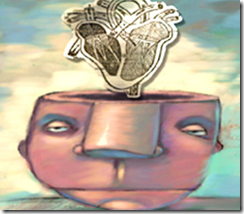 Who would have ever believed it?
 Going back over your mistakes, being asked painful questions and giving honest answers is a difficult, but cathartic experience.
 I have to admit to having had a few worries about how the day was going to play out as I drove the seventy miles to Bristol this morning.


Recents Comments