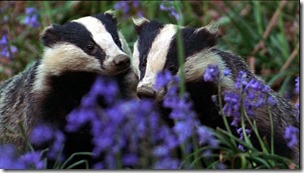
 Sometimes, being caught up in traffic can be a good thing. For example, had I sailed through to the office this morning, I might well have missed the latest round of debate on the forthcoming, and in my opinion, ill conceived badger cull, taking place in Somerset and Gloucestershire this coming summer.
A meeting will take place today at the Royal Society in London, to further examine the science behind the cull. Two of the protagonists, speaking on Radio 4’s Today program, made it clear that there is anything but consensus amongst scientists when it comes to the best way to eradicate, or even reduce, the incidence of bovine TB in the UK.
Professor Ian Boyd, for the action, said the badger cull was part of a wider set of solutions needed to combat the disease. He added: “TB is a complex and potentially quite dangerous disease. I think it would be very unfortunate if, as a result of protester activity, we lost the option in future of being able to use culling as a method in specific circumstances to control tuberculosis.”
But in contrast, Cambridge University zoologist Professor Sir Patrick Bateson told the programme the proposed badger cull was ill thought out, difficult to monitor and evaluate. He pointed out that the number of badgers was unknown, so the proposed 70% cull is impossible to evaluate. He also revealed that both cats and rats carry the bovine TB disease.
Professor Boyd said he has some sympathy for the arguments against the cull, but also stated that badgers are the major carrier ‘as far as we know’, further admitting that the science behind the action is still imperfect at best. He proposes to ‘test the system’ to see whether it is effective, but once the badgers are dead, it’s a little late for them.
I feel that we are approaching the problem from the wrong end. Although I have sympathy for the cattle farmers or this country, I would prefer to see a campaign of cattle inoculation before we let the hunters loose on the population of one of our most iconic indigenous wild animals. At the very least, we must be certain that killing these animals will have the desired effect. There is much evidence to suggest the opposite.
 and do it anyway … a rather overused cliché, was perfectly illustrated less than an hour ago as Felix Baumgartner jumped from just over 128,000ft, 24 miles high, to set a whole bunch of world records.
 I sat transfixed as Baumgartner and his team went through the pre-launch checklist. The professionalism and calm atmosphere was awe inspiring as the time for him to jump grew ever nearer.
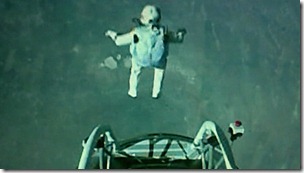 capsule steps, 24 miles above the Earth, knowing that your life, your very existence is in the hands of those who designed, built and tested your life-support suit.
 Genetic engineering has been around for some time, but
  Having had a few days off has given me the opportunity to watch some amazing TV. Pick of the bunch has to be a re-run of the BBC’s Wonders of the Universe series. After it first ran, I received the book of the series as a present and it’s great to be able to read about the topics after the episode has finished.
 The Search For Enlightenment
Recents Comments