Be Grateful For What You Have

Be GratefulWe all have the ability to feel sorry for ourselves. Sometimes it seems we have problem after problem, and think the world is against us. But we can all take a step back and look at our situation compared to others, and be honest enough to see that there are other people in much worse circumstances.

In Buddhist terms, the effects in our lives are caused by the causes we make along our way, it’s called Karma. Whilst it is difficult sometimes, to reconcile ourselves with the fact that we have, in some way caused our own problems, it is important to remember that we are not being punished.

So when you have had enough of your troubles, and are ready to throw in the towel, just take time to look around and realise that there is always someone worse off somewhere.

Be grateful for what you have, and concentrate on making causes for the effects you need to improve the situation. To do anything else is to lack Courage and Wisdom and that doesn’t help anyone, least of all yourself.

W.C.C … It’s Not Cricket You Know

Cricket_BallHave you ever had a problem or situation that has been rumbling around for a while, but you can’t drum up the enthusiasm to fix? I know you have, we all have. Maybe enthusiasm is not the right word, maybe energy, or confidence is a better one.

Perhaps you should have made a phone call, written a letter, or gone to see someone, but you know they aren’t going to be too pleased to hear from you when you do.

When I say you know, it’s probably more accurate to say you imagine, you suppose, see what I mean? We all build up little scenarios in our heads, and the more often we think about the problem, the more convinced we become, that our imagined outcome is what will actually happen. Our fundamental darkness will also do its best to confirm our worst fears.

This is where we need a bit of W.C.C … Wisdom, Courage and Compassion.

We need the Wisdom to see that what we imagine is the version of events from our point of view, and may be way off. We also need to accept that any problem that is left to fester, will only get worse and never go away by itself.

We need a deal of Courage to put ourselves into a situation that may be awkward, embarrassing or painful (hopefully not physically). Picking up that phone, or ringing that door bell, when we are unsure of the reception, takes guts. But remember that the alternative may be even worse.

Now we need a huge dollop of Compassion. The fact that we have put off doing something about this issue probably means that we feel that we are in the wrong, in some way. So we need to steel ourselves for a potential tirade, whilst remaining calm and sympathetic. We need to understand the problem from the other persons point of view. That will take a dialogue of some nature, and maintaining a compassionate nature may help defuse the situation. We need to bite our tongue when we may feel like giving a little back. I don’t mean a complete capitulation, more a flexible approach to understanding their side of things.

I imagine that each and every person who reads this has an issue, be it large or small, that falls into this category. Only you know what it is, so gird your loins, take a deep breath, and get it sorted today. You’ll feel a lot better when you do, believe me, I know from experience.

Have Patience

Have PatienceIt is said that patience is a virtue, and indeed that is a fact.

Having patience with someone, something, or with a situation can make the difference between causing, or solving problems.

When you are just about to run out of patience you should take a deep breath and carry on trying to be understanding.

Sometimes when our patience runs out, it is because we don’t have the full picture. Having a partial understanding of a situation leads us all to try to fill in the missing parts from our imagination. Our fundamental darkness will relish the chance to invent the details for us.

As anyone who has been to the dentist, and I guess that’s pretty much all of us, the waiting room, the fear of what might be in store, is often far worse than the reality when we finally sit in the chair.

So it is with most situations in life. So stop imagining, take that deep breath, and find a little more patience. It will be worth it in the end as we turn yet more poison into medicine

How It Looks From Here

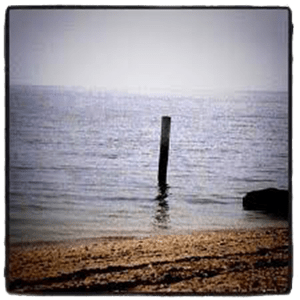
The Pole In The RiverWe all have a mental view of where we are going in life, what we would like our future to look like, a set of challenges that we must face if we are to achieve our goal. Each day, maybe even each second of each day, that view changes, usually just a little, sometimes quite a lot.

In a way, we can look at this from the view of a swimmer who is trying to swim against the flow of a river or a tide. He or she can swim at a constant pace, from their own viewpoint, a set number of strokes per minute, but their progress, from the viewpoint of an observer on the bank or the shore may be anything but constant.

It all depends on the strength of the current. If the current is flowing slower than the swimmer, the swimmer moves forward, if it is flowing faster than the swimmer, the swimmer moves backwards. Unsurprisingly, if the two are the same, the swimmer stays in exactly the same place.

Now we know that rivers and tides change, hourly, daily, in fact all the time. In order for the swimmer to know how fast to swim in order to make his or her desired progress they need to have a constant unchanging point on which to focus, a pole in the river, or a landmark on the shore, a point against which they can measure that progress.

Our situation in life changes in a similar way, so when we are striving towards our goals, we may think we are ‘swimming’ fast enough, think that we are making progress, when in fact, from another viewpoint, we are going nowhere, or even going backwards.

So what can we use as our ‘pole in the river’, our landmark by which we can measure our progress? Something that is constant, no matter what else changes around us. The answer, for me at least, is my practice. It is unchanging, it is strong and resilient and is always in the same place, no matter what else may be going on around me.

My practice gives me a great view of my progress. No matter what the challenge, when I chant Nam Myoho Renge Kyo, my perspective on things is focussed on a wider view of the situation rather than just my own viewpoint. So I know whether I am ‘swimming’ fast enough to reach my goal, or whether I need to put in more effort to achieve my aims.

Putting It In Context

Put That Problem Into ContextArriving back in the office this morning, following my nice long weekend, I was greeted by the dreaded bulging inbox. Most emails were asking about forgotten passwords or the whereabouts of mislaid deliveries, but one stood out like a sore thumb.

One of our clients had missed her subscription reminders and so had been locked out of our virtual album product. Her collection data was safe and sound, but she wasn’t to know that. However, judging by the panicked tone of her email, you might have thought that the world had stopped turning or the sun had suddenly gone out … ‘nothing short of an absolute disaster ‘ was the way she described it.

Naturally, I fixed the problem within minutes and soothed her furrowed brow, but the incident got me thinking.

How often do we see something, which in real terms is a minor irritant, maybe a worrying occurrence at worst, as the end of the world? Somebody puts a ding in your car on your way to work, or the first tube is full after you’ve waited a full ten minutes for it to arrive, or maybe you spill coffee on your nice clean white shirt … disaster !!!

But when we take a deep breath, let our pulse return to normal, and look at these events in the cold light of day, they really are nothing. The problem is that we are all too often distracted by the minutiae of life whilst we fail to see the bigger picture. Your car may have a dent in it, but nobody was injured, the next tube has plenty of space and you get in on time anyway, the stain on your shirt may be annoying, but at least you weren’t scalded in the process.

So next time you think your world has come off the rails, take time to see the problem in context. It may not be as trivial as the examples I’ve given, but is it really as bad as you first thought, I rather doubt it. Remember, even the end of the world won’t be the end of the world in real terms.

Unending Possibilities

Omega Centauri from the Hubble Space Telescope - click to view the full imageWhen we are open and engaged, we experience the greater self. When we are closed off, we are exhibiting our lesser self. The lesser self is a deluded condition, whilst our greater self is synonymous with our Buddha nature.

To live for the greater self means to recognise the universal principle behind all things and, being awaked in this way, rise above the suffering caused by the awareness of impermanence. A belief in something eternal is needed to enhance our quality of life.

By believing that this world is the be-all and end-all of existence, we will miss out, we will not live a truly profound life. When our viewpoint expands beyond the boundaries of our present existence to include the entire, eternal universe, we can finally live deeply fulfilling lives.

What’s Your POV?

What's Your Point Of View?Having confidence in yourself, in your faith, and in my case, my practice is a really comfortable place to be. But simply having someone else question that confidence can be a good thing at times, even though it might leave you questioning yourself.

When you find yourself being quizzed about aspects of your life, it is all too easy to become defensive, even annoyed by the questions. Who does this person think they are, putting my self confidence under the microscope?

But taking the time to think carefully about the questions, to see things from their point of view and to reflect upon what you see, is a good thing.

Of course it can make you question your own beliefs, about yourself, about the way things really are, and not just the way you see them. It can cause you to pull up short and may even make you realise that the situation is not quite the way you had imagined.

But it also gives you the opportunity to take stock and, where necessary, make changes to align your world view with the real world. Our own little universe is sometimes at odds with the way things really are, so if someone asks you awkward questions, don’t come out with all guns blazing, it may just be that they have a more realistic idea of the situation.

A Fresh Pair Of Eyes

A Fresh Pair Of EyesA great work of art is one that truly moves and inspires you. The test is when you yourself are moved. Don’t look at art with anyone else’s eyes. Don’t listen to music with others’ ears. You should view art with your own feelings, your own heart and mind.

If you allow yourself to be swayed by the opinions of others, ‘It must be good, because everyone else is raving about it’ or ‘It must be bad, because nobody else likes it’, your feelings, your sensibilities, even your confidence, which are the basis of every artistic experience, may wither and die.

To enjoy art to the fullest, you must abandon any preconceived notions, and look at things through fresh eyes. You should then confront the work directly, with your whole being. If you find that you are deeply moved, then for you, that is a great work of art.

Precisely the same applies to your faith. What moves you is a personal thing, it should not be based on what other people feel, nor should they influence you in any way. Have the wisdom, courage and compassion to stand firm and hold onto your own beliefs.

It’s All About Perspectives

UmbrellasThere was once an old lady who cried all the time. Her elder daughter was married to an umbrella merchant while the younger daughter was the wife of a noodle vendor. On sunny days, she worried, “Oh no! The weather is so nice and sunny. No one is going to buy any umbrellas. What will happen if the shop has to be closed?” These worries made her sad. She just could not help but cry.

When it rained, she would cry for the younger daughter. She thought, “Oh no! My younger daughter is married to a noodle vendor. You cannot dry noodles without the sun. Now there will be no noodles to sell. What should we do?” As a result, the old lady lived in sorrow everyday. Whether sunny or rainy, she grieved for one of her daughters. Her neighbours could not console her and jokingly called her “the crying lady.”

One day, she met a monk. He was very curious as to why she was always crying. She explained the problem to him. The monk smiled kindly and said, “Madam! You need not worry. I will show you a way to happiness, and you will need to grieve no more.”

The crying lady was very excited. She immediately asked the monk to show her what to do. The master replied, “It is very simple. You just need to change your perspective. On sunny days, do not think of your elder daughter not being able to sell umbrellas but the younger daughter being able to dry her noodles. With such good strong sunlight, she must be able to make plenty of noodles and her business must be very good. When it rains, think about the umbrella store of the elder daughter. With the rain, everyone must be buying umbrellas. She will sell a lot of umbrellas and her store will prosper.”

The old lady saw the light. She followed the monk’s instruction. After a while, she did not cry anymore; instead, she was smiling everyday. From that day on she was known as “the smiling lady.”

Light The Blue Touch Paper

BombI read with much interest today, that the Cambridge Union debating society are hosting a debate between Professor Richard Dawkins and former Archbishop of Canterbury, Rowan Williams. The topic of the debate, being held on Thursday, is “This house believes that religion has no place in the 21st Century”.

The bringing together of two such polarised views appears to be exciting the members of the society, with their president, Ben Kentish claiming that the event should be the highlight of the society’s 200-year history.

Professor Dawkins is renowned for his outspoken views on religion, coming as he does from a very firm atheist point of view. His book, The God Delusion, sets out to portray Dawkins’ views regarding faith and the position of religion in modern life.

Professor Tariq Ramadan, known as the Muslim Martin Luther, Andrew Copson, the chief executive of the British Humanist Association, and Douglas Murray, founder of the Centre for Social Cohesion, will also take part. The debate will be attended by around 1000 students and will be recorded and made available via the union website.

In all it promises to be a very open and eventful conversation, though it is difficult to see whether the motion will be defeated or passed, given such an inflammatory motion and such illustrious personalities in their fields.

I look forward to seeing the results on video.

Previous Older Entries Next Newer Entries