Chanting In The Dark

Chanting In The DarkI don’t know what it was that woke me early today, maybe it was the rocking of the boat, or maybe the sun shining in through the cabin window. Whatever it was, I dressed quietly and left the others sleeping soundly.

The stillness of the morning air was quite magic. I walked down the towpath, away from the boat and towards the Whitehouse tunnel a few hundred yards away. There were birds singing in the trees and an earthy smell from the wet soil, it was all very calm.

As I entered the tunnel I started chanting, quietly at first, then louder and louder. The tunnel is about 200 yards long and I could see the sunlight shining in at the far end. But as I got deeper and deeper inside, I could not see the towpath, my feet, even my hand in front of my face, other than by silhouetting it against the half circle of light ahead.

The resonance of my chanting got louder and louder and it got darker and darker. I could not see where I was walking, so I trusted in my senses and in the engineering expertise of the people who built the tunnel all those many years ago.

It struck me that walking through that dark tunnel was a little like my faith in my practice and in Nichiren Daishonin who had laid the path before me. Like the light at the far end of the tunnel, we walk forward, trusting our steps will rest on solid ground, towards the enlightenment we seek. We are never disappointed, the way is solid and supports us in our quest.

The Power Of Prayer

During morning Gongyo we say four Prayers, the first out loud, the last three silently to ourselves. During evening Gongyo, the first prayer is omitted.

The First Prayer – Appreciation for Life’s Protective Forces (spoken – morning Gongyo)

lotusI offer appreciation to the Shoten Zenjin, the functions in life and in the environment that serve to protect us, and prey that these protective powers may be further strengthened and enhanced through my practice of the Law.

The Second Prayer – Appreciation for the Gohonzon (silent)

lotusI offer my deepest praise and most sincere gratitude to the Dai-Gohonzon of the Three Great Secret Laws, which was bestowed upon the entire world.

I offer my deepest praise and most sincere gratitude to Nichiren Daishonin, the Buddha  of the Latter Day of the Law.

I offer my deepest praise and most sincere gratitude to Nikko Shonin.

I offer sincere gratitude to Nichimoku Shonin.

The Third Prayer – For the attainment of kosen-rufu (silent)

lotusI pray that the great desire for kosen-rufu is fulfilled, and that the Soka Gakkai International develops eternally in this endeavour.

I offer my most sincere gratitude to the three founding presidents – Tsunesaburo Makiguchi, Josei Toda and Daisaku Ikeda – for their eternal example of selfless dedication to the propagation of the Law.

The Fourth Prayer – Personal prayers and prayer for the deceased (silent)

lotusI pray to bring forth Buddhahood from within my life, change my karma and to fulfil my wishes in the present and the future.

(we may offer additional prayers here)

I pray for my deceased relatives and for all those who have passed away, particularly for these individuals:

(we name our relatives and friends here)

I pray for peace throughout the world and for the happiness of all humanity.

Nam Myoho Renge Kyo

True Freedom

True Freedom

Being able to allow ourselves or another to be free enough to reach full potential takes courage. But to take any other path would be to stifle that potential and act in a cowardly and selfish manner.

Nichiren writes: “Myoho-renge-kyo is the Buddha nature of all living beings…. The Buddha nature that all these beings possess is called by the name Myoho-renge-kyo” (wnd, 131). Regarding how to manifest one’s innate Buddha nature, Nichiren explains: “When we revere Myoho-renge-kyo inherent in our own life as the object of devotion, the Buddha nature within us is summoned forth and manifested by our chanting of Nam-myoho-renge-kyo. This is what is meant by ‘Buddha.’ To illustrate, when a caged bird sings, birds who are flying in the sky are thereby summoned and gather around, and when the birds flying in the sky gather around, the bird in the cage strives to get out. When with our mouths we chant the Mystic Law, our Buddha nature, being summoned, will invariably emerge” (wnd, 887).

In Nichiren’s metaphor, our innate Buddha nature, whose name is Nam myoho renge kyo, is a bird trapped in the cage of ignorance. In other words, our deluded minds create this cage that imprisons our Buddha nature. But when we chant Nam myoho renge kyo to the Gohonzon, which expresses Nichiren’s enlightened life and the potential of all people, our dormant Buddha nature becomes activated.

The singing of the caged bird is our chanting, and the birds flying in the sky are the Buddha nature in our environment, particularly as it is expressed in the Gohonzon. Through our chanting, the Buddha nature within our lives and the Buddha nature inherent in the universe begin their dynamic interaction.

For Nichiren’s metaphor to work, however, it is necessary for the caged bird to recognize the birds in the sky as being its own kind. In other words, when we pray to the Gohonzon, rather than thinking of it as an external power or deity, we must think of it as the mirror image of our own Buddha nature. If the caged bird thinks of itself as an elephant, it is unlikely to give the slightest thought to flying.

Nichiren Buddhism clarifies that the teaching of the Buddha nature is a teaching of faith and practice. All people have it, but not many can believe in it. Furthermore, some of those who believe in their Buddha nature may not practice to manifest it, erroneously thinking-I’m already a Buddha, so I don’t have to do anything. One’s faith in the Buddha nature must be expressed in one’s actions to manifest it.

Those who see the universal Buddha nature of oneself and others, and work to awaken it in all people are already Buddhas, for such actions belong to none other than a Buddha. As we cultivate our inherent Buddha nature through our conviction and actions to manifest it no matter our circumstances, we begin to see it and experience it. In our everyday lives, seeing may be believing. But in the world of Buddhism, believing in the Buddha nature is the first step toward seeing it.

(from Living Buddhism – February 2005)

Well It Works For Me

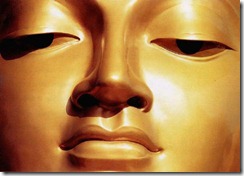
Golden BuddhaSo many of the World Religions base their beliefs on a God, a Supreme Being, a Creator or an Entity whose existence is the focus of the religion’s belief.

As an Atheist, that focus never sat comfortably in my psyche. I don’t think anyone really believes in a white haired old man sitting in the clouds these days, but there are millions of people who base their faith on a Being whose existence cannot be proven. In fact, many religions actively seek to dissuade followers from even trying to prove that existence.

I was schooled in the Sciences, Mathematics, Physics, Chemistry and Biology as well as Psychology, and those sciences demand proof for each and every hypothesis. So when I stumbled, and that is the right way to describe it, upon Nichiren Buddhism, I was overjoyed to find that there was no supreme being and that every part of Practice demands we examine the results of that Practice as proof of it’s validity.

Nichiren Daishonin said that we should seek proof of the effectiveness of our Practice in the results it brings. He also says that if the results do not support the practice, that we should desist.

I don’t want anyone to think that I am putting Nichiren Buddhism above or before any other religion, I am only saying that, for me, it fits my thinking and for me, it works.

I have been practicing for a little while now, but I’m still learning new things every day. I never expected immediate results, but recently I have to say they have been truly amazing. So the proof is there for me.

Ten Worlds In One Day

The Ten Worlds are the life-states we all experience, many each and every day.

The Ten WorldsThe Ten Worlds are:

  • Hell
  • Hunger
  • Animality
  • Anger
  • Humanity
  • Heaven
  • Learning
  • Realisation
  • Bodhisattva
  • Buddhahood

Each World contains the other nine Worlds to a greater or lesser extent, so even though you might be in a Heaven (or Rapture) life-state, you will have elements of Hell, Hunger, Animality, Anger, Humanity(or Tranquillity), Learning, Realisation, Bodhisattva and Buddhahood within that life-state. This helps us to explain how our life-state (or mood) can change so quickly when we encounter new or changing causes.

The first six Worlds, Hell, Hunger, Animality, Anger, Humanity and Heaven are brought about by external causes, events which we cannot control.

The last four, Learning, Realisation, Bodhisattva and Buddhahood are brought about by our own thoughts and actions, which we can control.

Nichiren Daishonin wrote:

‘If you wish to free yourself from the sufferings of birth and death you have endured since time without beginning and to attain without fail unsurpassed enlightenment in this lifetime, you must perceive the mystic truth that is originally inherent in all living beings. This truth is Myoho-renge-kyo. Chanting Myoho-renge-kyo will therefore enable you to grasp the mystic truth innate in all life.

The Lotus Sutra is the king of sutras, true and correct in both word and principle. Its words are the ultimate reality, and this reality is the Mystic Law (myoho). It is called the Mystic Law because it reveals the principle of the mutually inclusive relationship of a single moment of life and all phenomena. That is why this sutra is the wisdom of all Buddhas.

Life at each moment encompasses the body and mind and the self and environment of all sentient beings in the Ten Worlds as well as all insentient beings in the three thousand realms, including plants, sky, earth, and even the minutest particles of dust. Life at each moment permeates the entire realm of phenomena and is revealed in all phenomena. To be awakened to this principle is itself the mutually inclusive relationship of life at each moment and all phenomena. Nevertheless, even though you chant and believe in

Myoho-renge-kyo, if you think the Law is outside yourself, you are embracing not the Mystic Law but an inferior teaching. “Inferior teaching” means those other than this [Lotus] sutra, which are all expedient and provisional. No expedient or provisional teaching leads directly to enlightenment, and without the direct path to enlightenment you cannot attain Buddhahood, even if you practice lifetime after lifetime for countless kalpas. Attaining Buddhahood in this lifetime is then impossible. Therefore, when you chant myoho and recite renge, you must summon up deep faith that Myoho-renge-kyo is your life itself.

You must never think that any of the eighty thousand sacred teachings of Shakyamuni Buddha’s lifetime or any of the Buddhas and bodhisattvas of the ten directions and three existences are outside yourself. Your practice of the Buddhist teachings will not relieve you of the sufferings of birth and death in the least unless you perceive the true nature of your life. If you seek enlightenment outside yourself, then your performing even ten thousand practices and ten thousand good deeds will be in vain. It is like the case of a poor man who spends night and day counting his neighbour’s wealth but gains not even half a coin. That is why the T’ien-t’ai school’s commentary states, “Unless one perceives the nature of one’s life, one cannot eradicate one’s grave offenses.” This passage implies that, unless one perceives the nature of one’s life, one’s practice will become an endless, painful austerity. Therefore, such students of Buddhism are condemned as non-Buddhist. Great Concentration and Insight states that, although they study Buddhism, their views are no different from those of non-Buddhists.

Whether you chant the Buddha’s name, recite the sutra, or merely offer flowers and incense, all your virtuous acts will implant benefits and roots of goodness in your life. With this conviction you should strive in faith. The Vimalakirti Sutra states that, when one seeks the Buddhas’ emancipation in the minds of ordinary beings, one finds that ordinary beings are the entities of enlightenment, and that the sufferings of birth and death are nirvana. It also states that, if the minds of living beings are impure, their land is also impure, but if their minds are pure, so is their land. There are not two lands, pure or impure in themselves. The difference lies solely in the good or evil of our minds.

It is the same with a Buddha and an ordinary being. When deluded, one is called an ordinary being, but when enlightened, one is called a Buddha. This is similar to a tarnished mirror that will shine like a jewel when polished. A mind now clouded by the illusions of the innate darkness of life is like a tarnished mirror, but when polished. it is sure to become like a clear mirror, reflecting the essential nature of phenomena and the true aspect of reality. Arouse deep faith, and diligently polish your mirror day and night. How should you polish it? Only by chanting Nam-myoho-renge-kyo.

What then does myo signify? It is simply the mysterious nature of our life from moment to moment, which the mind cannot comprehend or words express. When we look into our own mind at any moment, we perceive neither colour nor form to verify that it exists. Yet we still cannot say it does not exist, for many differing thoughts continually occur. The mind cannot be considered either to exist or not to exist. Life is indeed an elusive reality that transcends both the words and concepts of existence and nonexistence. It is neither existence nor nonexistence, yet exhibits the qualities of both. It is the mystic entity of the Middle Way that is the ultimate reality. Myo is the name given to the mystic nature of life, and ho, to its manifestations. Renge, which means lotus flower, is used to symbolize the wonder of this Law. If we understand that our life at this moment is myo, then we will also understand that our life at other moments is the Mystic Law. This realization is the mystic kyo, or sutra. The Lotus Sutra is the king of sutras, the direct path to enlightenment, for it explains that the entity of our life, which manifests either good or evil at each moment, is in fact the entity of the Mystic Law.

If you chant myoho-renge-kyo with deep faith in this principle, you are certain to attain Buddhahood in this lifetime. That is why the sutra states, “After I have passed into extinction, [one] should accept and uphold this sutra. Such a person assuredly and without doubt will attain the Buddha way.” Never doubt in the slightest. Respectfully. Maintain your faith and attain Buddhahood in this lifetime. Nam-myoho-renge-kyo, Nam-myoho-renge-kyo.’

Nichiren

The more we chant, and the more we practice, the higher our life-energy becomes and the more control we have over our life-state. The object of the exercise is to raise our own self-awareness and through selfless thoughts and deeds, to grow ever nearer our goal of attaining Buddhahood.

Practice, Practice, Practice

The World of BuddhahoodNichiren Buddhists believe that, not only does everyone have the World of Buddhahood within them, but that it can be achieved within this lifetime.
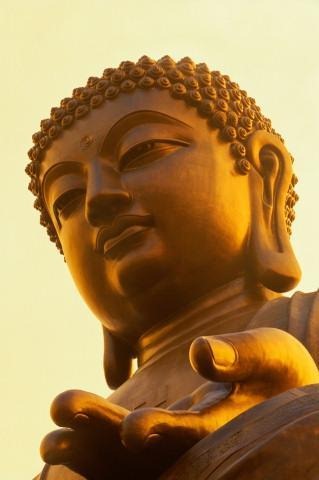
Think about that, everyone you know has the potential to reach Buddhahood, your family, friends, work colleagues, everyone. And not only those people you like, but those you don’t like too.

But how do we achieve this state of Buddhahood? The Daishonin had this to say …

“When deluded, one is called an ordinary being, but when enlightened, one is called a Buddha.  This is similar to a tarnished mirror, that will shine like a jewel when polished.

A mind now clouded by the illusions of the innate darkness of life is like a tarnished mirror, but when polished, it is sure it become like a clear mirror, reflecting the essential nature of phenomena, and the true aspect of reality.

Arouse deep faith, and diligently polish your mirror day and night. How should you polish it? Only by chanting Nam Myoho Renge Kyo.”

So there it is, such a simple Practice, so easy to learn, that when applied with faith and diligence, will allow us to reveal the Buddha in each and every one of us.

A Way Of Life

BuddhahoodAs you know, my Buddhist Practice is now a way of life. A routine of chanting Nam Myoho Renge Kyo and prayer, that I go through every day, a routine that also involves me writing this blog. But routine is also another word for boring, mundane or even hum-drum, so it’s important to keep in mind why we Practice.

We Practice for several reasons …

  • To raise our life-energy levels …

  • To chant for certain outcomes …

  • To move us along the road towards Buddhahood …

  • To give a stable anchor in our lives …

and there are many others, often different for every individual.

As a mere novice, I find that I can learn a little more each day Let’s face it, Buddhism has been around for well over two thousand years, so there’s plenty to learn about.. I can improve or seek to perfect my Practice and to maintain a more focussed attention to the subject of my chanting. I look forward to the feeling I get during and after Gongyo. I often find that I am quite warm when I finish chanting and in a really good mood, despite any problems I am facing.

I never cease to be amazed by the effectiveness of chanting either. To start with, the word coincidence came into my mind when I saw results, but not any more. But I do get surprised by the way the Universe solves the problems with which I have asked it to help. Not always the way I expected, and often in better, more subtle ways than I could have imagined.

So my Practice is a pleasure, not a chore. It’s something I enjoy and never something I feel I have to do. As Nichiren Daishonin said, ‘If you practice something, you must test it’s validity with the results you see’. In other words, if it doesn’t work, stop doing it. For me, it is still working wonders almost daily, and I truly believe the World would be a better place if more people were to discover those wonders.

Anger In Buddhism

Become A Lion KingI think all of us are more than a little angry about the current injustices in our society. It appears, on the face of it, that the banking community has plunged the world into a state of turmoil, yet they are the first to be offered help to get out of the mess of their own making.

Nichiren Daishonin was never afraid to confront injustice. He spent a large part of his life in prison and exile because he was unafraid to voice his feelings about it and had this to say:

Each of you should summon up the courage of a lion king and never succumb to threats from anyone. The lion king fears no other beast, nor do it’s cubs. Slanderers are like barking foxes, but Nichiren’s followers are like roaring lion kings.

So summon up your courage and roar at the injustice we are seeing right before our very eyes. We all understand that we will have to make sacrifices, but those sacrifices have to be borne by every individual according to the ability to survive having made them.

None of us want to reside in the lower world of anger, but turning that poison into medicine is the route to, not only solving the injustices in the world, but also the financial situation in which we find ourselves.

Determination To Succeed

Determined To SucceedThe world’s population has just passed seven billion, and our small planet is obviously not getting any bigger. To support all these hungry mouths we have to collaborate more closely than ever, to stop fighting and start farming.
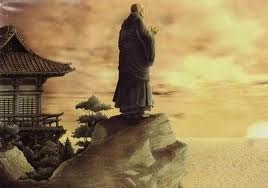
All those hundreds of years ago, Nichiren was utterly convinced we could change even the most dire and painful reality, including the danger of war, and indeed that it was imperative that we do so.

This conviction underlies his unwavering determination to create a peaceful society by disseminating the teachings of Buddhism. This is why we are working with endless determination today, to achieve Kosen Rufu, World Peace.

Have Faith – No Matter What

Nichiren on Sado IslandTonight’s study group concerned itself with Nichiren’s reply to his disciple Sairen-bo regarding The True Aspect of All Phenomena (WND383)

In the letter Nichiren writes

‘Now, no matter what, strive in faith and be known as a votary of the Lotus Sutra, and remain my disciple for the rest of your life. If you are of the same mind as Nichiren, you must be a Bodhisattva of the Earth. And if you are a Bodhisattva of the Earth, there is not the slightest doubt that you have been a disciple of Shakyamuni Buddha from the remote past.’

It is easy to miss the phrase ‘No Matter What’ in the first sentence, but studying it more closely, and taking into account the circumstances in which Nichiren and Sairen-bo found themselves when it was written, we see a deep and most profound meaning.

Both of them were in exile on Sado Island and being held in less than pleasant conditions. So when Nichiren wrote ‘No Matter What’, he was asking Sairen-bo to keep his faith and maintain his practice whatever situation he found himself in.

There is little doubt that both Nichiren and Sairen-bo were subjected to much worse conditions than we can ever imagine, let alone experience. Due to their fortitude and strength, Nichiren Buddhism exists today. If they had lost their faith, or stopped practicing in order to improve their situation, Nichiren Buddhism would have died at that time.

So when we find ourselves in difficult situations, when we feel that we are too tired or too busy to practice, we must remember their resolute stance and practice all the harder. To do anything less would be to let their efforts be for nought. Let your practice reflect their strength and your efforts be worthy of their sacrifice.

Previous Older Entries Next Newer Entries