 If you research Buddhism, you will find, as with Christianity, that there are many schools or sects, believing much the same basic principles, but with their own embellishments or focus.
When I first became a Buddhist, I was rather naive about the different schools and followed the Kadampa tradition practiced at the Shantideva Buddhist centre in Maidenhead, later moving to Reading.
Kadampa Buddhism focuses on the teachings of Geshe Kelsang Gyatso and the centre of the practice is concentrated on clearing the mind through meditation. The cause of much unhappiness and suffering is due to desirous attachment to property, people or situations, according to Kelsang Gyatso. The way to remove suffering is therefore to break the links of desirous attachment and accept the principle of impermanence.
This is all very well in an eastern third world country, where possessions are few, life is lived at a different pace and everyone, or at least the majority, hold the same beliefs. Here in the west, where Judaeo Christianity is the predominant religion, Kadampa Buddhism only works if you can remove yourself from the mainstream society and immerse yourself in study within one of their centres.
I also felt that the worship of gods within the temple was wrong. Shakyamuni was a man, he never proclaimed to be, or to be connected with, any deity. So where did all these gods spring from. I believe they are the manifestation of the metaphorical gods of The Lotus Sutra, made real by man’s need for a focus of worship. Not for me, this went against my atheist beliefs and lost the focus of the practice in my eyes.
Over time I drifted away from the practice, and it was only when I was suffering because of the breakdown of my marriage, that I sought Buddhism once again. This time, I was lucky, or fortunate as we would say in Buddhism (no such thing as luck), to find Jason Jarrett’s podcasts, and through that, William Woollard’s The Reluctant Buddhist and Eddy Canfor-Dumas’ The Buddha, Geoff and Me.
Immediately, the sense that my own life would be put back in my own hands, that belief was in the self and one’s ability to achieve Buddhahood in this lifetime, struck a chord. At last, a Practice that worked with real life, that answered questions instead of posing several more. A Practice that has helped me more over the best part of a year, than any other practice has done in the past fifty years.
I wish I had been as fortunate as Ken, Jayne, William, Eddy and so many, many others, who found Nichiren Buddhism ten, fifteen, twenty or more years ago. My life would have been completely transformed, and I believe, entirely for the better.
There is a letter from Nichiren Daishonin to the wife of the late Matsuno, which describes how unlikely, and difficult it is to meet the Practice in a lifetime, it is well worth reading and explains just how lucky I have been to find my faith at last.
 With the cycle trip to Bristol beginning tomorrow, I’m busy tidying up some of the loose ends here at work before my much anticipated long weekend. There’s a lot going on at present, in fact it’s been this way since all the changes earlier in the year, but a company wide migration to cloud based applications is keeping us all on our toes. I want to leave the decks nice and clear before I head off for home this evening.
 My own experiences with Nichiren Buddhism have shown me how powerfully it can change your life.
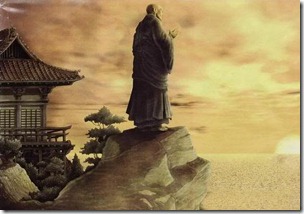 In Nichiren Buddhism, attaining enlightenment is not about embarking on some inconceivably long journey to become a resplendent, all knowing Buddha, it is about accomplishing a transformation in the depths of one’s being, little by little.
 The true victors in life are those who, having endured repeated challenges and setbacks, have sent the roots of their spiritual being to such a depth, that nothing can ever shake them loose.
 A few people have asked how chanting Nam Myoho Renge Kyo actually works, how it raises my life-energy and puts me in a higher life-state, irrespective of the circumstances.
 One of the most difficult things to do, personally speaking, is to remain in a constant life-state when confronted by the highs and lows of life.
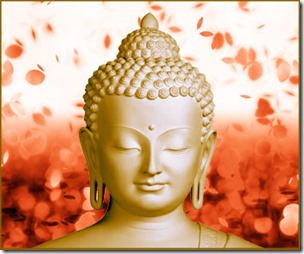 What does attaining Buddhahood mean for us? It does not mean that one day we suddenly turn into a Buddha or become magically enlightened. In a sense, attaining Buddhahood means that we have securely entered the path, or orbit, of Buddhahood inherent in the cosmos.
 Each and every one of our actions in previous existences are engraved, and contained, in this lifetime. The causes for our present suffering or joy, misery or happiness, all lie in our own past actions.
 The Search For Enlightenment
Recents Comments