An article, written by me, for the Homophilosophicus blog to explain my view of the role of prayer in Nichiren Buddhism.
 Just like a scratched record, I hear myself once again having to explain, that unlike almost every other religion, Nichiren Buddhism see things differently. Not that I feel I am apologising for that, just that because it is a philosophy for life and living, rather than a religion in the more generally accepted sense, the meaning and purpose of prayer are in my opinion, fundamentally different.
As with all the deity based religions, prayer is a conduit of communication, a method for getting a message, or request, heard. However, in Buddhism, prayer is a communication to the inner self, rather than to an external being, and in that respect, it is more about focussing the conscious and sub-conscious on a task or topic at hand.
Prayer in Nichiren Buddhism is an integral part of our daily practice. We say, or think, as three of the prayers are silent, four prayers during Gongyo and these are they:
First Prayer – for the appreciation of life’s protective forces:
I offer appreciation to the Shoten Zenjin, the functions in life and in the environment that serve to protect us, and pray that these protective powers may further be strengthened and enhanced through my practice of the Law.
Second Prayer – for the appreciation for the Gohonzon:
I offer my deepest praise and most sincere gratitude to the Dai-Gohonzon of the Three Great Secret Laws, which was bestowed upon the entire world.
I offer my deepest praise and most sincere gratitude to Nichiren Daishonin, the Buddha of the Latter Day of the Law.
I offer my deepest praise and most sincere gratitude to Nikko Shonin.
I offer sincere gratitude to Nichimoku Shonin.
Third Prayer – for the attainment of kosen-rufu:
I pray that the great desire for kosen-rufu is fulfilled, and that the Soka Gakkai International develops eternally in this endeavour.
I offer my most sincere gratitude to the three founding presidents – Tsunesaburo Makiguchi, Josei Toda and Daisaku Ikeda – for their eternal example of selfless dedication to the propagation of the Law.
Fourth Prayer – personal prayers and prayers for the deceased:
I pray to bring forth Buddhahood from within my life, change my karma and to fulfil my wishes in the present and the future.
* Prayers for specific outcomes are brought to mind here.
I pray for my deceased relatives and for all those who have passed away, particularly for these individuals:
* Here we bring to mind the names of those we particularly wish to remember
I pray for peace throughout the world and for the happiness of all humanity.
I think you can see that the prayers are mainly intended to bring to mind the subjects they contain, rather than being any form of communication with a third party. They focus the mind on the desired effect, and are intended to remind us that we need to make the causes ourselves, for the effects we wish to see.
We remember the dedication and sacrifices that the founding presidents have made in order to keep the faith alive and the efforts they have made in promoting the religion in the past decades. I feel it is important to mention that although the third prayer mentions the development of the Soka Gakkai International, it is more important that the aim of the SGI to promote peace for all on earth, rather than the organisation itself, is the desired outcome.
Personally, during the forth prayer, where we bring to mind specific outcomes, I remind myself of personal goals, self-improvement, human revolution and the like, as well as thinking of others who are struggling with challenges such as ill health, difficult situations and so on.
By bring these things into my consciousness means that I can focus on ways I may resolve my own challenges, or help others resolve theirs. There is no concept of me asking any third party to intervene in the outcome, the responsibility for that is all my own.
In that respect, I find Nichiren Buddhism to be a very empowering philosophy. I am taking responsibility for the events occurring in my life, myself. Whilst this puts the onus squarely on my own shoulders, it also gives me control, rather than handing it to any third party whatsoever.
Far from being an all-knowing, all-seeing deity, I am, like you, a simple human being. So I make mistakes in the decisions and thoughts, words and deeds I perform each and every day. Because I take full responsibility for all those mistakes, I am free to learn from them, rather than ask forgiveness for them.
Prayers form a large part in that learning process. By purposefully bringing these erroneous issues into my consciousness, I am able to analyse, evaluate and modify my thinking. By doing this as part of my daily regime, I am forced to constantly confront my failings, and that improves my chances to improve and to increase the scope of my enlightened nature.
So I hope you can see the contrast between Buddhist prayers and those of other theistic religions. Far from being a form of communication between the person praying and his or her god, it is communication between me and my consciousness. Furthermore, because I accept responsibility for everything that happens in my life, I am forced to search for the causes of the effects I am experiencing, rather than asking ‘why is this happening to me?’.
I am tempted to suggest that Nichiren Buddhists do not actually pray at all, in the accepted definition of that word. But although the intended recipient of our prayers could not be more different, the intention behind those prayers can be seen to be very much the same.
 For me, my Buddhist Practice is a way of life. A routine that I go through every day, Gongyo, Daimoku, even writing this blog. But routine is also another word for boring, mundane or even hum-drum, so it’s important to keep in mind why we Practice.
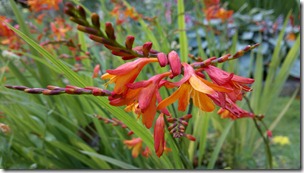 The function of fire is to burn and give light. The function of water is to wash away filth. The winds blow away dust and breathe life into plants, animals, and human beings. The earth produces the grasses and trees, and heaven provides nourishing moisture.
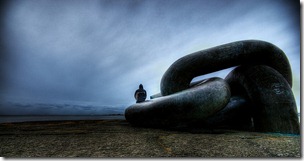 Our actions in previous lives are all engraved upon, and contained within, this lifetime. The causes for our present suffering, our joy, happiness or misery, all lie with our own past actions. But Nichiren Buddhism enables us to fundamentally transform our destiny.
 With my current struggle with The Dark Passenger continuing, this quotation from Daisaku Ikeda hit the proverbial nail squarely on the head …
 As you may have gathered from a couple of my recent posts, I’m getting excited about the prospect of spending the next week on a narrow boat in the middle of nowhere. Although I doubt that there is too much chance of anyone getting sunstroke, it does promise to be reasonably good weather and it will be much quieter than it is in the office.
 I offer appreciation to the Shoten Zenjin, the functions in life and in the environment that serve to protect us, and prey that these protective powers may be further strengthened and enhanced through my practice of the Law.
 I offer my deepest praise and most sincere gratitude to the Dai-Gohonzon of the Three Great Secret Laws, which was bestowed upon the entire world.
 I pray that the great desire for kosen-rufu is fulfilled, and that the Soka Gakkai International develops eternally in this endeavour.
 I pray to bring forth Buddhahood from within my life, change my karma and to fulfil my wishes in the present and the future.
 Even the atrocious weather didn’t put a dampener on a lovely Sunday. The rain was coming down by the bucketful as B and I made our way to the Porto Lounge in Fishponds, but we managed to park nearby and didn’t get too wet getting to the cafe.
 The Search For Enlightenment
Recents Comments