The Freedom To Fly

Freeing The Caged BirdWe can all be guilty of trying to hold things, or people, too close to us. This may be for a number of reasons, fear of losing them probably being the most common. With possessions we may only cause ourselves problems, but with people, the act of holding them close, may actually have the effect of pushing them away. We must learn to give people the freedom to grow, to learn, to blossom and the chance to be themselves, otherwise we may lose them forever.

Nichiren writes: “Myoho-renge-kyo is the Buddha nature of all living beings…. The Buddha nature that all these beings possess is called by the name Myoho-renge-kyo” (wnd, 131). Regarding how to manifest one’s innate Buddha nature, Nichiren explains: “When we revere Myoho-renge-kyo inherent in our own life as the object of devotion, the Buddha nature within us is summoned forth and manifested by our chanting of Nam-myoho-renge-kyo. This is what is meant by ‘Buddha.’ To illustrate, when a caged bird sings, birds who are flying in the sky are thereby summoned and gather around, and when the birds flying in the sky gather around, the bird in the cage strives to get out. When with our mouths we chant the Mystic Law, our Buddha nature, being summoned, will invariably emerge” (wnd, 887).

In Nichiren’s metaphor, our innate Buddha nature, whose name is Nam myoho renge kyo, is a bird trapped in the cage of ignorance. In other words, our deluded minds create this cage that imprisons our Buddha nature. But when we chant Nam myoho renge kyo to the Gohonzon, which expresses Nichiren’s enlightened life and the potential of all people, our dormant Buddha nature becomes activated.

The singing of the caged bird is our chanting, and the birds flying in the sky are the Buddha nature in our environment, particularly as it is expressed in the Gohonzon. Through our chanting, the Buddha nature within our lives and the Buddha nature inherent in the universe begin their dynamic interaction.

For Nichiren’s metaphor to work, however, it is necessary for the caged bird to recognize the birds in the sky as being its own kind. In other words, when we pray to the Gohonzon, rather than thinking of it as an external power or deity, we must think of it as the mirror image of our own Buddha nature. If the caged bird thinks of itself as an elephant, it is unlikely to give the slightest thought to flying.

Nichiren Buddhism clarifies that the teaching of the Buddha nature is a teaching of faith and practice. All people have it, but not many can believe in it. Furthermore, some of those who believe in their Buddha nature may not practice to manifest it, erroneously thinking-I’m already a Buddha, so I don’t have to do anything. One’s faith in the Buddha nature must be expressed in one’s actions to manifest it.

Those who see the universal Buddha nature of oneself and others, and work to awaken it in all people are already Buddhas, for such actions belong to none other than a Buddha. As we cultivate our inherent Buddha nature through our conviction and actions to manifest it no matter our circumstances, we begin to see it and experience it. In our everyday lives, seeing may be believing. But in the world of Buddhism, believing in the Buddha nature is the first step toward seeing it.

(from Living Buddhism – February 2005)

So That’s That For Another Week

That's All FolksLet’s just think back to Friday evening. The anticipation of a couple of days away from the office, maybe big plans, maybe just looking forward to the chance to recharge the batteries.

But where is that time now? Of course you can remember what you got up to, at least most of it I hope, but it’s time that has gone and you can never get it back.

It’s just a simple example of the unending passage of time, something we take so much for granted we often fail to remember how important it is. Because, although we have all the time in world through the process of reincarnation, to waste a single second it is to lack Wisdom.

If there is something you have been meaning to do, someone you intended to phone, but keep putting it off for any reason you can lay your hands on, you might have found the world of Tranquillity. It’s maybe not the worst of the Lower Worlds (Hell, Hunger, Animality, Anger, Tranquillity, Heaven) but can mean that you lack the life-energy to drive you get things done.

Get chanting, raise your life-energy and hence your life-state, after all, the weekend is over for another week.

It’s All About Perception

It's All About PerceptionIt is a well known Buddhist saying, that our problems are not the real problem, it is the way we perceive them that is the problem.

Don’t have problems, have a series of challenges. Challenges are just problems that we are confident that we can overcome. Our problems come and go, nothing lasts forever, so view them with an open mind, look on them as challenges and remember, you are turning poison into medicine.

Even places that have been shrouded in darkness for billions of years can be illuminated by a simple lit candle. Even a flint from the bottom of the deepest river can be used to produce fire.

Our present sufferings, no matter how dark, have certainly not existed for billions of years, nor will they linger forever.

The sun will definitely rise, in fact its ascent has already begun. With determination, we can all overcome our problems, so look on them as challenges and enjoy the victory when it arrives.

A Change For The Better

Human Revolution - Change For The BetterIn today’s world where global issues are so important, many people feel a sense of powerlessness and resignation; a feeling that no individual’s efforts can change the way things are.

But the Buddhist viewpoint is that the world should be seen from the perspective of the individual, and that the human life contains the entire universe.

That is why changing our own lives one by one will bring a change in our family, our community, and the society in which we live. It will change the age we live in, our history, and indeed all aspects of our world.

If we look for the true causes of war, we see that it is essentially caused by the human mind. War stems from the desire to control and conquer others, to have power, and from hatred and antipathy. Such is a human being in the grip of the negative force of life. World peace starts with the inner transformation of the individual, and the struggle to elevate our state of life, and free ourselves from the domination of the negative force of life.

A single sunflower contains the seeds for more than a thousand new plants. Similarly, when one brave person stands up for peace, his or her resolve spreads out into the environment in thousands of ways. Courage always brings a response. One person’s human revolution can therefore eventually change the destiny of the entire human race.

The Spirit of Human Revolution

In his writing On Attaining Buddhahood, Nichiren Daishonin conveys the basic spirit of human revolution: “You must never think that any of the eighty thousand sacred teachings of Shakyamuni’s lifetime or any of the Buddhas and bodhisattvas of the ten directions and three existences are outside yourself. Your practice of the Buddhist teachings will not relieve you of the sufferings of birth and death in the least unless you perceive the true nature of your own life.” [WND p3]

We could summarise the spirit of this teaching as being, “It’s not up to others; nor can I blame anyone else. I have to change myself first.” It is a viewpoint which says, everything in life is part of our own training; it is for our benefit and development. Human revolution takes place right now, in the situation we find ourselves at this moment.

World peace starts with this inner transformation of the individual. And yes it is a struggle to develop and elevate our state of life but human revolution is the foundation for world peace and also for individual peace and happiness. It is at the heart of our Buddhist practise. It is about changing our heart and drawing out our humanity.

It is the most amazing feeling as you discover that if the cause of your suffering is within the realms of your own life then you and only you can change that aspect of your life. This is the most freeing feeling. This is human revolution and the door to your Buddhahood.

Human revolution brings into play all the principles and processes that make up the Buddhist teachings of life. Learning to be able to live our lives on the basis of correct teachings is part of our human revolution. The process is a transformation of the heart.

Transforming the Self, Living the Teachings

When we commit our lives to chanting we embark on a journey of self-discovery and challenge. By taking responsibility for our feelings and emotions, especially those we most dislike, we come to realise we have the ability to transform our lives from within. As we broaden our experiences of chanting daimoku we get experiences of our environment reflecting the transformation of our inner lives. This could be in our family relationships, at work or in other aspects of life.

It is usually within one of these arenas that we find life can be difficult or cause us to suffer. As we continue chanting, the more we start to see our lives very differently. At first this process may seem a little uncomfortable because it is quite unique and new to us. We may or may not like what we see. Perhaps we realise we have set attitudes or opinions about others or various issues that make us suffer. It may seem that others have a problem with us. This can draw out all sorts of feelings and emotions that can make us uneasy, or uncomfortable.

Getting this kind of reaction does not mean that chanting is not working or that it is working in a negative way. On the contrary you are actually in the process of transforming exactly that which has always led you to suffer in that particular area of your life. Your chanting is illuminating an area of your life that needs to change for your own happiness. The realisation that this opinion or attitude stems from our own lives and not from others opinions of us, leads us to uncover the Buddha nature inherent in our lives. The quickest way to transform these feelings or attitude is to keep chanting until you realise the cause of these uncomfortable feelings.

However, it may be that is exactly when you find it the most difficult time to chant. You are on the brink of changing a part of your life that always stops you from progressing or being happy. It will probably feel like walking up a hill backwards. At such times obstacles and devils arise. You will probably be able to justify why it is more beneficial to watch TV than do gongyo or chant or tell a friend about Nam-myoho-renge-kyo or study some of Nichiren Daishonin`s writings. But this is exactly the time to do these things in order to break through and win over something that has always held you back. This is the time to muster a fighting spirit and to be courageous.

In his book Seven Paths to Peace, Daisaku Ikeda talks about human revolution in terms of self-mastery. Simply put, this means winning control over oneself, overcoming the small self that is dominated by narrow self-interest and awakening to the larger self that works for the good of all humanity. From this standpoint a major obstacle to developing ourselves is to pursue a way of life bound by our small ego or self. Expanding from the lesser self to the greater self is the path of human revolution.

Through our practice of introducing others to Nichiren Daishonin’s Buddhism, and through efforts to share Buddhism with others, we ourselves grow immensely, we can carry out our human revolution, and transform our karma. Therefore by guiding another individual towards happiness, we also guide ourselves towards happiness. The act of introducing others to Buddhism, which enables us to profoundly benefit both ourselves and others, is the formula of hope for humanity.

At a time when an ordinary person attains Buddhahood, or at a time when a person is at a turning point in doing their human revolution, the negative aspect of life will always appear in some form. This is an unavoidable fact of life! Nichiren Daishonin assures us of this and asks us to transmit it as an axiom or principle of faith so that it is understood by all those who practise.

Taken from the SGI-UK study notes, this encapsulates the meaning of Human Revolution. It beautifully explains the way that self discipline through practice makes us examine our own thoughts and deeds and promotes an inner change by increasing our self awareness.

Chanting Nam Myoho Renge Kyo (at least) twice a day, every day may seem a mindless practice, but it enables us to devote our whole lives to changing for the better.

Changes Over Time

Nam Myoho Renge KyoIf you research Buddhism, you will find, as with Christianity, that there are many schools or sects, believing much the same basic principles, but with their own embellishments or focus.

When I first became a Buddhist, I was rather naive about the different schools and followed the Kadampa tradition practiced at the Shantideva Buddhist centre in Maidenhead, later moving to Reading.

Kadampa Buddhism focuses on the teachings of Geshe Kelsang Gyatso and the centre of the practice is concentrated on clearing the mind through meditation. The cause of much unhappiness and suffering is due to desirous attachment to property, people or situations, according to Kelsang Gyatso. The way to remove suffering is therefore to break the links of desirous attachment and accept the principle of impermanence.

This is all very well in an eastern third world country, where possessions are few, life is lived at a different pace and everyone, or at least the majority, hold the same beliefs. Here in the west, where Judaeo Christianity is the predominant religion, Kadampa Buddhism only works if you can remove yourself from the mainstream society and immerse yourself in study within one of their centres.

I also felt that the worship of gods within the temple was wrong. Shakyamuni was a man, he never proclaimed to be, or to be connected with, any deity. So where did all these gods spring from. I believe they are the manifestation of the metaphorical gods of The Lotus Sutra, made real by man’s need for a focus of worship. Not for me, this went against my atheist beliefs and lost the focus of the practice in my eyes.

Over time I drifted away from the practice, and it was only when I was suffering because of the breakdown of my marriage, that I sought Buddhism once again. This time, I was lucky, or fortunate as we would say in Buddhism (no such thing as luck), to find Jason Jarrett’s podcasts, and through that, William Woollard’s The Reluctant Buddhist and Eddy Canfor-Dumas’ The Buddha, Geoff and Me.

Immediately, the sense that my own life would be put back in my own hands, that belief was in the self and one’s ability to achieve Buddhahood in this lifetime, struck a chord. At last, a Practice that worked with real life, that answered questions instead of posing several more. A Practice that has helped me more over the best part of a year, than any other practice has done in the past fifty years.

I wish I had been as fortunate as Ken, Jayne, William, Eddy and so many, many others, who found Nichiren Buddhism ten, fifteen, twenty or more years ago. My life would have been completely transformed, and I believe, entirely for the better.

There is a letter from Nichiren Daishonin to the wife of the late Matsuno, which describes how unlikely, and difficult it is to meet the Practice in a lifetime, it is well worth reading and explains just how lucky I have been to find my faith at last.

Opportunity Knocks

Exploring LifeEvery day can be an adventure into the unknown. If we allow ourselves to go with the flow of events, we can find ourselves in new situations, with new challenges.

Making assumptions about where life will take us, to expect the mundane, the ordinary, the usual, may mean that we walk straight past the very opportunity we need to take our lives in a completely different and exciting direction.

The belief taught in the Lotus Sutra provides no easy answers, no escape route from the difficulties of human life. In fact it firmly rejects such easy answers, and instead implores us to take up the two tools for exploring life.

The use of those tools, belief and understanding, allows us to continually challenge, and work to perfect, ourselves. When combined with the practice of chanting Nam Myoho Renge Kyo, they also provide us with the wisdom, courage and compassion and the energy to do just that.

Solid Foundations

Bomb ProofThe true victors in life are those who, having endured repeated challenges and setbacks, have sent the roots of their spiritual being to such a depth, that nothing can ever shake them loose.

Practicing Nichiren Buddhism, with all our heart and mind, on a daily basis, can allow us to grow our own spiritual roots to a great depth. Whilst our practice takes us along the road to enlightenment, this is a powerful side-effect that makes us able to defeat anything that life throws at us.

The Middle Way

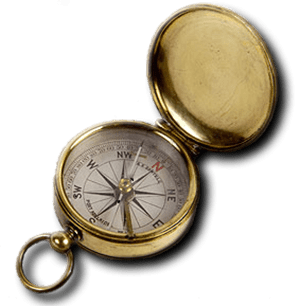
The Middle WayWe are all aware that life is made up of two components, the physical (ke or ketai) and the spiritual (ku or kutai). They are two, but not two (shikishin funi) and cannot exist one without the other. The body or physical aspect becomes useless without the mind, or spiritual aspect, and the mind is helpless without the body.
The mind however, can continue to function without the body, when we sleep for example. We have all experienced dreams where we perform feats that would be totally impossible in the physical world, like being able to fly.

So we have two rather different components, maybe working in a way that is not necessarily harmonious, until chu (or chutai) takes control. Chu is the harmonisation of ke and ku. It controls each aspect, making sure one or the other does not dominate or drag us off course.

This is known as The Middle Way (chudo).

Juzu Beads & Chanting

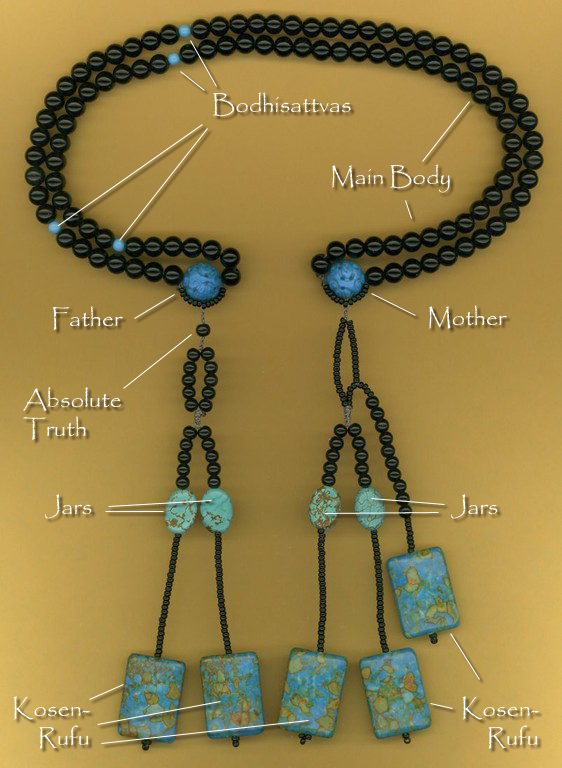
Click for a larger imageIn the practice of Nichiren Buddhism, we hold juzu beads in our hands while reciting Gongyo and chanting Diamoku.

There are 108 beads in the main body, signifying the 108 Earthly Desires.

The 4 smaller beads in the main body represent the 4 Great Bodhisattvas of the Earth … Jogyo, Muhengyo, Jyogyo, and Anryugyo.

The 2 large beads at each end of the main body, are the “parent” beads.  The “mother” bead, representing “mystic” is on the side with 3 dangles, and is placed over the middle finger of the right hand.  The “father” bead, representing “law” is on the side with 2 dangles, and is placed on the middle finger of the left hand.

We cross the beads in the middle, which shows our oneness with The Law.  Also, we cross the beads so our benefits do not fall through our hands and lives.  By placing the beads on our hands this way, we are accepting the reality that Buddhahood exists within our lives.

When we press our hands together while we hold our juzu beads, our 10 fingers represent the 10 Worlds which fuse together simultaneously in the life of a Buddha, our lives.  Our life is now one with the Mystic Law!

The one small bead that sits below the “father” bead, represents Absolute Truth.

Prior to Nichiren Buddhism, there were only 2 dangles on each end of juzu beads.  The third dangle, consisting of 10 beads and a “Kosen-Rufu” bead, on the side of the “mother” was added, actually tied on, to signify Nichiren Buddhism and distinguish it from other Buddhist sects.

On the remaining 4 dangles, there is a differently shaped bead part way down each string.  This bead is called the “jar” bead and holds the benefits of our practice.

The 5 larger beads at the bottom of each dangle are the “Kosen-Rufu” beads, and represent our desire to spread Nichiren Buddhism,  Kosen-Rufu, throughout the World.

My huge thanks are due to my lovely friend Lily Rose of Myoho Beads for researching the meanings of the individual beads and for allowing me to use her explanation.

As Lily Rose says on her site, be careful buying juzu beads on line.  Use this description or the juzu purchased in SGI bookstores as a guide.  Make sure the beads you purchase have been created in an ethical and politically correct manner. Sorry to say, but many are not.

If you would like to learn more about chanting, this link will take you to a very informative video produced by SGI.

The Benefit Of Chanting

CapsulesA few people have asked how chanting Nam Myoho Renge Kyo actually works, how it raises my life-energy and puts me in a higher life-state, irrespective of the circumstances.

So how can chanting the title of The Lotus Sutra, without the need for reading or studying it, help me make contact with my Buddha nature?

Well chanting whilst keeping a problem or question in mind brings forth a certain clarity of thought, which has, on occasion, provided solutions or at least peace of mind.

So why don’t we need to understand The Lotus Sutra, chapter and verse, in order to benefit from it’s wisdom? Well, apart from the fact that we do study the major principles that it encompasses, there are a fair number of similarities with complex things in life.

I imagine you have taken painkillers like ibuprofen, a highly complex molecule that took many years to perfect, test and approve. Unless you are a pharmacist or a pharmaceutical chemist, I doubt that you have the slightest idea of how the shape of the molecule blocks the pain receptors in your nervous system. But the tablets work, whether you know, or whether you don’t.

Another good example is the humble motor car. You can drive from Land’s End to John O’Groats without having any knowledge of how an internal combustion engine works or how the friction linings of the brake pads slow the car by turning the kinetic energy into heat in the brake disks.

My point is, that some very clever people have spent many, many years developing complicated medicines or machines. Being able to benefit from them is simple, simply because they are so well thought out. So it is with The Lotus Sutra and chanting Nam Myoho Renge Kyo. Shakyamuni Buddha and Nichiren Daishonin spent many, many years perfecting the Lotus Sutra and Nichiren Buddhism.

The benefit of chanting can be ours simply by chanting the title, studying the sutra is not necessary, but is certainly enlightening.

Previous Older Entries Next Newer Entries