An Alternative View

An Alternative ViewAs you might expect, my Gohonzon has it’s own special place in my apartment and although that isn’t the only place I chant, it doesn’t come with me when I travel around. Although chanting isn’t always done alone, being in a strange place, as in new to me,  requires me to seek out a little secluded spot to practice.

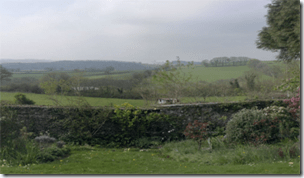
Last night, through all the thunder and lightning, B and I headed off to her aunt’s house in a little village just outside Totnes in Devon. We arrived late and the place was as dark as could be, no street lights and no moon because of the clouds, so I didn’t get to see the view until this morning.

To say that it was breath-taking would be an understatement. Beautiful rolling countryside as far as the eye could see, and all bathed in beautiful sunshine. I was trying to be a little quiet and so had delayed my morning practice until I could slip quietly away. After breakfast, B and her aunt went out into the garden to inspect the plethora of unusual plants growing there, and seeing the opportunity, I made my getaway.

The South facing picture window in our bedroom was the perfect vista to substitute for my absent Gohonzon, so while the ladies were outside, I stood and looked at the view and chanted. They say that variety is the spice of life, and I can concur with that view. Chanting in new and interesting places is fun, energy-giving and powerful, and as usual, I felt my life-energies rising as I chanted. So much so, that I am even tempted to start a new section of the blog, dedicated to photos of my experiences.

Nam Myoho Renge Kyo

Super Saturday

Spring SunshineThe plan for today had been to get up, chant and then get some DIY done so that we could spend time down by the river Frome tomorrow. But as with all plans, a degree of flexibility never goes amiss. The weather forecast says it’s going to rain on Sunday, so it made far better sense to chant and then enjoy today’s sunshine leaving the DIY for tomorrow.

Following an exploratory expedition into Plastic Wax records to see the one and only Mr Dave Kellard, we headed off up Gloucester Road to see what ethnic delights awaited us. For those who don’t know the area, it is an eclectic mix of small privately own emporiums with the odd corporate coffee shop thrown in for bad measure.

It was interesting to see that a chap had set up a one-man demonstration outside Costa, to express his feelings about the apparently unstoppable encroachment of coffee shops,  fast food and mini supermarkets. He has a point, without the little private shops, the whole character of the place would change forever.

Having bought a nice freshly baked loaf from The Bread Shop (imaginatively named) and taken it home for lunch with a selection of yummy cheeses, we took a not-so-leisurely walk along the river. B’s daughter Josie, is a very free spirit and took us off the path most travelled over fallen trees, through piles of leaf litter and up onto a rock escapement.

From there we could get a totally different view of the river, as well as the people and their dogs who were enjoying the warm spring sunshine. It was great to get out in the fresh air, to have the sunshine on our faces and to be able to make the most of such a beautiful natural amenity. No doubt the DIY will rear it’s ugly head tomorrow, but at least we have the memories of today.

Ten Worlds In One Day

The Ten Worlds are the life-states we all experience, many each and every day.

The Ten WorldsThe Ten Worlds are:

  • Hell
  • Hunger
  • Animality
  • Anger
  • Humanity
  • Heaven
  • Learning
  • Realisation
  • Bodhisattva
  • Buddhahood

Each World contains the other nine Worlds to a greater or lesser extent, so even though you might be in a Heaven (or Rapture) life-state, you will have elements of Hell, Hunger, Animality, Anger, Humanity(or Tranquillity), Learning, Realisation, Bodhisattva and Buddhahood within that life-state. This helps us to explain how our life-state (or mood) can change so quickly when we encounter new or changing causes.

The first six Worlds, Hell, Hunger, Animality, Anger, Humanity and Heaven are brought about by external causes, events which we cannot control.

The last four, Learning, Realisation, Bodhisattva and Buddhahood are brought about by our own thoughts and actions, which we can control.

Nichiren Daishonin wrote:

‘If you wish to free yourself from the sufferings of birth and death you have endured since time without beginning and to attain without fail unsurpassed enlightenment in this lifetime, you must perceive the mystic truth that is originally inherent in all living beings. This truth is Myoho-renge-kyo. Chanting Myoho-renge-kyo will therefore enable you to grasp the mystic truth innate in all life.

The Lotus Sutra is the king of sutras, true and correct in both word and principle. Its words are the ultimate reality, and this reality is the Mystic Law (myoho). It is called the Mystic Law because it reveals the principle of the mutually inclusive relationship of a single moment of life and all phenomena. That is why this sutra is the wisdom of all Buddhas.

Life at each moment encompasses the body and mind and the self and environment of all sentient beings in the Ten Worlds as well as all insentient beings in the three thousand realms, including plants, sky, earth, and even the minutest particles of dust. Life at each moment permeates the entire realm of phenomena and is revealed in all phenomena. To be awakened to this principle is itself the mutually inclusive relationship of life at each moment and all phenomena. Nevertheless, even though you chant and believe in

Myoho-renge-kyo, if you think the Law is outside yourself, you are embracing not the Mystic Law but an inferior teaching. “Inferior teaching” means those other than this [Lotus] sutra, which are all expedient and provisional. No expedient or provisional teaching leads directly to enlightenment, and without the direct path to enlightenment you cannot attain Buddhahood, even if you practice lifetime after lifetime for countless kalpas. Attaining Buddhahood in this lifetime is then impossible. Therefore, when you chant myoho and recite renge, you must summon up deep faith that Myoho-renge-kyo is your life itself.

You must never think that any of the eighty thousand sacred teachings of Shakyamuni Buddha’s lifetime or any of the Buddhas and bodhisattvas of the ten directions and three existences are outside yourself. Your practice of the Buddhist teachings will not relieve you of the sufferings of birth and death in the least unless you perceive the true nature of your life. If you seek enlightenment outside yourself, then your performing even ten thousand practices and ten thousand good deeds will be in vain. It is like the case of a poor man who spends night and day counting his neighbour’s wealth but gains not even half a coin. That is why the T’ien-t’ai school’s commentary states, “Unless one perceives the nature of one’s life, one cannot eradicate one’s grave offenses.” This passage implies that, unless one perceives the nature of one’s life, one’s practice will become an endless, painful austerity. Therefore, such students of Buddhism are condemned as non-Buddhist. Great Concentration and Insight states that, although they study Buddhism, their views are no different from those of non-Buddhists.

Whether you chant the Buddha’s name, recite the sutra, or merely offer flowers and incense, all your virtuous acts will implant benefits and roots of goodness in your life. With this conviction you should strive in faith. The Vimalakirti Sutra states that, when one seeks the Buddhas’ emancipation in the minds of ordinary beings, one finds that ordinary beings are the entities of enlightenment, and that the sufferings of birth and death are nirvana. It also states that, if the minds of living beings are impure, their land is also impure, but if their minds are pure, so is their land. There are not two lands, pure or impure in themselves. The difference lies solely in the good or evil of our minds.

It is the same with a Buddha and an ordinary being. When deluded, one is called an ordinary being, but when enlightened, one is called a Buddha. This is similar to a tarnished mirror that will shine like a jewel when polished. A mind now clouded by the illusions of the innate darkness of life is like a tarnished mirror, but when polished. it is sure to become like a clear mirror, reflecting the essential nature of phenomena and the true aspect of reality. Arouse deep faith, and diligently polish your mirror day and night. How should you polish it? Only by chanting Nam-myoho-renge-kyo.

What then does myo signify? It is simply the mysterious nature of our life from moment to moment, which the mind cannot comprehend or words express. When we look into our own mind at any moment, we perceive neither colour nor form to verify that it exists. Yet we still cannot say it does not exist, for many differing thoughts continually occur. The mind cannot be considered either to exist or not to exist. Life is indeed an elusive reality that transcends both the words and concepts of existence and nonexistence. It is neither existence nor nonexistence, yet exhibits the qualities of both. It is the mystic entity of the Middle Way that is the ultimate reality. Myo is the name given to the mystic nature of life, and ho, to its manifestations. Renge, which means lotus flower, is used to symbolize the wonder of this Law. If we understand that our life at this moment is myo, then we will also understand that our life at other moments is the Mystic Law. This realization is the mystic kyo, or sutra. The Lotus Sutra is the king of sutras, the direct path to enlightenment, for it explains that the entity of our life, which manifests either good or evil at each moment, is in fact the entity of the Mystic Law.

If you chant myoho-renge-kyo with deep faith in this principle, you are certain to attain Buddhahood in this lifetime. That is why the sutra states, “After I have passed into extinction, [one] should accept and uphold this sutra. Such a person assuredly and without doubt will attain the Buddha way.” Never doubt in the slightest. Respectfully. Maintain your faith and attain Buddhahood in this lifetime. Nam-myoho-renge-kyo, Nam-myoho-renge-kyo.’

Nichiren

The more we chant, and the more we practice, the higher our life-energy becomes and the more control we have over our life-state. The object of the exercise is to raise our own self-awareness and through selfless thoughts and deeds, to grow ever nearer our goal of attaining Buddhahood.
Practice, Practice, Practice

The World of BuddhahoodNichiren Buddhists believe that, not only does everyone have the World of Buddhahood within them, but that it can be achieved within this lifetime.

Think about that, everyone you know has the potential to reach Buddhahood, your family, friends, work colleagues, everyone. And not only those people you like, but those you don’t like too.

But how do we achieve this state of Buddhahood? The Daishonin had this to say …

“When deluded, one is called an ordinary being, but when enlightened, one is called a Buddha.  This is similar to a tarnished mirror, that will shine like a jewel when polished.

A mind now clouded by the illusions of the innate darkness of life is like a tarnished mirror, but when polished, it is sure it become like a clear mirror, reflecting the essential nature of phenomena, and the true aspect of reality.

Arouse deep faith, and diligently polish your mirror day and night. How should you polish it? Only by chanting Nam Myoho Renge Kyo.”

So there it is, such a simple Practice, so easy to learn, that when applied with faith and diligence, will allow us to reveal the Buddha in each and every one of us.

Another Turn Of The Wheel

StarsSadly, a friend’s mother passed away earlier this week after a long battle against illness. For her, gone are the ties that bind us to this physical world. She is now at one with the stars, the universe, and knows no limits.

After a very short time, she will be back, in a different physical form, wiser for her experience during her past lives, and ready to start another rotation of her Wheel of Life.

While those who are left behind mourn her passing, we should remember to rejoice that she has broken free of the shackles of her worldly body, and to celebrate the achievements of her past life.

Nam Myoho Renge Kyo

Nam Myoho Renge Kyo Explained

Nam Myoho Renge KyoThe most commonly asked questions, when people learn that I am a Buddhist, are ‘do you chant?’ followed by ‘what do you chant?’ and then ‘what does it mean?’. Nichiren Buddhists chant Nam Myoho Renge Kyo in a rhythmic mantra during Gongyo, and quite often at other times, to raise our Life-State and Life-Energy levels.
But what does it mean? Well it encapsulates many things, including affirmation of our devotion to the Lotus Sutra. This explanation comes from the  Soka Gakkai Dictionary of Buddhism.

[南無妙法蓮華経] Nam-myoho-renge-kyo

The ultimate Law or truth of the universe, according to Nichiren’s teaching. Nichiren first taught the invocation of Nam-myoho-renge-kyo to a small group of people at Seicho-ji temple in his native province of Awa, Japan, on the twenty-eighth day of the fourth month in 1253. It literally means devotion to Myoho-renge-kyo. Myoho-renge-kyo is the Japanese title of the Lotus Sutra, which Nichiren regards as the sutra’s essence, and appending nam (a phonetic change of namu ) to that phrase indicates devotion to the title and essence of the Lotus Sutra. Nichiren identifies it with the universal Law or principle implicit in the meaning of the sutra’s text.

The meaning of Nam-myoho-renge-kyo is explained in the opening section of The Record of the Orally Transmitted Teachings, the record of Nichiren’s lectures on the Lotus Sutra compiled by his disciple and successor, Nikko. It states that namu derives from the Sanskrit word namas and is translated as devotion, or as “dedicating one’s life.” What one should dedicate one’s life to, he says, are the Person and the Law. The Person signifies “Shakyamuni,” which means the eternal Buddha, and the Law is “the Lotus Sutra,” which means the ultimate truth, or Myoho-renge-kyo. According to Orally Transmitted Teachings, the act of devotion (namu) has two aspects: One is to devote oneself to, or fuse one’s life with, the eternal and unchanging truth; the other is that, through this fusion of one’s life with the ultimate truth, one simultaneously draws forth inexhaustible wisdom that functions in accordance with changing circumstances.

Orally Transmitted Teachings further states: “We may also note that the nam of Nam-myoho-renge-kyo is a Sanskrit word, while Myoho-renge-kyo are Chinese words. Sanskrit and Chinese join in a single moment to form Nam-myoho-renge-kyo. If we express the title [of the Lotus Sutra] in Sanskrit, it will be Saddharma-pundarika-sutra. This is Myoho-renge-kyo. Sad (a phonetic change of sat ) means myo, or wonderful. Dharma means ho, Law or phenomena. Pundarika means renge, or lotus blossom. Sutra means kyo, or sutra. The nine Chinese characters [that represent the Sanskrit title] are the Buddha bodies of the nine honoured ones. This expresses the idea that the nine worlds are none other than the Buddha world.”

Myo stands for the Dharma nature, or enlightenment, while ho represents darkness, or ignorance. Together as myoho, they express the idea that ignorance and the Dharma nature are a single entity, or one in essence. Renge stands for the two elements of cause and effect. Cause and effect are also a single entity.”

Kyo represents the words and voices of all living beings. A commentary says, ‘The voice carries out the work of the Buddha, and it is called kyo.’ Kyo may also be defined as that which is constant and unchanging in the three existences of past, present, and future. The Dharma realm is myoho, the wonderful Law; the Dharma realm is renge, the lotus blossom; the Dharma realm is kyo, the sutra.”

As Nichiren states, namu derives from Sanskrit, and Myoho-renge-kyo comes from Chinese. Nam-myoho-renge-kyo is, therefore, not simply a Japanese phrase, but a Japanese reading of a Sanskrit and Chinese phrase. In this sense, it contains aspects of the languages of three countries in which Mahayana Buddhism spread. According to Nichiren’s treatise The Entity of the Mystic Law, Nan-yüeh and T’ient’ai of China and Dengyoof Japan recited the invocation meaning devotion to the Lotus Sutra of the Wonderful Law, or Nam-myoho-renge-kyo, as their private practice, but they did not spread this practice to others.

In On the Three Great Secret Laws, Nichiren states that the daimoku Nichiren chants today in the Latter Day of the Law is different from that of the previous ages—the daimoku T’ient’ai and others chanted in the Former Day and Middle Day of the Law—because the practice of daimoku in the Latter Day of the Law involves chanting it oneself and teaching others to do so as well. Nichiren not only established the invocation (daimoku) of Nam-myoho-renge-kyo but embodied it as a mandala, making it the object of devotion called Gohonzon. In Reply to Kyo’o, he states, “I, Nichiren, have inscribed my life in sumi ink, so believe in the Gohonzon with your whole heart. The Buddha’s will is the Lotus Sutra, but the soul of Nichiren is nothing other than Nam-myoho-renge-kyo” (412).

A Way Of Life

BuddhahoodAs you know, my Buddhist Practice is now a way of life. A routine of chanting Nam Myoho Renge Kyo and prayer, that I go through every day, a routine that also involves me writing this blog. But routine is also another word for boring, mundane or even hum-drum, so it’s important to keep in mind why we Practice.

We Practice for several reasons …

  • To raise our life-energy levels …

  • To chant for certain outcomes …

  • To move us along the road towards Buddhahood …

  • To give a stable anchor in our lives …

and there are many others, often different for every individual.

As a mere novice, I find that I can learn a little more each day Let’s face it, Buddhism has been around for well over two thousand years, so there’s plenty to learn about.. I can improve or seek to perfect my Practice and to maintain a more focussed attention to the subject of my chanting. I look forward to the feeling I get during and after Gongyo. I often find that I am quite warm when I finish chanting and in a really good mood, despite any problems I am facing.

I never cease to be amazed by the effectiveness of chanting either. To start with, the word coincidence came into my mind when I saw results, but not any more. But I do get surprised by the way the Universe solves the problems with which I have asked it to help. Not always the way I expected, and often in better, more subtle ways than I could have imagined.

So my Practice is a pleasure, not a chore. It’s something I enjoy and never something I feel I have to do. As Nichiren Daishonin said, ‘If you practice something, you must test it’s validity with the results you see’. In other words, if it doesn’t work, stop doing it. For me, it is still working wonders almost daily, and I truly believe the World would be a better place if more people were to discover those wonders.

Oh God, You’re In Court

High CourtWhatever will our crazy society come up with next? Bideford Town Council defended their right to hold Christian prayers before its meetings in the High Court today. The defence was necessary because a former atheist councillor, Cline Bone, had tried to stop prayers because they made him feel ‘disadvantaged and embarrassed’.

Now call me progressive, but to my mind, prayers, beliefs, acts of worship and so on, are on a purely personal preference basis. Having said that, England is a Christian country, hence The Church of England. Even so, nobody should have to go to court to defend their beliefs, or their non-beliefs either.

So stop all this rubbish. At a time when the whole country is cash-strapped, people losing jobs and budgets being cut, left right and centre, the council tax payers of Bideford deserve better. Somebody bang these folk’s heads together and come to a compromise. I bet God is looking down on you all with a right proper frown on his (or her) face.

Of course, that compromise could be holding Gongyo before the meetings instead. I can just hear it now … Nam Myoho Renge Kyo, in a broad Devon accent, followed by clotted cream teas.

A Day Of Reflection

Mirror MirrorBack on my own again, and time to think, to get everything in place and to take stock. Being alone isn’t all bad. It does give me the space for introspection and that is a very healthy thing. Having the peace and quiet to chant is also the perfect environment to put my thoughts in order.
A nice bike ride in the autumn sunshine and the brisk air also gets the grey matter working again. Working hard forces the blood to flow and the heart to pound, both a great way to make me feel alive. Burning the excess calories of the last few days gives a feeling of satisfaction and makes all the effort worthwhile.

So my mind is clear, my decision is made and all that remains is to deliver the verdict. That isn’t going to be the most fun, but I know it will bring a sense of closure. At least, only being half way through my week of relaxation, I still have time to get life back on the right track and settle back onto my path to self enlightenment.

Food For The Soul

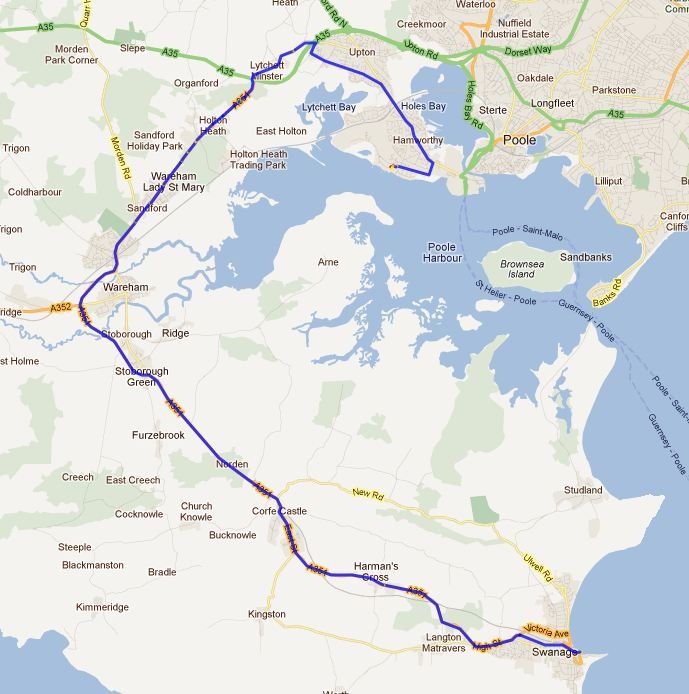
Sunny SwanageToday has been an unseasonably sunny and warm(ish) day, so what could be better than to get out in the fresh air, challenge yourself to ride to a beautiful destination and burn off a whole bunch of calories? Yesterday was a rest day in my schedule and I ate well in preparation for today. So by 8:30am I was up and preparing myself and the bike for the trip to Swanage.

Setting off at 9:00am it was still pretty chilly, even though I was wearing several layers, but by the time I passed the St. Peter’s Finger pub, I was warming up nicely. I guess that 9:00am is still a little early for most people to be about on a Sunday, so I had the roads pretty much to myself. One thing you do notice on a road bike, with thin and very hard tyres, is just how poor some of our roads have become, and how come they always seem to get rougher when the road starts to climb?

Swanage or BustThe route almost picks itself, out through Upton through Lychett Minster and then onto Sandford road at the A35. I always have a little smile to myself as I pass the Half Way Inn pub, just the child within me I guess.  Now the route is not exactly flat, but it doesn’t really get you standing on the pedals until you reach Corfe Castle. The rise to the castle entrance is quite challenging, there is a side road, with a horse and rider waiting to cross this morning, then a pedestrian crossing and all manner of obstacle that could potentially slow your progress.

Having successfully negotiated all of that, it’s off down East Street, though no sign of Bruce Springsteen today, and off towards Harman’s Cross. As a bit of a closet train spotter, steam trains of course, the joy of crossing the Swanage Steam Railway line, just as a locomotive goes under the bridge, was brilliant. Sadly I didn’t have enough pairs of hands to capture the event on my phone.

You would imagine, that having got over the highest point at the castle, it would be a nice downhill bimble into Swanage, but nothing could be further from the truth. As you can see from the cliffs of the Jurassic Coast, the land along the South coast is a series of folds, and some of those folds are not so gentle at times. But apart from the lumps and bumps, and being chivvied along by a farmer on his tractor, the last few kilometres were pretty uneventful, and I rolled onto the promenade at about 10:20am.

Taking a short rest round by the pier, I took the photo at the top of the post. As you can see, there are a few ‘white horses’ rolling in and it was quite windy down by the sea. Of course, the problem with riding down to the coast, is that you have to ride all the way back home. The good news was that the wind was generally in my favour, which on a bike is a real bonus. So although the energy levels were being tested towards the end, I was back in The Quay before 12 noon. A wonderful way to spend a glorious Sunday morning, and a little secret, chanting Nam Myoho Renge Kyo is a great way to keep your cadence high, whilst remembering to breathe.

Previous Older Entries Next Newer Entries