
Ultimate Responsibility

Abortion QuestionsWhether you agree with the right of women to abort their unborn children, or not, the news that a US doctor has been convicted of killing three babies after their delivery, is shocking and thought provoking in the extreme. Dr Kermit Gosnell performed thousands of abortions over a career spanning three decades, with officials saying that his medical practice earned him about $1.8m a year.

Cause no harm to any sentient being, is the principle at the heart of Buddhist practice, so the act of abortion flies in the face of Buddhist beliefs at the most base level. Having said that, Nichiren Buddhism has no rules, so the decision by anyone, to kill another being, is left in their own hands, albeit that the responsibility for their action must be taken.

Each abortion decision is surrounded by a unique set of circumstances. Maybe the unborn child has been diagnosed with a life-altering illness, maybe the mother is in danger if she continues the pregnancy, the list is infinite. But whatever the situation, the responsibility of termination lies with all those concerned.

The horrific details of this case are fuelling the abortion debate, and will no doubt cause the argument to make the act of abortion illegal to be more strongly heard. Whatever the outcome, it is important that we all recognise that whilst each individual has the right to decide the course of their lives, that as individuals, we have an ultimate responsibility for every thought, word and deed.
The Ultimate Question?

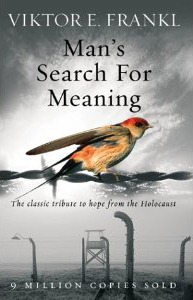
Taken from the book Man’s Search For Meaning (p.113), by the late Dr Viktor E. Frankl, this is a most sensible and acceptable explanation of possibly the ultimate question, ‘what is the meaning of life?’ I have ever read. It is a question we should all ask ourselves on a regular basis, for as you will see, there is no one single answer.

Man's Search For Meaning - Viktor Frankl”I doubt whether a doctor [we] can answer this question in general terms. For the meaning of life differs from man to man, from day to day and from hour to hour.

What matters, therefore, is not the meaning of life in general but rather the specific meaning of a person’s life at a given moment.

To put the question in general terms would be comparable to the question posed to a chess champion: “Tell me, Master, what is the best move in the world?” There simply is no such thing as the best or even a good move apart from a particular situation in a game and the particular personality of one’s opponent.

The same holds for human existence. One should not search for an abstract meaning of life. Everyone has his own specific vocation or mission in life to carry out a concrete assignment which demands fulfilment.

Therein he cannot be replaced, nor can his life be repeated. Thus, everyone’s task is as unique as is his specific opportunity to implement it. As each situation in life represents a challenge to man and presents a problem for him to solve, the question of the meaning of life may actually be reversed.

Ultimately, man should not ask what the meaning of his life is, but rather he must recognize that it is he who is asked. In a word, each man is questioned by life; and he can only answer to life by answering for his own life; to life he can only respond by being responsible.”

This short explanation, taking less than a page in the book, encapsulates an answer to which I can relate.

The book itself covers Dr Frankl’s own struggle for survival in Auschwitz and other Nazi concentration camps. It has tragic as well as surprisingly humorous passages, but reading it will leave you forever changed and, I believe, better for the experience.

Don’t Leave It Too Late

Don't Leave I Too LateOn the day that saw the passing of Margaret Thatcher, it might be a good point to remind ourselves to make the most of our time.

If you think about it, although we may not be destined to die five minutes from now, we are all, without exception, going to die at some point. We can count on it 100%. There is nothing surer than this.

Victor Hugo said, “We are all under sentence of death, but with a sort of indefinite reprieve.”

Ideally, we should live every minute of our lives mindfully, as if it were the last moment of our lives. Those who live aimlessly are left with a sense of emptiness at the end of their lives, but those who live all-out, striving to achieve their goals right to the end, will die peacefully.

Leonardo da Vinci said “As a well-spent day brings happy sleep, so a life well used brings happy death.”

One who is aware that death could come at any time, will live each day to the fullest. So don’t wait for something to happen, or someone to come along, before you start living, do it now.

Why Are We Here?

Josei TodaWhy are human beings born? This question has posed a great challenge for civilisations and societies all around the world for thousands of years.

The second president of the Soka Gakkai, Josei Toda, had this to say about his own conclusions.

“This world is a place for people to, as the Lotus Sutra states, ‘Enjoy themselves at ease’.

We were born here to thoroughly savour the joys of life.

Faith in Nichiren Buddhism enables one to bring forth the great life-force needed to lead such an existence.”

The arrival of a new-born baby makes us think about such questions and such an answer goes a long way to solving the riddle.

2012 Is Over, Here Comes 2013

Happy New Year - 2013I have to report, that for the majority of people I know, with the exception of a couple of high points, 2012 has been a year of sadness, and one that most will be happy to see gone.

But as we know, the challenges in life are there to help us become stronger. And those of us who have met those challenges and grown as a result, are still here to greet the New Year.

Happy New Year everyone. I pray that 2013 will be a healthy, fortunate, positive and above all peaceful one for everyone.

Instant Buddhahood? – Simply Add Practice

Nichiren DaishoninReligion must teach an “attitude to life.” To live a life of true human dignity is certainly difficult.
Life is change; it is continuous change. Nothing is constant. The four sufferings of birth, old age, sickness and death are an eternal theme that no one can escape.

Amid harsh reality, people yearn from the depths of their beings to live with dignity and for their lives to have meaning, and they make efforts toward that end. The product of these human yearnings, these prayers, is religion. Religion was born from prayer.

What is Nichiren’s response to these prayers of human beings? What attitude toward life does he teach? The answer, in short, is the principle of attaining Buddhahood in this lifetime.

What is needed to attain Buddhahood in this lifetime? Wisdom, Courage and Compassion and that comes from sustained, diligent practice.

Made Of Stardust

SupernovaWatching the Seven Ages of Starlight on BBC HD tonight, apart from appealing to my enquiring scientific mind, reinforced my Buddhist belief that we are at one with the Universe, being literally made of stardust.

The elements of Hydrogen and Helium, that are involved in the fusion taking place in a star, such as our sun, are the building blocks of all other elements, created as the star collapses under the force of gravity.

This process sometimes creates what we now call a supernova, a huge, intensely bright, but very short lived source of light. This in fact may have been the source of the ‘star’ that guided the Three Wise Men in the Christian religion.

Our bodies are made of a collection of the same elements as those created in the stars, iron, carbon even a little gold, but in essence, we are all stardust. When we die, those elements are returned to the Universe and the cycle goes on.

The Universe is around 13.5 billion years old and the cycle of birth and death has been going on for much of that time. We have come from the Universe, we will go back into the Universe. Science facts for the last few years and Buddhist beliefs for more than two millennia. As I say, science is finally catching up with Buddhism.

Don’t Just Sit There

Don't Just Sit ThereIf you think about it, although we may not be destined to die five minutes from now, we are all, without exception, going to die at some point. We can count on it 100%. There is nothing surer than this.

Victor Hugo said, “We are all under sentence of death, but with a sort of indefinite reprieve.”

Ideally, we should live every minute of our lives mindfully, as if it were the last moment of our lives. Those who live aimlessly are left with a sense of emptiness at the end of their lives, but those who live all-out, striving to achieve their goals right to the end, will die peacefully.

Leonardo da Vinci said “As a well-spent day brings happy sleep, so a life well used brings happy death.”

One who is aware that death could come at any time, will live each day to the fullest. So don’t wait for something to happen, or someone to come along, before you start living, do it now.

Ouch, This Hurts

Saddle SoreIf you ride a bike on the roads around Britain you’ll know how lovely it is to find yourself on a stretch of nice new smooth tarmac. The lumps and bumps of our older repaired roads really can rattle your bones, so the new surface is a real treat.

Life is very much like that too. It’s the lumps and bumps of everyday life that make you realise just how comfortable the smooth untroubled times are. But without the rough times, we would never recognise the comparison and enjoy the easier times when they appear.

We all know, that as we move through life, it is impossible to stay on the smooth untroubled path. The bumpy times are a simple fact, just as they are out on the road. So when they come along, just be determined, hold on tight, keep pedalling and look forward to the smoother times ahead.

Creating A Life

Rainbow ColoursThere is no one lonelier or more unhappy than a person who does not know the pure joy of creating a life for himself or herself. To be human is not merely to stand erect and manifest intelligence or knowledge. To be human in the full sense of the word is to lead a creative life.

The struggle to create new life from within is a truly wonderful thing. There is found the brilliant wisdom that guides and directs the workings of reason; the light of insight that penetrates the farthest reaches of the universe; the undaunted will to see justice done that meets and challenges all the assaults of evil; the spirit of unbounded care that embraces all who suffer. When these are fused with that energy of compassion that pours forth from the deepest sources of cosmic life, an ecstatic rhythm arises to colour the lives of all people.

Daisaku Ikeda

From Buddhism Day By Day

Next Newer Entries