The ultimate Law or truth of the universe, according to Nichiren’s teaching. Nichiren first taught the invocation of Nam-myoho-renge-kyo to a small group of people at Seicho-ji temple in his native province of Awa, Japan, on the twenty-eighth day of the fourth month in 1253. It literally means devotion to Myoho-renge-kyo. Myoho-renge-kyo is the Japanese title of the Lotus Sutra, which Nichiren regards as the sutra’s essence, and appending nam (a phonetic change of namu ) to that phrase indicates devotion to the title and essence of the Lotus Sutra. Nichiren identifies it with the universal Law or principle implicit in the meaning of the sutra’s text.
The meaning of Nam-myoho-renge-kyo is explained in the opening section of The Record of the Orally Transmitted Teachings, the record of Nichiren’s lectures on the Lotus Sutra compiled by his disciple and successor, Nikko. It states that namu derives from the Sanskrit word namas and is translated as devotion, or as “dedicating one’s life.” What one should dedicate one’s life to, he says, are the Person and the Law. The Person signifies “Shakyamuni,” which means the eternal Buddha, and the Law is “the Lotus Sutra,” which means the ultimate truth, or Myoho-renge-kyo. According to Orally Transmitted Teachings, the act of devotion (namu) has two aspects: One is to devote oneself to, or fuse one’s life with, the eternal and unchanging truth; the other is that, through this fusion of one’s life with the ultimate truth, one simultaneously draws forth inexhaustible wisdom that functions in accordance with changing circumstances.
Orally Transmitted Teachings further states: “We may also note that the nam of Nam-myoho-renge-kyo is a Sanskrit word, while Myoho-renge-kyo are Chinese words. Sanskrit and Chinese join in a single moment to form Nam-myoho-renge-kyo. If we express the title [of the Lotus Sutra] in Sanskrit, it will be Saddharma-pundarika-sutra. This is Myoho-renge-kyo. Sad (a phonetic change of sat ) means myo, or wonderful. Dharma means ho, Law or phenomena. Pundarika means renge, or lotus blossom. Sutra means kyo, or sutra. The nine Chinese characters [that represent the Sanskrit title] are the Buddha bodies of the nine honoured ones. This expresses the idea that the nine worlds are none other than the Buddha world.”
Myo stands for the Dharma nature, or enlightenment, while ho represents darkness, or ignorance. Together as myoho, they express the idea that ignorance and the Dharma nature are a single entity, or one in essence. Renge stands for the two elements of cause and effect. Cause and effect are also a single entity.”
Kyo represents the words and voices of all living beings. A commentary says, ‘The voice carries out the work of the Buddha, and it is called kyo.’ Kyo may also be defined as that which is constant and unchanging in the three existences of past, present, and future. The Dharma realm is myoho, the wonderful Law; the Dharma realm is renge, the lotus blossom; the Dharma realm is kyo, the sutra.”
As Nichiren states, namu derives from Sanskrit, and Myoho-renge-kyo comes from Chinese. Nam-myoho-renge-kyo is, therefore, not simply a Japanese phrase, but a Japanese reading of a Sanskrit and Chinese phrase. In this sense, it contains aspects of the languages of three countries in which Mahayana Buddhism spread. According to Nichiren’s treatise The Entity of the Mystic Law, Nan-yüeh and T’ient’ai of China and Dengyoof Japan recited the invocation meaning devotion to the Lotus Sutra of the Wonderful Law, or Nam-myoho-renge-kyo, as their private practice, but they did not spread this practice to others.
In On the Three Great Secret Laws, Nichiren states that the daimoku Nichiren chants today in the Latter Day of the Law is different from that of the previous ages—the daimoku T’ient’ai and others chanted in the Former Day and Middle Day of the Law—because the practice of daimoku in the Latter Day of the Law involves chanting it oneself and teaching others to do so as well. Nichiren not only established the invocation (daimoku) of Nam-myoho-renge-kyo but embodied it as a mandala, making it the object of devotion called Gohonzon. In Reply to Kyo’o, he states, “I, Nichiren, have inscribed my life in sumi ink, so believe in the Gohonzon with your whole heart. The Buddha’s will is the Lotus Sutra, but the soul of Nichiren is nothing other than Nam-myoho-renge-kyo” (412).
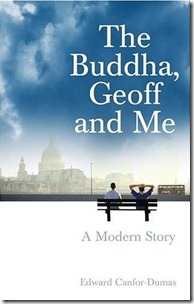 When you find something that excites and enthuses you, you want to tell people about it and spread the news. When it is a spiritual matter it can be a more delicate situation, wanting to be enthusiastic without being evangelical or overbearing.
 The most commonly asked questions, when people learn that I am a Buddhist, are ‘do you chant?’ followed by ‘what do you chant?’ and then ‘what does it mean?’. Nichiren Buddhists chant Nam Myoho Renge Kyo in a rhythmic mantra during Gongyo, and quite often at other times, to raise our Life-State and Life-Energy levels.
 Sorting out our life can be a bit like solving a Rubik’s cube, each part is like one of the faces, separate but all connected. We work to get one face, let’s say Blue sorted out. On it’s own that task is pretty easy and we complete it quite quickly. So we move on to to the Red face, again it’s pretty easy, in isolation, so we get it sorted and we feel a satisfaction in that. But then we turn the cube back to the Blue side, and it’s all messed up again, because it is connected to the Red side.
 We have all asked ourselves this question, maybe once or twice, maybe a thousand times, but the answer to the question turns out to be so simple, so eloquent, so meaningful, when it is asked from a position of total hopelessness.
 I know, I’m always going on about this brilliant book, but The Buddha, Geoff and Me is the perfect Christmas gift for the Buddhist in your life (if that isn’t an oxymoron).
 My own experiences with Nichiren Buddhism have shown me how powerfully it can change your life. Whether that is simply making you a happier person or helping you see situations from a different perspective, that may help you solve your problems in a better way. As with all good things, you want to tell people about it, so they can share the benefits.
 Time only moves in one direction, forwards. That is why we say time after time, and not time before time.
 The path to enlightenment involves a lot of learning, much of it about yourself.
 Reading is a dialogue with ourselves, it is self-reflection, which cultivates profound humanity. Reading is essential to our self development. It expands and enriches the personality like a seed that germinates after a long time and sends forth a multitude of blossom-laden branches.
 Today would have been my Dad’s 85th birthday.
 The Search For Enlightenment
Recents Comments