Inner Dialogue

BooksApart from my usual daily cycling workout, I’ve spent most of the day with my nose in a book, again. I’m not going to go into details, as I did yesterday, but the more I read, the more convinced I am that everyone should do likewise, so they can make up their own minds about the issues. You can get a taste of the topics covered by following this link.

Reading is a dialogue with ourselves, it is self-reflection, which cultivates profound humanity. Reading is essential to our self development. It expands and enriches the personality like a seed that germinates after a long time and sends forth a multitude of blossom-laden branches.

People who can say of a book ‘this changed my life’ truly understand the meaning of inner happiness. Reading that sparks inner revolution is urgently needed to help us escape drowning in the rapidly advancing information society.

Reading is far more than simple intellectual ornamentation, it is a battle for the establishment and preservation of the self, a ceaseless challenge that keeps us young and vigorous.

Challenge Or Opportunity?

IndonesiaWith my recently announced redundancy still five months away, time is not yet of the essence to find alternative employment.

But as we all know, times are tight, jobs few on the ground, and times flies when things of this nature are concerned.

Not, I have to say, that I am unduly concerned at present, but I have been having a look around.

Having put in a 40 year shift in IT, I’m not at all sure I want to continue in the same vein, so I’ve decided to have an open mind and see what opportunities present themselves.

Interestingly, during a recent night out in Poole to watch Jack Dee in concert, a friend asked whether I had thought about teaching English as a foreign language, know as TEFL in the profession. I had to admit that I hadn’t.

I’ve never been drawn to teaching. In the past I would never have had the patience to teach anyone anything. But with age and, maybe more so Buddhism, I have a great deal more calmness and patience. So I have been looking at the process needed to get qualified.

On the face of it, it all looks rather straightforward. There is an international qualification required, a TEFL certificate from an academy accredited by the World TEFL Accrediting Commission (WTEFLAC).

The course takes a minimum of 120 hours, of which 20 hours are face to face tutorials and practice. The cost is not too crazy, and the opportunities appear quite realistic, in places as close as Paris or as far away as China and Indonesia.

Whether or not the notion takes hold, the whimsies turn into reality or the possibilities become fact is in my hands. At the moment I have to say that it all sounds rather exciting, and I’m certainly going to take some time to investigate further.

So, far from being the end of the world, this redundancy might be the start of a whole new adventure. We all need a short, sharp, shock at times, just to ease us out of the comfortable rut we have made for ourselves. The shock has been administered, so time will tell.

Look And Learn

Look And LearnI love the way this poem beautifully encapsulates the stages of learning, and the long, long road to enlightenment …

  1. I walk down the street. There is a deep hole in the sidewalk I fall in. I am lost… I am hopeless. It isn’t my fault. It takes forever to find a way out. ~~~~

  2. I walk down the same street. There is a deep hole in the sidewalk. I pretend I don’t see it. I fall in again. I can’t believe I’m in the same place. But it isn’t my fault. It still takes a long time to get out. ~~~~

  3. I walk down the same street. There is a deep hole in the sidewalk. I see it is there. I still fall in…it’s a habit My eyes are open; I know where I am; It is my fault. I get out immediately. ~~~~

  4. I walk down the same street. There is a deep hole in the sidewalk. I walk around it. ~~~~

  5. I walk down another street.
~ Portia Nelson

Life is a series of lessons. As our wisdom increases, we learn more and more from each lesson. Be heartened by your progress, do not be down-hearted by the mistakes you make, they are a sure sign that you are living life to the full.

Shhhhhh

TranquillityWhen you are waiting for something, an answer, a decision, an outcome, it can be almost like the world is holding its breath.

Sometimes the World of Tranquillity can be a true blessing, a time to recover after a period of intense work for example.

Sometimes it can be be like the dying notes of a moving piece of music or the fading echoes of the most magnificent firework display.

Maybe the biggest difference between the two is whether you wish for Tranquillity or not.

If you do wish for it, Tranquillity can be the most restful of time, if not it can be like the quiet of the grave, peaceful but not something which you might actively desire.

Reading, Forever Reading

The Pleasure ReadingDaisaku Ikeda, in his Buddhism Day By Day, says this about the act of reading:

‘Reading is dialogue with oneself; it is self-reflection, which cultivates profound humanity. Reading is therefore essential to our development.

It expands and enriches the personality like a seed that germinates after a long time and sends forth many blossom-laden branches.

People who can say of a book ‘this changed my life’ truly understand the meaning of happiness. Reading that sparks inner revolution is desperately needed to escape drowning in the rapidly advancing information society.

Reading is more than intellectual ornamentation; it is a battle for the establishment of the self, a ceaseless challenge that keeps us young and vigorous.’

We all know which book ‘changed my life’, and I can confirm that I understand the meaning of the happiness that this encompasses. Books transformed civilisation in the broadest sense when they became widely available via the printing presses of William Caxton and all those who have followed.

The advent of the world wide web and the internet has simply taken that process to the Nth level. The dissemination of information, and the written word has never been so widespread. Although there are associated dangers and we must be circumspect about the source of the information we consume, there has never been an easier time to read.

Beneficial Introspection

SocratesThe path to enlightenment involves a lot of learning, much of it about yourself.

Wisdom is rooted in the souls of human beings. The way to acquire it is to follow the simple advice of Socrates – ‘Know Thyself’.

This is the starting point for the establishment of a sense of human dignity, preventing the degradation of human beings into anonymous, interchangeable cogs in a machine.

The essence of true knowledge is self knowledge.

Are You Writing Nice Letters?

Creating Our Own DestinyThe law of cause and effect, action and reaction, applies to everything in life and forms the basis of our Karma.

The results of all the causes we have made in this, and previous lives, is precisely why we are where we are today.

The more good causes we create, generally speaking, the more good effects we see, and the happier we are with our lives.

Dora, in the book The Buddha, Geoff and Me, explains that Karma is a bit like letters we write to ourselves. Many of those letters were written so long ago, that we have forgotten all about them.

The nice letters are lovely surprises when they arrive. Nasty ones come as a bit of a shock, they may annoy us and we might even write another nasty one in response. Of course, in time, those responses get delivered too, so the cycle may repeat itself, time after time.

That is, of course, until you understand the way the process works. Once you realise that you create the causes, you can create causes for nice, or good effects, rather than going round and round forever.

I cannot imagine a more important lesson to learn, to know that your Karma, and hence your future, is determined by you? It is the most empowering feeling, to take control of your life and to have your destiny in your own hands.

Boys, Boys, Boys

Boys, Boys, BoysSpending time with my grandsons is blooming hard work, and absolutely brilliant at the same time. Talk about a barrel load of monkeys, even Oliver, the two year old, run on some form of perpetual motion engine. They just don’t stop, which is awful and wonderful at the same time.

I really don’t see enough of the boys. Partly because of the geographical separation and partly because as families, they are always doing something, going somewhere, busy, busy, busy. The trouble is, they don’t stop growing, maturing, learning, simply because I’m not around. So when I do get to see them, they are almost different, although lovely, little people.

So this morning was a real pleasure. Watching the boys interact with each other, while we watched Ice Age for the Nth time and blew up balloons for Rob’s 40th birthday party this evening, was great fun. Letting the balloons go flying around the room, scattering boys in all directions, caused much amusement, even though some of them got a bit soaked in spittle after a while.

The morning flew by and all the exertion was a bit too much for Ollie, who went off to bed for a nap. The east of us continued the fun until Charlotte and Rob returned and set about making lunch for the assembled throng. I’m making silent promises to myself to be back up here very soon. Jake will be 8 in a few days time, then it will be Christmas, so there are lots of reasons to return, it just takes a bit of arranging.

Back To The Very Basics

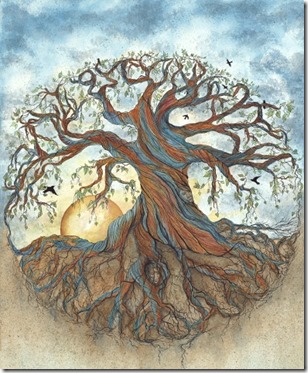
The Bodhi TreeEach day, at least twice a day, I chant Nam Myoho Renge Kyo. It is this phrase that encapsulates the very essence of The Lotus Sutra, which itself contains the teachings of Shakyamuni Buddha as refined during his time sitting under the Bodhi tree.

So much philosophy, encompassed in a single phrase, requires some explanation.

The teachings of Shakyamuni, the historical founder of Buddhism, are recorded in an enormous body of texts, known as sutras. The manner in which the philosophy of Buddhism is presented within the sutras varies widely.

This can be explained by a number of factors. During the 50 odd years over which Shakyamuni shared his teachings with the people of his day, he travelled widely throughout India.

Rather than expounding his philosophy in a systematic manner, his teaching mainly took the form of dialogue. Meeting with people from a wide range of backgrounds–from ministers of state to unlettered men and women–he sought to respond to their questions and doubts. Most of all, he sought to provide answers to the fundamental questions of human existence: Why is it that we are born and must meet the inevitable sufferings of illness, aging and death?

The sutras were compiled in the years following the death of Shakyamuni; it is thought that the Lotus Sutra was compiled between the first and second century C.E. In Sanskrit it is known as the Saddharmapundarika-sutra (lit. “correct dharma white lotus sutra”). Like many Mahayana sutras, the Lotus Sutra spread through the “northern transmission” to Central Asia, China, Korea and Japan.

Originally entering China in the third century C.E., the Lotus Sutra is said to have been translated into several different versions of the Chinese, of which three complete versions are extant. The fifth-century translation of Kumarajiva (344-413 C.E.) is considered to be particularly outstanding; its philosophical clarity and literary beauty are thought to have played a role in the widespread veneration of this sutra throughout East Asia.

The title of the Lotus Sutra in Kumarajiva’s translation, Myoho-renge-kyo, contains the essence of the entire sutra, and it was on the basis of this realization that Nichiren (1222-1282 C.E.) established the invocation of Nam-myoho-renge-kyo as his core Buddhist practice.

The Lotus Sutra is considered the sutra that fulfils the purpose for Shakyamuni’s advent in the world, expressed in these words: “At the start I took a vow, hoping to make all persons equal to me, without any distinction between us.” In other words, the purpose of Shakyamuni’s advent was to enable all people to attain the same state of perfect enlightenment that caused him to be known as “Buddha,” or “awakened one.”

The Lotus Sutra contains a number of concepts that were revolutionary both within the context of Buddhist teachings and within the broader social context of the time. Many of these are not stated explicitly but are implied or materialized in the dramatic and even fantastic-seeming events portrayed in the text. Much of the genius of later scholars of the sutra, such as T’ien-t’ai (538-597 C.E.), lay in their ability to extract and systematize these principles.

A core theme of the sutra is the idea that all people equally and without exception possess the “Buddha nature.” The message of the Lotus Sutra is to encourage people’s faith in their own Buddha nature, their own inherent capacity for wisdom, courage and compassion. The universal capacity for enlightenment is demonstrated through the examples of people for whom this possibility had traditionally been denied, such as women and people who had committed evil deeds.

In many sutras a number of Shakyamuni’s senior disciples are condemned as people who have, through arrogant attachment to their intellectual abilities and their self-absorbed practice, “scorched the seeds of their own enlightenment.” The profundity of Shakyamuni’s teachings in the Lotus Sutra, however, awakens in them the spirit of humility and compassion. They realize that all people are inextricably interlinked in their quest for enlightenment, and that if we desire happiness ourselves, it is imperative that we work for the happiness of others.

In this sutra, moreover, Shakyamuni demonstrates that he actually attained enlightenment in the infinite past, not in his current lifetime as had been assumed by his followers. This illustrates, through the concrete example of his own life, that attaining enlightenment does not mean to change into or become something one is not. Rather, it means to reveal the inherent, “natural” state that already exists within.

As President Daisaku Ikeda has said, “The Lotus Sutra is ultimately a teaching of empowerment. It teaches us that the inner determination of an individual can transform everything; it gives ultimate expression to the infinite potential and dignity inherent in each human life.”

Taking Time To Learn

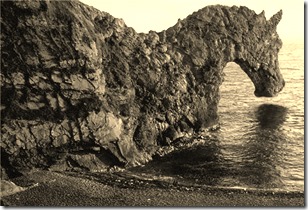
You can lead a horse to water, but you can’t make it drinkYou know the old adage, ‘you can lead a horse to water, but you can’t make it drink’. I believe it means that you can introduce an idea to someone, but you can’t make them accept the suggestion.

So it is with Nichiren Buddhism, or in fact any religion, but let’s talk about Buddhism in this instance.

I have many friends who show an interest in my Practice. They ask lots of questions, often offer their views and sometimes will join me in Daimoku or Gongyo.

I find that the most difficult thing about this, is to feed their inquisitive nature without allowing my own enthusiasm to take over. It is so easy to appear evangelical and that can be a most unattractive trait, particularly for someone who is just taking the first tentative steps.

If you were teaching a child to swim, you wouldn’t take them to the poolside, explain a little about how to do the breast stroke and then push them into the deep end to experience it for themselves. At best, they might flounder their way back to the side, never to ask you for guidance ever again, at worst they might get into real difficulties, need rescuing and develop such a phobia, that they would never go near deep water again.

And so it can be with Buddhism. Like learning to swim, Buddhist practice can open up amazing new vistas on the world and be a life-long pleasure, but it has to be introduced gently, wisely and at the right pace for each and every individual.

To try to rush someone into Buddhism, or swimming for that matter, may be depriving that person of a life-changing journey, so show some wisdom and let them go at their own pace.

Previous Older Entries Next Newer Entries