Centred, Anchored, Simply Rock Solid

The GohonzonOver the life of this blog, you will have seen that my Buddhist Practice has become, more and more, the basis of my life.

Having my Practice as the centre, as my Honzon, as my anchor is a very liberating state of affairs. At the centre of that Practice is my recently enshrined Gohonzon making it the absolute centre and the pivot, around which, my whole life now revolves.

Of course, the centre of many people’s lives are their partners, their children, their families and that is perfectly acceptable, but does mean that their anchor is not fixed, it is ever changing. These changes can be a major source of unhappiness. How often have we seen the elderly couple, totally devoted to each other, that when one of them dies, the other goes soon after.

Having Buddhism and my Practice as my Honzon doesn’t mean that my family and friends mean any less to me, but it does mean that as situations change, as problems arise, my anchor remains firm and I can cope with those challenges all the better.

Maybe that’s not for everyone, it does take a conscious effort to make the change, but for me, the effort is repaid many, many times over by the feeling of constancy in my life.

Nichiren Buddhism – The Gohonzon

What is the Gohonzon?
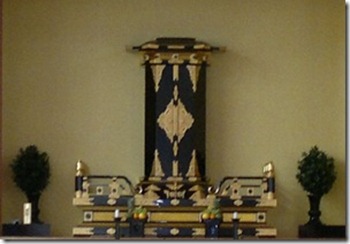
The Butsudan At Taplow Court - SGI-UK HeadquartersThe Gohonzon is the prime point of faith, practice and study in Nichiren Buddhism.

It provides us with a correct model or standard of faith and practice for our time. It usually takes the form of a paper scroll, with Chinese and Sanskrit characters printed on it in black ink.

It is kept in a protective box, or butsudan. The area around the Gohonzon often has offerings of light (in the form of candles), evergreen, incense, water, and fruit. You may also see other offerings, and items like a bell around the butsudan.

In Reply to Kyo’o the Daishonin writes,

“I, Nichiren, have inscribed my life in sumi ink, so believe in the Gohonzon with your whole heart.”

Although the Gohonzon takes the form of a paper scroll, it is vital that when we are chanting to it, it is not seen as outside one’s life. It is through our chanting to the ‘external’ Gohonzon in the butsudan, that we activate all the forces and functions within our own lives.

Nichiren Daishonin began to inscribe the Gohonzon for his followers around the time of his exile to Sado in 1271. He wanted to establish an object of fundamental respect which would enable anyone chanting to it to awaken the Buddhahood in their lives, and to experience the same life state as he did. Nichiren Daishonin provided us with the means to draw out the state of Buddhahood inherent in life.

The word ‘Gohonzon’ is translated into English as ‘object of fundamental respect’. ‘Go’ is an honorific prefix, and ‘honzon’ means what it is that we base our lives on.

Nichiren Daishonin was aware of the difficulty people had in believing that the life state of the Buddha could exist in their lives, and then how hard it is to manifest it. His writing The Object of Devotion for Observing the Mind [WND p354] is in the form of a dialogue which strives to persuade the listener that if all the other nine worlds can be perceived in one’s life, then Buddhahood must be too. He inscribed the Gohonzon for individuals so that they would have a constant reminder of the eternal law, the cause for this life state, and which would serve as a focus for their daily practice, as well as functioning as the external cause for drawing out Buddhahood and revealing their greater self.

It is not necessary to be able to read or understand the characters on the Gohonzon in order to experience benefit from chanting to it. The Daishonin used script or calligraphy for the Gohonzon because he wanted the Gohonzon to be a universal mirror, free of the connotations of race and gender inherent in pictures or images.

The Calligraphy on the Gohonzon

The Gohonzon is sometimes described as a ‘mandala’, a word used in the East to describe an object in which Buddhas and bodhisattvas are depicted or on which a philosophical doctrine is expressed. Originally it meant a circle drawn in the earth around the place where a religious ceremony was to take place. The circle embraced all the people who participated in the ceremony, and was believed to protect them from negative influences. The word mandala was rendered in Chinese as ‘perfectly endowed’ or ‘cluster of blessings’.

Using Chinese calligraphy, Nichiren Daishonin put the characters Nam-myoho-renge-kyo Nichiren boldly down the centre of the Gohonzon. This represents the oneness of the Person and the Law. In other words, the ordinary person is the Buddha, and the Mystic Law is inherent in each living being. He then surrounded these characters with the names of people referred to in the Lotus Sutra, such as Shakyamuni Buddha and Many Treasures and others. All the characters represent an aspect of life, whether as a protective function, or as a representative of the ten worlds, and all are illuminated by the Law of Nam-myoho-renge-kyo.

In the writing The Real Aspect of the Gohonzon Nichiren Daishonin explains why he placed the particular characters where he did. The blueprint for the Gohonzon was the description in the Lotus Sutra of the Ceremony in the Air, when a great jewelled Treasure Tower emerged out of the earth, and many Buddhas and bodhisattvas gathered to hear the Buddha Taho (or Many Treasures) confirm the truth that Shakyamuni had taught – that we all have the potential to reveal our Buddha nature in our daily life, as we are. This story in the Lotus Sutra represented the emergence of the state of Buddhahood in countless peoples’ lives, called Bodhisattvas of the Earth (the people who promised to propagate Nam-myoho-renge-kyo at the time we now live).

Shakyamuni described the dramatic events of the Tower emerging from out of the ground and reaching high into the sky. It was encrusted with precious gems and was intended to represent life with all its mystic and wonderful qualities. As it halted, floating in the air, the doors of the Tower opened and the Buddha Many Treasures was seen sitting inside. This Buddha invited Shakyamuni to enter and sit in the place of honour on Many Treasures’ right hand side. As we look at the Gohonzon, then, it is as if Shakyamuni and Many Treasures are in the Tower looking out at us and all the other characters on the Gohonzon. Then the Buddhas lifted the tower and the assembled company into the air, in what is known as the Ceremony in the Air, an event not limited to any particular time or place. When we look at the Gohonzon in this way, we realize that we are among the Bodhisattvas of the Earth. Through chanting to the Gohonzon, we are participating in the Ceremony in the Air, just as described in the Lotus Sutra.

The Gohonzon is said to contain all aspects of life, so it includes not just the positive and value creating qualities of life represented by the Buddha’s good disciples, but also examples of evil and destruction. For instance the representative of fundamental darkness, the Devil King of the Sixth Heaven is also included on it, although he too is bathed in the transforming power of Nam-myoho-renge-kyo and revealing his enlightened rather than his negative aspects.

The four corners of the Gohonzon each contain a Heavenly King, a character that represents the protective forces of the universe. Between these, in the middle of each side, and written in Sanskrit calligraphy are the characters Aizen (or Craving Filled) on the left as we look at the Gohonzon and Fudo (or Immovable) on the right, who represent the principles that `earthly desires are enlightenment` and `the sufferings of birth and death are nirvana`, respectively. Nichiren Daishonin’s teachings enable us to transform our desires and our sufferings into enlightenment, rather than having to deny them.

Practising with the Gohonzon

Nichiren Daishonin teaches that the Gohonzon enables us to see the ten worlds in our lives, in other words, that we have Buddhahood, and can use it. It is easy to see the lower life states, and to have the illusion that we can never be like the Buddha. The Gohonzon is described as a clear mirror which shows the law of Nam-myoho-renge-kyo and all its manifestations in the different life states, revealing their enlightened qualities.

The way to practise is to have the attitude while we are chanting that we are in no way different or separate from the eternal Law of Nam-myoho-renge-kyo, or the Buddhas who are enlightened to that Law. The key is to praise one’s inherent Buddhahood and then go out into the world and practise as a bodhisattva, treasuring others, encouraging them to experience their Buddhahood too.

Through studying Nichiren Daishonin’s writings and awakening the wisdom we have within our lives, we become alive with the qualities of the Buddha state that are embodied in the Gohonzon. At the same time, we develop a natural desire to change our lives so that we bring out more and more consistently the condition of Buddha revealed by the Gohonzon. The more we practise with this desire to change, the more our lives and Nichiren Daishonin’s life-state embodied in the Gohonzon become as one.

This is a gradual process. When we practise to the Gohonzon, Nichiren Daishonin said we are simultaneously in the state of Buddhahood or enlightenment, but we cannot easily discern that life condition with our minds; therefore we do not always act accordingly. However, through our constant relationship with the Gohonzon, we gradually challenge and overcome the influence of negativity arising from our karma. As we open up our hearts we can begin to experience all those qualities of Buddhahood working naturally and vibrantly inside us and affecting everything that we think and say and do.

President Ikeda has recently described the process as this:

“When we chant Nam-myoho-renge-kyo while practising for ourselves and others, with the Gohonzon of Nam-myoho-renge-kyo manifested by the Buddha as our clear mirror, and with deep confidence in the Gohonzon existing in our own lives, Myoho-renge-kyo within us resonates with the Myoho-renge-kyo outside us, and the world of Buddhahood emerges within us.”

[World of Nichiren Daishonin’s Writings Part 12]

Catching Up

Catching UpHaving a weekend at home has given me chance to catch up with all the things that get left behind while I’m up in Bristol with Bumble. So today has been a day of making good all the missing posts on my blog, washing all the clothes from the holiday, not all fun stuff I’m sure you’ll agree.

But it’s also been great to be able to chant in front of my Gohonzon. I enjoy, if that is the right word, chanting anywhere, as you may have seen from my Chanting in the Dark post. But I have to say that having the Gohonzon in front of me does seem to make it more relevant.

Now that may sound a little trite, but I imagine the same might be said for people praying in church, rather than by kneeling next to their bed. I think it is probably more to do with the focus of my practice, rather than any inherent power in the scroll itself.

Anyway, there is a certain satisfaction in getting the chores up square. It was also nice to be able to sit and watch the Tour de France live without feeling guilty. But given the choice, I would choose spending the weekend with Bumble over doing the washing, and I’m sure she’ll be happy to hear that.

Wonders Of The Buddhist World

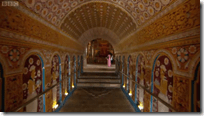
Wonders Of The Buddhist WorldHaving time to sit and watch, to listen and learn, is one of the most precious luxuries in our lives. So often, we have too much to do, too little time in which to do it. So having the chance to sit and really watch a beautifully crafted program about Buddhist culture and iconography today, was a real joy.
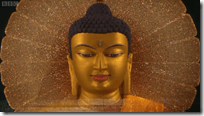
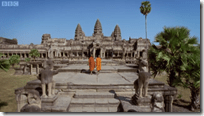
In the program, Seven Wonders of the Buddhist World, Bettany Hughes visits seven of the most famous ancient and modern Buddhist locations in the world: seven wonders that give an insight into the long and rich history of Buddhism.

Wonders Of The Buddhist WorldWonders Of The Buddhist WorldWonders Of The Buddhist World

Several Buddhist traditions are covered in the program, sadly Nichiren Buddhism isn’t one of them. But I believe that there is a very good reason for that.

One of the more appealing aspects of Nichiren Buddhism, for me, is the near absence of iconography. Ok, we have our Butsudan, our Gohonzon as a focus for our practice, but we actively shun statues and other paraphernalia which would clutter our path.

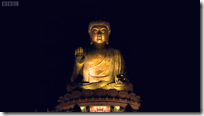
Wonders Of The Buddhist WorldWonders Of The Buddhist WorldWonders Of The Buddhist World

Beautiful as these building, statues and temples may be, I believe that Buddhism comes from within, and that there is no need to adorn our spiritual lives with these icons. In the program, Bettany poses the question of how The Buddha would have felt about the worldwide spread of his teachings. I’m sure he would have been happy at the thought of being able to give so many people the tools to reduce or remove unhappiness from their lives.

I’m also convinced that he would have been dismayed by this kind of adoration, he never looked for it in his lifetime and would not welcome it now. For me, the one single most important wonder of Buddhism, is that it puts control of my life in my hands, no gods, no fate, and nothing to do with luck. Make good causes, see good results, that’s all there is to it.

(All images are taken from the program and are copyright of the BBC)

The Gohonzon Explained

What is the Gohonzon?

The Butsudan At Taplow Court - SGI-UK HeadquartersThe Gohonzon is the prime point of faith, practice and study in Nichiren Buddhism. It provides us with a correct model or standard of faith and practice for our time. It usually takes the form of a paper scroll, with Chinese and Sanskrit characters printed on it in black ink. It is kept in a protective box, or butsudan. The area around the Gohonzon often has offerings of light (in the form of candles), evergreen, incense, water, and fruit. You may also see other offerings, and items like a bell around the butsudan.

In Reply to Kyo’o the Daishonin writes,

“I, Nichiren, have inscribed my life in sumi ink, so believe in the Gohonzon with your whole heart.”

Although the Gohonzon takes the form of a paper scroll, it is vital that when we are chanting to it, it is not seen as outside one’s life. It is through our chanting to the ‘external’ Gohonzon in the butsudan, that we activate all the forces and functions within our own lives.

Nichiren Daishonin began to inscribe the Gohonzon for his followers around the time of his exile to Sado in 1271. He wanted to establish an object of fundamental respect which would enable anyone chanting to it to awaken the Buddhahood in their lives, and to experience the same life state as he did. Nichiren Daishonin provided us with the means to draw out the state of Buddhahood inherent in life.

The word ‘Gohonzon’ is translated into English as ‘object of fundamental respect’. ‘Go’ is an honorific prefix, and ‘honzon’ means what it is that we base our lives on.

Nichiren Daishonin was aware of the difficulty people had in believing that the life state of the Buddha could exist in their lives, and then how hard it is to manifest it. His writing The Object of Devotion for Observing the Mind [WND p354] is in the form of a dialogue which strives to persuade the listener that if all the other nine worlds can be perceived in one’s life, then Buddhahood must be too. He inscribed the Gohonzon for individuals so that they would have a constant reminder of the eternal law, the cause for this life state, and which would serve as a focus for their daily practice, as well as functioning as the external cause for drawing out Buddhahood and revealing their greater self.

It is not necessary to be able to read or understand the characters on the Gohonzon in order to experience benefit from chanting to it. The Daishonin used script or calligraphy for the Gohonzon because he wanted the Gohonzon to be a universal mirror, free of the connotations of race and gender inherent in pictures or images.

The Calligraphy on the Gohonzon

The Gohonzon is sometimes described as a ‘mandala’, a word used in the East to describe an object in which Buddhas and bodhisattvas are depicted or on which a philosophical doctrine is expressed. Originally it meant a circle drawn in the earth around the place where a religious ceremony was to take place. The circle embraced all the people who participated in the ceremony, and was believed to protect them from negative influences. The word mandala was rendered in Chinese as ‘perfectly endowed’ or ‘cluster of blessings’.

Using Chinese calligraphy, Nichiren Daishonin put the characters Nam-myoho-renge-kyo Nichiren boldly down the centre of the Gohonzon. This represents the oneness of the Person and the Law. In other words, the ordinary person is the Buddha, and the Mystic Law is inherent in each living being. He then surrounded these characters with the names of people referred to in the Lotus Sutra, such as Shakyamuni Buddha and Many Treasures and others. All the characters represent an aspect of life, whether as a protective function, or as a representative of the ten worlds, and all are illuminated by the Law of Nam-myoho-renge-kyo.

In the writing The Real Aspect of the Gohonzon Nichiren Daishonin explains why he placed the particular characters where he did. The blueprint for the Gohonzon was the description in the Lotus Sutra of the Ceremony in the Air, when a great jewelled Treasure Tower emerged out of the earth, and many Buddhas and bodhisattvas gathered to hear the Buddha Taho (or Many Treasures) confirm the truth that Shakyamuni had taught – that we all have the potential to reveal our Buddha nature in our daily life, as we are. This story in the Lotus Sutra represented the emergence of the state of Buddhahood in countless peoples’ lives, called Bodhisattvas of the Earth (the people who promised to propagate Nam-myoho-renge-kyo at the time we now live).

Shakyamuni described the dramatic events of the Tower emerging from out of the ground and reaching high into the sky. It was encrusted with precious gems and was intended to represent life with all its mystic and wonderful qualities. As it halted, floating in the air, the doors of the Tower opened and the Buddha Many Treasures was seen sitting inside. This Buddha invited Shakyamuni to enter and sit in the place of honour on Many Treasures’ right hand side. As we look at the Gohonzon, then, it is as if Shakyamuni and Many Treasures are in the Tower looking out at us and all the other characters on the Gohonzon. Then the Buddhas lifted the tower and the assembled company into the air, in what is known as the Ceremony in the Air, an event not limited to any particular time or place. When we look at the Gohonzon in this way, we realize that we are among the Bodhisattvas of the Earth. Through chanting to the Gohonzon, we are participating in the Ceremony in the Air, just as described in the Lotus Sutra.

The Gohonzon is said to contain all aspects of life, so it includes not just the positive and value creating qualities of life represented by the Buddha’s good disciples, but also examples of evil and destruction. For instance the representative of fundamental darkness, the Devil King of the Sixth Heaven is also included on it, although he too is bathed in the transforming power of Nam-myoho-renge-kyo and revealing his enlightened rather than his negative aspects.

The four corners of the Gohonzon each contain a Heavenly King, a character that represents the protective forces of the universe. Between these, in the middle of each side, and written in Sanskrit calligraphy are the characters Aizen (or Craving Filled) on the left as we look at the Gohonzon and Fudo (or Immovable) on the right, who represent the principles that `earthly desires are enlightenment` and `the sufferings of birth and death are nirvana`, respectively. Nichiren Daishonin’s teachings enable us to transform our desires and our sufferings into enlightenment, rather than having to deny them.

Practising with the Gohonzon

Nichiren Daishonin teaches that the Gohonzon enables us to see the ten worlds in our lives, in other words, that we have Buddhahood, and can use it. It is easy to see the lower life states, and to have the illusion that we can never be like the Buddha. The Gohonzon is described as a clear mirror which shows the law of Nam-myoho-renge-kyo and all its manifestations in the different life states, revealing their enlightened qualities.

The way to practise is to have the attitude while we are chanting that we are in no way different or separate from the eternal Law of Nam-myoho-renge-kyo, or the Buddhas who are enlightened to that Law. The key is to praise one’s inherent Buddhahood and then go out into the world and practise as a bodhisattva, treasuring others, encouraging them to experience their Buddhahood too.

Through studying Nichiren Daishonin’s writings and awakening the wisdom we have within our lives, we become alive with the qualities of the Buddha state that are embodied in the Gohonzon. At the same time, we develop a natural desire to change our lives so that we bring out more and more consistently the condition of Buddha revealed by the Gohonzon. The more we practise with this desire to change, the more our lives and Nichiren Daishonin’s life-state embodied in the Gohonzon become as one.

This is a gradual process. When we practise to the Gohonzon, Nichiren Daishonin said we are simultaneously in the state of Buddhahood or enlightenment, but we cannot easily discern that life condition with our minds; therefore we do not always act accordingly. However, through our constant relationship with the Gohonzon, we gradually challenge and overcome the influence of negativity arising from our karma. As we open up our hearts we can begin to experience all those qualities of Buddhahood working naturally and vibrantly inside us and affecting everything that we think and say and do.

President Ikeda has recently described the process as this:

“When we chant Nam-myoho-renge-kyo while practising for ourselves and others, with the Gohonzon of Nam-myoho-renge-kyo manifested by the Buddha as our clear mirror, and with deep confidence in the Gohonzon existing in our own lives, Myoho-renge-kyo within us resonates with the Myoho-renge-kyo outside us, and the world of Buddhahood emerges within us.”

[World of Nichiren Daishonin’s Writings Part 12]

Gongyo, Daily Respite

ButsudanThe twice daily chanting of Gongyo is the basis of Nichiren Buddhist Practice.
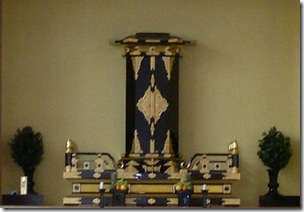
Reciting two chapters of the Lotus Sutra and chanting Nam Myoho Renge Kyo is my way of moulding my mind, my heart, my very life, towards Buddhahood.

The twice daily routine is not always easy. There are times in the morning when I would rather have a little more time in bed. In the evening, there are times when there are important things to get done, or I am tired. But I Practice all the same.

Before I chant I sometimes focus on a particular problem or situation. Then sitting in front of the Gohonzon I chant, and as I chant I detach myself from the stresses of everyday life and let the repetition of Diamoku still, cleanse, stir and stimulate my heart and mind.

Speaking personally, I look forward to Gongyo. The day hasn’t started till morning Gongyo has been done, and the day is only complete when evening Gongyo is complete.

If there are times when you don’t feel like chanting remember one thing, the only person who loses out if you skip it … is you.

Nam Myoho Renge Kyo.

Picture Perfect

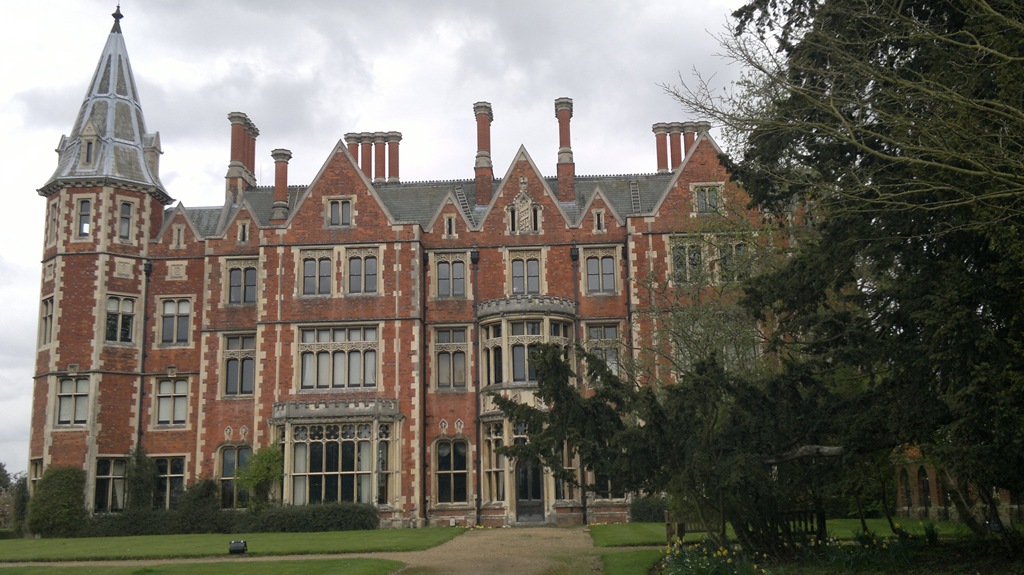
The Butsudan at Taplow CourtAs hoped, today went perfectly. The trip was easy, the weather was warm and Taplow Court was even more amazing than I expected.
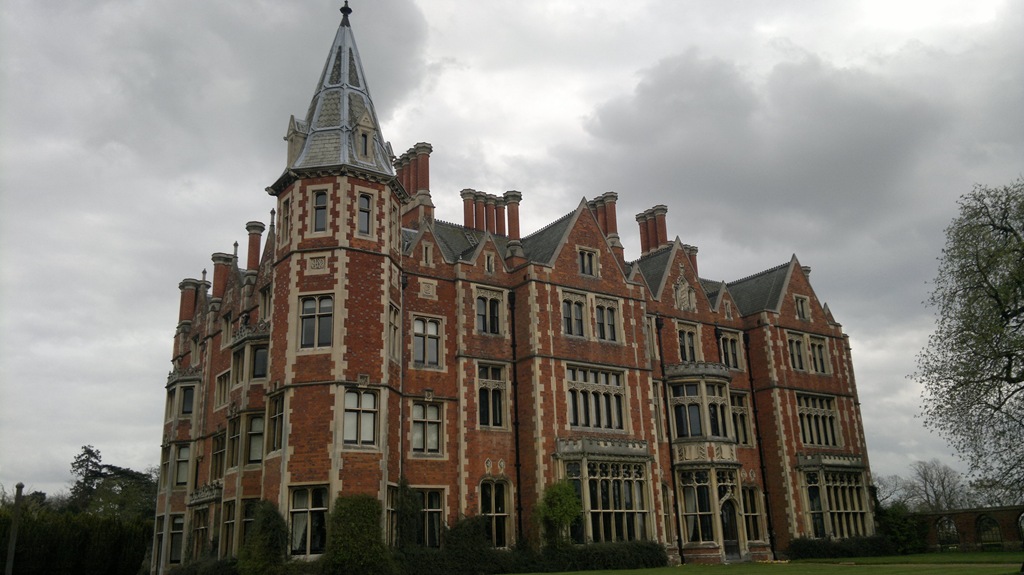
Morning Gongyo got louder and more energetic as more people joined the chanting, and the lesson, about the role of pupils or disciples, was very apt for everyone, let alone those of us who were receiving Gohonzon.

After lunch, the Gohonzon conferral was emotional and about thirty people were invited, one by one, to receive the Gohonzon.

After dropping Ken back in Sandbanks, I came home to get the Butsudan ready for Jayne and Ken to come round to enshrine the Gohonzon and to chant before it for the very first time. They gave me a card and a present, a Gongyo CD, because they know I still need the practice. We sat and chatted over a few nibbles and before long, it was time for them to leave.

They are wonderful people, and my thanks go to them and everyone who helped to make this a very special day.

As promised, here are a few photos …

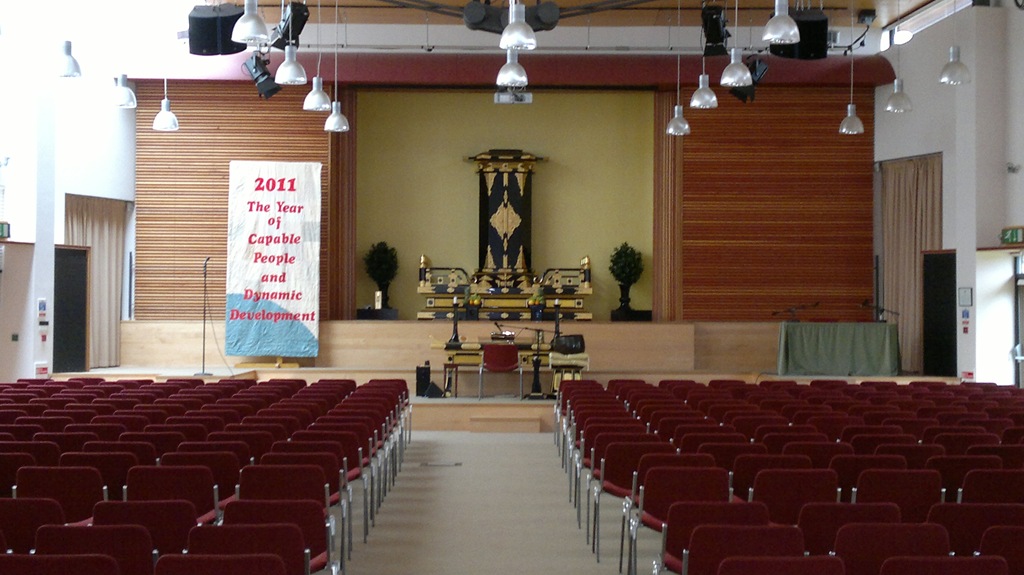
Taplow CourtAfter receiving the GohonzonTaplow Court - gardensTaplow CourtThe one and only Ken HawkinsImage076Taplow Court - Main Hall & Butsudan

A Pleasant Surprise

I suppose, with Christmas just around the corner, I should not have been so surprised when the postman arrived this afternoon, with a parcel.

You may remember that I had seen a Gohonzon offered for sale on eBay. I was unsure whether it was right for such an item to be offered, so I decided to put in a bid, to ‘rescue’ it from falling into less appreciative hands.

The Gohonzon had originally hung in a Buddhist temple in Japan, some forty years ago, and was in New York. Combined with the current cold spell, the distance had meant that it had taken a while to arrive, but it was really worth the wait, it’s beautiful.

It will take it’s rightful place in the Butsudan, The House of Buddha, the place in my home where I perform Gongyo, chant and pray.

Whether it will make my Practice more effective is yet to be proven, but it has formed the perfect focus for my chanting. Results will, as always, be the proof.

My eternal thanks, to my partner, for a most unusual, inspired and inspiring birthday present.