Wonders Of The Buddhist World

Wonders Of The Buddhist WorldHaving time to sit and watch, to listen and learn, is one of the most precious luxuries in our lives. So often, we have too much to do, too little time in which to do it. So having the chance to sit and really watch a beautifully crafted program about Buddhist culture and iconography today, was a real joy.

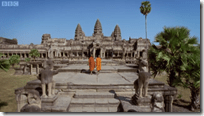
In the program, Seven Wonders of the Buddhist World, Bettany Hughes visits seven of the most famous ancient and modern Buddhist locations in the world: seven wonders that give an insight into the long and rich history of Buddhism.
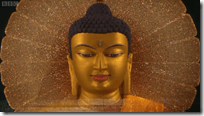
Wonders Of The Buddhist WorldWonders Of The Buddhist WorldWonders Of The Buddhist World

Several Buddhist traditions are covered in the program, sadly Nichiren Buddhism isn’t one of them. But I believe that there is a very good reason for that.

One of the more appealing aspects of Nichiren Buddhism, for me, is the near absence of iconography. Ok, we have our Butsudan, our Gohonzon as a focus for our practice, but we actively shun statues and other paraphernalia which would clutter our path.

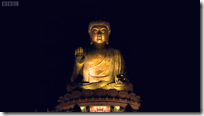
Wonders Of The Buddhist WorldWonders Of The Buddhist WorldWonders Of The Buddhist World

Beautiful as these building, statues and temples may be, I believe that Buddhism comes from within, and that there is no need to adorn our spiritual lives with these icons. In the program, Bettany poses the question of how The Buddha would have felt about the worldwide spread of his teachings. I’m sure he would have been happy at the thought of being able to give so many people the tools to reduce or remove unhappiness from their lives.

I’m also convinced that he would have been dismayed by this kind of adoration, he never looked for it in his lifetime and would not welcome it now. For me, the one single most important wonder of Buddhism, is that it puts control of my life in my hands, no gods, no fate, and nothing to do with luck. Make good causes, see good results, that’s all there is to it.

(All images are taken from the program and are copyright of the BBC)

Super Sunday

SunshineIt’s been a really super Sunday. It started with an hour’s Gongyo, followed by a half hour chat to a very good friend and it just got better and better.

The sun has shone through beautiful billowing white clouds and it has been a wonderful day, weather wise. The stroll through Hamworthy park and on to Poole quay was very pleasant and everyone seemed to be sporting a broad smile in the sunshine.

Follow that up with a cracking Charity Shield match, a scary horror movie, all topped off with a huge thunderstorm this evening, and the day has been pretty much complete. I still have no proper broadband, so the posts are bit short and sweet, but I hope Sky will meet or beat their 17th deadline for activation.

Confidence

ConfidenceWhat would you say if I told you that I have come to believe that my own practice, practiced in my own way, gives me courage, wisdom and compassion. That I believe that we must all follow our own path and that being lead, or listening too intently to others can confuse and distract us.

We must all be true to ourselves, and decide the path we must take in our own way. To allow others to cajole us into being or doing something that is foreign to our nature is to forfeit our integrity.

Take a moment to look at your own situation and decide whether you are compromising your own integrity. If you find that you are, you might want to reconsider your own path and take steps to get back on track.

Imagination – MEF’s Best Friend

Dark PassengerDo you ever find yourself getting into a state over a situation that is mainly in your own head? If your world is not anchored by your faith and is dependant on factors outside your control, your imagination can run riot. Our Fundamental Darkness, or My Evil Friend, is a devious character and will use everything tot get it’s way. Your imagination is one of it’s most powerful weapons.

This is how I was until I found Nichiren Buddhism, and it is a very precarious state in which to live. Each day can be up, or down, at the whim of something or someone else, and that’s no life. Particularly if that something or someone cannot be relied upon.

Taking back control of your life is simple, it is a state of mind, a determination to re-centre, re-focus your life. That certainly doesn’t mean that you have to rid yourself of the something or someone, and it doesn’t mean that your relationship with them is any less important. It’s just that your life centres around something infinitely stable, and that can make all the difference in the world.

My anchor, my honzon is my practice, and I’m a better, calmer, more contented person for that. I am happier for that, and at the end of the day, isn’t that what we all seek from life, a little more happiness?

Amy – Another Sad Story

Amy WinehouseThe news that 27 year old Amy Winehouse has died today is the latest in a long list of musical stars who die too young and another member of The Forever 27 Club. Back in the days of my youth there were a number of stellar performers who also died too young. Jimi Hendix, Janis Joplin, Brian Jones, Jim Morrison, Kurt Cobain, the list goes on and on.

But why do these amazing people lose their way, get trapped by drug addiction and drive themselves to oblivion? Is it because they find fame too much to handle, is their life out of their control, governed by the fickle fate of the rollercoaster of popularity?

Basing our lives on anything that unstable, anything over which we have no control, means that we leave ourselves open to the inevitable winds of change.

Basing our lives on something constant, unchanging, gives us back that control, or at least a greater degree of it. That is why I have based my life on Nichiren Buddhism, made it my Honzon, or anchor.

My Faith, my Practice, Nichiren Buddhism doesn’t magically remove all the problems in life, nor does it solve those problems that arrive, but having the stability that comes with basing everything on the Gohonzon does make life easier.

We are sorry to lose you Amy, you were a very bright star, and maybe the brightest stars are meant to burn out soonest.

The Four Virtues

Juzu BeadsNichiren Buddhism demands that we test ourselves and that we test the results of our Practice. To do this we must know why we do, what we do, and this covers every aspect of our Practice.

In my previous post about The Significance Of Prayer Beads we saw that the four smaller beads in the body represent the four Great Bodhisattvas of the Earth. These in turn represent The Four Virtues of the Buddha, and here is a much fuller explanation.

Nichiren Daishonin attributes the four virtues of the Buddha to the four leaders of the Bodhisattvas of the Earth. Bodhisattva Superior Practices (Jogyo) represents true self. Revealing true self means for us to chant Nam-myoho-renge-kyo to the Gohonzon, thus manifesting our innate Buddhahood and shedding the lesser self of egotism. Bodhisattva Boundless Practices (Muhengyo) signifies eternity. Through establishing our true self of Buddhahood, we come to understand, perhaps not intellectually but with our innermost heart, the eternity of life, and remain unswayed by our ever-changing circumstances while confidently challenging ourselves. Bodhisattva Pure Practices (Jyogyo) represents purity. Once we are awakened to the greater self of Buddhahood, we are no longer tainted by delusions. With a secure sense of self, we can even positively influence our environment, thus purifying it. Finally Bodhisattva Firmly Established Practices (Anryugyo) signifies happiness—a kind of happiness that withstands all the ups and downs of our lives, including death. Through developing confidence in the Buddha nature as our true self, we free ourselves from trivial concerns for any unnecessary artifice of life and remain at peace with ourselves, knowing that we will ultimately triumph over any obstacle.

It is significant that the four leaders of the Bodhisattvas of the Earth represent the four virtues of the Buddha. As the names of those bodhisattvas indicate, only through our dedicated practice as bodhisattvas—practice dedicated to the happiness of others—can we break through our lesser self and reveal the greater self of Buddhahood. In other words, our bodhisattva practice is the cause for the Buddha’s four virtues to manifest in our lives. Yet from another perspective, it may be also said that Buddhas are in essence those who are awakened to their greater self and act for the well-being of others. In this sense, the altruism of Bodhisattva practice is not only the means to overcome the lesser self and develop the four virtues; it is also a direct expression of these four virtues inherent in life, in our Buddha nature. This is why chanting Nam-myoho-renge-kyo, which calls forth our inherent Buddhahood and its corresponding virtues, provides the greatest basis for an altruistic life—a life dedicated to the happiness of others.

The four virtues of the Buddha, from the standpoint of the Daishonin’s Buddhism, describe the ideal characteristics of human beings whose view of self is not hindered in any way by selfish ego. Their understanding of self is so encompassing that their own existence and the world around them become indistinguishable. A limited understanding of self, however, leads to egotism, bringing suffering and misery to both oneself and others. True self-knowledge—an awakening to our true, greater self—in this sense is a key to overcoming selfishness.

The Good, The Bad, And The Explanation

Good and BadBuddhism teaches that our lives are endowed with both good and bad aspects simultaneously. The human mind switches between ten individual conditions, The Ten Worlds, and as we know, each World contains the other nine. The lowest three Worlds are those of Hell, filled with suffering, Hunger, which is dominated by greed, and Animality, characterised by fear of the strong or powerful and contempt of the weak.
The two highest worlds are those of Bodhisattva and Buddhahood, states of mind in which people strive to help others to eliminate their suffering and attain happiness.

Good and bad, happiness and sadness exist together, they cannot be separated and are integral parts of life. In fact it could be said that to try to describe one without the other would be meaningless.

Buddhist practice cannot remove bad things from our life nor the sadness, but it can help us deal with them (Poison into Medicine), and by doing so, help us and those around us promote the good and the happy aspects.

Nam Myoho Renge Kyo.

The Significance Of Prayer Beads

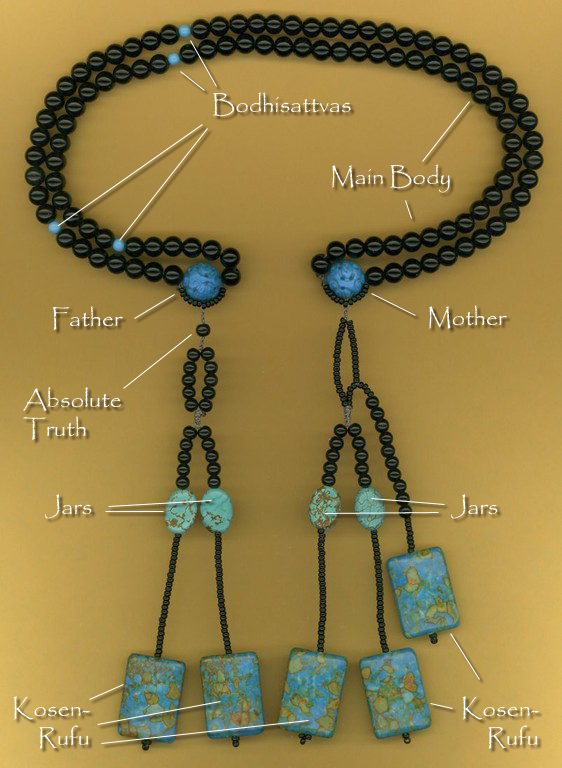
Click for a larger imageIn the practice of Nichiren Buddhism, we hold juzu beads in our hands while reciting Gongyo and chanting Daimoku.

There are 108 beads in the main body, signifying the 108 Earthly Desires.

The 4 smaller beads in the main body represent the 4 Great Bodhisattvas of the Earth….Jogyo, Muhengyo, Jyogyo, and Anryugyo.

The 2 large beads at each end of the main body, are the “parent” beads.  The “mother” bead, representing “mystic” is on the side with 3 dangles, and is placed over the middle finger of the right hand.  The “father” bead, representing “law” is on the side with 2 dangles, and is placed on the middle finger of the left hand.

We cross the beads in the middle, which shows our oneness with THE LAW.  Also, we cross the beads so our benefits do not fall through our hands and lives.  By placing the beads on our hands this way, we are accepting the reality that Buddhahood exists within our lives.

When we press our hands together while we hold our juzu beads, our 10 fingers represent the 10 Worlds which fuse together simultaneously in the life of a Buddha, our lives.  Our life is now one with the Mystic Law!

The one small bead that sits below the “father” bead, represents Absolute Truth.

Prior to Nichiren Buddhism, there were only 2 dangles on each end of juzu beads.  The third dangle, consisting of 10 beads and a “Kosen-Rufu” bead, on the side of the “mother” was added, actually tied on, to signify Nichiren Buddhism and distinguish it from other Buddhist sects.

On the remaining 4 dangles, there is a differently shaped bead part way down each string.  This bead is called the “jar” bead and holds the benefits of our practice.

The 5 larger beads at the bottom of each dangle are the “Kosen-Rufu” beads, and represent our desire to spread Nichiren Buddhism,  Kosen-Rufu, throughout the World.

My huge thanks are due to my lovely friend Lily Rose of Myoho Beads for researching the meanings of the individual beads and for allowing me to use her explanation.

As Lily Rose says on her site, be careful buying juzu beads on line.  Use this description or the juzu purchased in SGI bookstores as a guide.  Make sure the beads you purchase have been created in an ethical and politically correct manner. Sorry to say, but many are not.

Embrace The Change

Embrace The ChangeMany people fear and oppose change within their lives. Be that at home, at work or in society as a whole.

That fear is, in many ways, understandable. Change often takes us into the unknown and the unknown can be a scary place.

The change that is brought about by embracing Nichiren Buddhism is less scary. The outcome of Practice is certain, although the time taken to reach enlightenment is less defined.

With the passing of every day, I feel my inner happiness growing. I have a strengthening confidence in my ability to handle problems as they arise. So how do I know I am progressing?

The Daishonin tells us to test our Practice. To measure our progress by seeing the results from our own lives on a daily basis. Problems are a fact of life. We should not seek to skirt around them, nor should we ignore them in the hope that they will solve themselves.

So how we tackle problems of all natures, as they arise, gives us a good way to measure our progress. Speaking personally, I find that my ability to deal with problems, large and small, has improved enormously. Now that might sound a little conceited, but it is all down to my Practice, and the more progress I make, the more confidence I gain. The ultimate in positive feedback.

If you Practice, you know exactly what I mean. If you don’t, you really should give it a go.

Tranquillity II

Peace and QuietHaving spent several hours mulling over what I should write for my input into my works appraisal over the weekend, then wondering what feedback I would receive from my manager at the meeting today, I was pleased, not to say a little relieved, when the majority of it was positive.

Who of us hasn’t worried, just a little, about how others see our efforts? We all thrive on a little praise and the feeling of being appreciated, so it is pleasing when it comes, particularly when it is a little unexpected.

I hope that most people find me quite grounded, fairly rational, even a bit laid back. I have found that since I started practicing Nichiren Buddhism, that I am able to see the bigger picture and not react to the the immediate situation.

But that could be seen as having a predominant life-state of Tranquillity, and that is part good, part bad.

Tranquillity, also called Humanity, as seen as one of the lower of the Ten Worlds, has two sides. On the one hand it can be described as being at peace, in control of ones desires, with an ability to act rationally and with humanity. On the other, it is the World of inactivity, lethargy and inertia. Failing to tackle issues, thus leading to decline and neglect.

So, whilst I have had a metaphorical pat on the back, I must be aware that my Tranquillity has to be tempered by, or combined with, the resolution to be determined to push ahead with my goals, to confront my tendency to ‘put things off till tomorrow’ and to strive with all my being to reach the higher Worlds through rigorous Practice.

Previous Older Entries Next Newer Entries