 To start the process of Human Revolution you must meet the right teaching. The best and easiest way to do this is to have a mentor. Nichiren Daishonin was the ultimate in mentors and his successors, right through to Daisaku Ikeda have followed his teachings, been his disciples and, in turn, become amazing mentors in their own right. Find the right mentor and follow the right teaching.
‘Many in Body – One in Mind’ and the ‘Oneness of Mentor and Disciple’
In many of Nichiren Daishonin’s writings, the principle of unity is stressed again and again. Unity starts with the individual. He writes: ‘Even an individual at cross purposes with himself is certain to end in failure.’ (1)
We all know what it is like to be ‘at cross purposes’ – those feelings of indecision, confusion or vagueness. Maybe we have also experienced the opposite feeling when we are focused on a goal and confident that we will not deviate from our path towards it, and ready for any problem that may appear to try to hinder us.
Truly fulfilling our potential, however, is dependent on more than not being ‘at cross purposes’ with our self. Although practising Nichiren Buddhism brings happiness to each of us as individuals, this alone is not enough. As Nichiren Daishonin explains:
All disciples and lay supporters of Nichiren should chant Nam-myoho-renge-kyo with the spirit of many in body but one in mind, transcending all differences among themselves to become as inseparable as fish and the water in which they swim. This spiritual bond is the basis for the universal transmission of the ultimate Law of life and death. Herein lies the true goal of Nichiren’s propagation. When you are so united, even the great desire for widespread propagation can be fulfilled. But if any of Nichiren’s disciples disrupt the unity of many in body but one in mind, they would be like warriors who destroy their own castle from within. (2)
Many in Body, One in Mind
When we look at our neighbours, our colleagues, even members of our family, we can see that while there are clearly similarities between some groups of people, there are also enormous differences. Around the world, cultural and language differences can appear insurmountable.
Nichiren Daishonin accepts that we are all very different; in fact we are each unique. He asks us to learn to respect other people’s unique characteristics and differences. This becomes much easier to do when we look beneath the surface and recall that everyone has the qualities of a Buddha deep in their lives, even if it is not yet apparent.
Although we are all different (‘many in body’), it is possible for us to share a common goal, or ‘one mind’. This does not mean that we all have to ‘think the same’, as past experience of totalitarian regimes may indicate. Indeed, it is essential for us to develop our own unique qualities to the full. As Nichiren Daishonin pointed out, different sorts of fruit are perfect in themselves. A pear, for example, should not try to be, or to taste like, a plum. All of our own individual talents and characteristics are necessary for us to realise our goal of a harmonious peaceful world. The essence of ‘many in body – one in mind’ (Japanese. itai doshin) is for us to learn how to transcend the differences between us; to develop respect for each person in our environment.
The concept of many in body, one in mind is based on the vow of Shakyamuni Buddha, which is contained in the Lotus Sutra, ‘to make all persons equal to me, without any distinction between us.’ (3) Therefore true enlightenment only comes from helping others to achieve the same state of life. This vow is at the heart of Nichiren Daishonin’s teachings.
Consequently, those who chant Nam-myoho-renge-kyo share the same ideal of basing their actions on the qualities of courage, compassion and wisdom, which is in fact ‘attaining Buddhahood’. When we see a positive change in our self, we naturally want to encourage others to reveal their potential in the same way. This leads to a desire for the widespread propagation of Buddhist philosophy throughout the world so that society becomes based on fundamental respect for life, rather than on greed, anger or foolishness.
This leads to another important principle – that of the ‘oneness of mentor and disciple’, or as it is sometimes referred to – ‘the mentor and disciple relationship’.
The Oneness of Mentor and Disciple
The ‘oneness of mentor and disciple’ is a principle which has profound significance in Buddhism. Nichiren Daishonin re-confirmed Shakyamuni’s plea to his followers to: ‘Rely on the Law and not upon persons’(4). Therefore, we do not worship or pray to statues of the Daishonin or Shakyamuni. Rather we have an object of devotion – the Gohonzon – which is a representation of Nichiren Daishonin’s enlightened life state. However, the Daishonin also stated that we should ‘seek out the votary of the Lotus Sutra and make him our teacher.’ (5)
There are many examples in society of the relationship between a teacher and student, or a master and apprentice. Generally this relationship occurs when a mentor or teacher has some knowledge or skill which they want to pass on to someone else. In the case of Nichiren Buddhism it is the essence of the teachings that the mentor is communicating. Both mentor and disciple are therefore equal and united in their desire to become enlightened. A true mentor desires that the disciples will eventually surpass them in understanding whilst a true disciple shares the same sense of responsibility and commitment to the Law as the mentor.
We may come to a time when we think we understand everything about Nichiren Buddhism. At this point we can stop making as much effort in our practice as we previously did. Then, without being aware of it, start to stagnate in faith and stop seeing positive changes in our life. In order to continue developing our self and speaking with sincerity to others about the teachings, it is vital for us to remain close to the heart of Nichiren Buddhism so that we are able to maintain a strong life state.
We consider that Nichiren Daishonin is our mentor because he provided us with a profound teaching. He first expounded Nam-myoho-renge-kyo and inscribed his enlightened life-condition in the Gohonzon, which enables us to reveal our own inherent Buddha nature. His life is an inspiring example of the potential an ordinary human being has to single-mindedly achieve all their goals. We are able to read about his extraordinary life in the many letters of encouragement he wrote to his followers. Consequently, Nichiren Daishonin has been called the ‘mentor of life’ (6).
Daisaku Ikeda was born in 1928 and began practising this Buddhism just after the Second World War, when he was 19 years old. He became the third President of the Soka Gakkai in 1960. His example has shown us how to practise and spread Nichiren Daishonin’s teachings in twenty-first century. Therefore, he has been described as the ‘mentor for kosen-rufu [widespread propagation]’ (7). SGI President Daisaku Ikeda’s guidance and activities are thoroughly based on his profound understanding of the teachings of Nichiren Daishonin.
Studying any of Daisaku Ikeda’s guidance we can see how he has continually applied the principles of Nichiren Buddhism in order to achieve wonderful victories in all areas of his life. Yet he does not proclaim himself to be our ‘mentor’. His great pride is to be the disciple of his predecessor second Soka Gakkai president Josei Toda (1900 – 1958), who in turn was the disciple of Tsunesaburo Makiguchi (1871 -1944).
The mentor-disciple relationship in Nichiren Buddhism depends upon the disciple or how the disciple responds. We choose the mentor, not the other way round. If we look at this from another angle, we can see that it is the activities and achievements of the disciple that validates the mentor. This concept is very different from a traditional understanding of the function of religious leaders, such as guru’s, saviours or saints, to give security and reassurance to their disciples.
President Ikeda clarifies this as follows:
“The Daishonin urges his followers to practise ‘just as Nichiren’ and to ‘spread the Lotus Sutra as he does’. Disciples who wait for the mentor to do something for them are disciples of the pre-Lotus Sutra teachings. True disciples of the Lotus Sutra are those who struggle just as the mentor does.”(8)
The oneness of mentor and disciple in Nichiren Buddhism is not a passive relationship, where the disciple waits for instructions from the mentor. It is an active two-way process based on a vow or pledge that both disciple and mentor make to continuously develop their characters for the sake of the happiness of other people.
President Ikeda has likened the concepts of ‘many in body, one in mind’ and the ‘oneness of mentor and disciple’ to the process of making a beautiful cloth or carpet:
The warp represents the bond of mentor and disciple, and the weft to the bond of fellow members. When these are interlaced, a splendid brocade of kosen-rufu is created. (9)
The mentor-disciple relationship provides the vertical ‘structure’ and the members are like the individual multi-coloured strands of thread that bonded together form the ‘pattern or design’. This principle applies to people chanting together in small local groups as well as to the world wide organisation.
If we wish to see a change in the core values of our society, then learning how to work in harmonious co-operation with our fellow human beings is crucial. Nichiren Daishonin’s teachings are rooted in a humanistic belief that each person is deeply worthy of respect. Chanting Nam-myoho-renge-kyo gives each person the ability to reveal their highest life condition. President Ikeda’s guidance and actions for peace becomes a model for us to transform our society.
-
Nichiren Daishonin, ‘Many in Body, One in Mind’ (WND p. 618).
-
Nichiren Daishonin, ‘The Heritage of the Ultimate Law of Life’ (WND p. 217).
-
Burton Watson, The Lotus Sutra (Columbia University Press, 1993) p. 36.
-
Nirvana Sutra
-
Nichiren Daishonin, ‘The Opening of the Eyes’ (WND p. 278).
-
See Suzanne Pritchard’s article ‘The Oneness of Mentor and Disciple’ in the Art of Living, September 2004.
-
ibid
-
Daisaku Ikeda, The World of Nichiren Daishonin’s Writings (SGI-Malaysia, 2004) Vol. 1, pp. 164-165. See also ‘The World of Nichiren Daishonin’s Writings’ No. 8 (SGI Newsletter No. 5290, 2 October 2002).
-
Daisaku Ikeda, The World of Nichiren Daishonin’s Writings (SGI-Malaysia, 2004) Vol. 1, p. 135. See also ‘The World of Nichiren Daishonin’s Writings’ No. 7 (SGI Newsletter No. 5251 22 August 2002).
 Recently, we talked about the fact that we only lose when we decide we have lost. Having the courage, patience and determination to press on, even when all the signs are telling you to stop, to give in, to cut and run, can allow amazing unexpected results to occur.
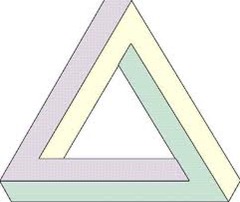 While the ‘real’ world is out there, all around us, in physical form, ‘our’ world is contained within the amazing structure we call our brain.
 If you ride a bicycle on UK roads, you’ll know how lovely it can be to find yourself on a stretch of nice smooth new tarmac. The lumps and bumps of our older repaired roads really can rattle your bones, so the new surface is a real treat.


 March the thirteenth always stirs up the saddest of memories for me and for my family. It is exactly twenty two years ago today, that I lost the second most important lady in my life, my paternal grandmother. Just to make it even worse, if that were at all possible, ironically, March the thirteenth 1992 was a Friday, probably the worst Friday the thirteenth ever.
 I learned a really important lesson today, one which at my age, you might expect I had already learned. When you ask someone a question, you must be prepared to receive an answer, and not necessarily the answer you were expecting.
 We all appear to have an inbuilt ability to feel sorry for ourselves. Sometimes it seems we have problem after problem, and think the world is against us. But we can all take a step back and look at our situation compared to others, and the chances are that there are millions of people in much worse circumstances.
 The surge in communication technology, and particularly the spread of the internet, has made the world a much smaller place.
 I know that my Buddhist practice has changed the way I interact with everything and everyone in my own personal Universe.
 The Search For Enlightenment
Recents Comments